A Texas Honky Tonk in Tokyo
What it Taught Me About Cultural Borders
CULTURAL
6/16/20264 min read
Tokyo is full of surprises.
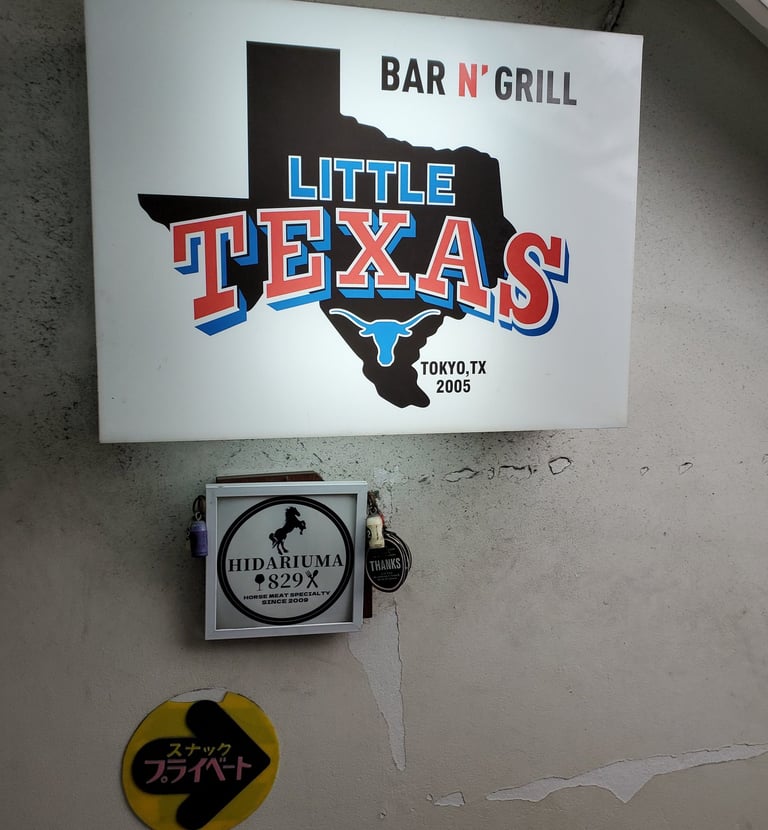
You expect temples tucked between skyscrapers, tiny ramen shops hidden in alleyways, and neighborhoods that seem to belong to entirely different cities. What you don't expect is to step off a train in Meguro and find yourself descending into what feels like a Texas dance hall.
Yet that's exactly what happened.
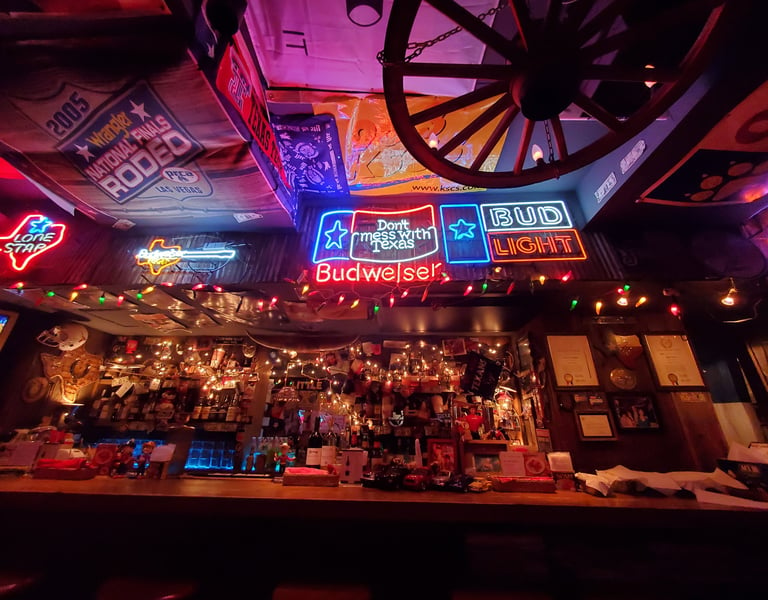
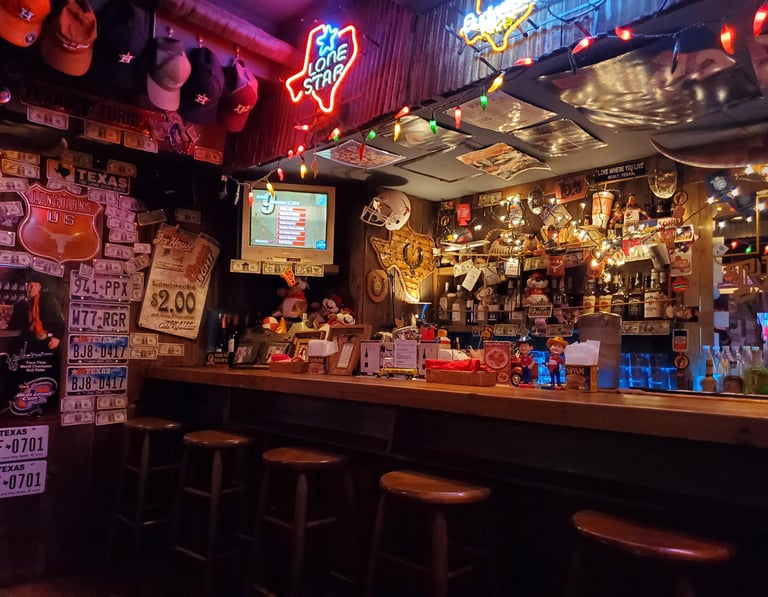
Hidden beneath the streets of Tokyo, Little Texas is a honky-tonk and Texas roadhouse-style venue built around a genuine fascination with Texas, country music, and the American Southwest. Its owners, Takeshi Yoshino and Natsuko Grace Yoshino, imported wood from Texas for the walls and designed the interior to resemble a rural Texas dance hall. The result is something unusual: not a themed restaurant, but a community built around an idea.
When Americans think about Japanese fascination with the United States, they usually imagine Hollywood, New York, or Los Angeles. Little Texas represents something different. Here, a group of Japanese enthusiasts looked at Texas culture—country music, dance halls, pickup trucks, barbecue, cowboy hats, and wide-open roads—and found something meaningful enough to preserve and celebrate on the other side of the Pacific.
The first surprising thing was not that the place existed, but how sincere it felt.
When Mary and I walked inside, we were immediately impressed by how successfully the owners had captured the atmosphere of an authentic honky-tonk. We had expected parody at first—a kind of exaggerated imitation of America assembled from old movies, Route 66 mythology, neon beer signs, and decades of exported pop culture. We expected irony, performance, perhaps even a little kitsch.
Instead, we found something more complicated.
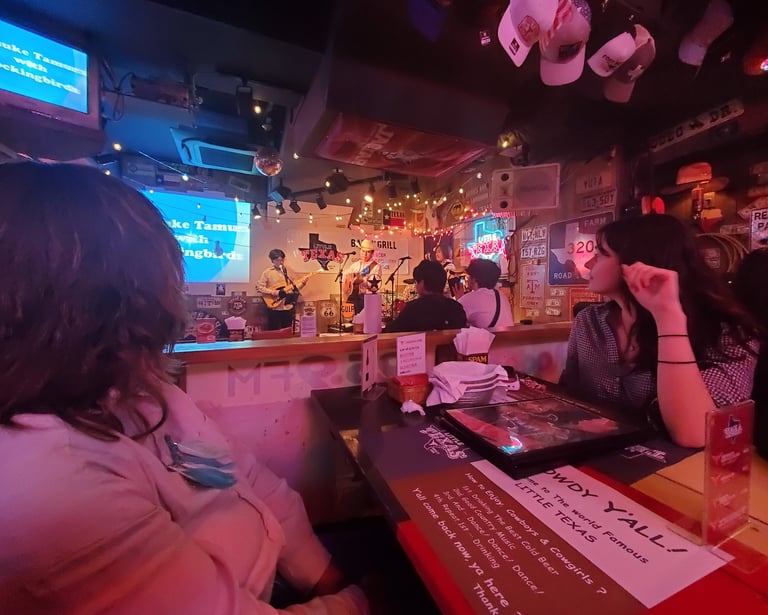
The food was familiar enough—spare ribs, onion ring tornadoes, and other roadhouse staples—but nothing about the experience felt forced or contrived. Live performances filled the evening, with country music enthusiasts dressed in traditional western attire playing classic country songs. Japanese patrons sang along to tunes about highways, deserts, loneliness, broken hearts, and Texas towns they had probably never visited.
There was no mockery in it. No sense that anyone was playing dress-up.
A small dance floor remained busy throughout the evening as couples and groups two-stepped beneath the lights. The atmosphere carried an unexpected sincerity, as though the room itself had quietly agreed to set aside national boundaries for a few hours.
That was the moment the place became truly interesting.
Not because it was American, but because it revealed how people reach toward one another through symbols long before they fully understand one another as realities.
Most people imagine cultural understanding happens through formal experiences: museums, language classes, historical sites, official exchanges, and carefully curated tourism. Yet it often happens somewhere far more ordinary. Sometimes it happens while simply going out for a drink.
Bars are fascinating social environments because people tend to become less guarded there. You hear aspirations, emotional tones, musical preferences, insecurities, and ideas about freedom, romance, rebellion, loneliness, and escape. In a strange way, bars function as informal anthropology. People unconsciously reveal the worlds they admire and the lives they imagine.
The Texas-style bars I visited in Japan—including others in Kawasaki—were not simply imitations of America. They were meeting grounds: small, unofficial border zones where people experimented with identity, atmosphere, admiration, and belonging.
The more time I spent in those places, the more I realized that everyone inside was trying to understand someone else.
For some Japanese patrons, country culture may represent emotional openness, wandering, rugged individualism, melancholy, and freedom. Not necessarily literal America, but a symbolic America constructed from music, films, stories, and imagination.
Americans romanticize Japan as well. We often arrive carrying our own mythology: quiet shrines, disciplined craftsmanship, neon skylines, ritual, harmony, and serenity.
Neither side sees the other perfectly clearly, but neither side is entirely wrong. And that was what fascinated me most.
People often begin by understanding one another symbolically rather than realistically. Yet genuine connection can still emerge from that imperfect beginning. That curiosity becomes the bridge.
An expatriate expecting alienation suddenly discovers that Japanese patrons know every word to an old country song. A Japanese customer expecting a loud American stereotype instead encounters someone thoughtful, reflective, lonely, generous, or kind.
In a strange way, Little Texas is not really about Texas.
It is about what happens when one culture adopts another out of admiration rather than obligation. It is about curiosity overcoming distance. It is about people reaching across oceans through music, stories, and shared experiences.
When you walk down those stairs in Meguro, you are not simply entering a Texas-themed bar; you are stepping into a conversation between cultures.
But in places like Little Texas, people simply exist together.
They share songs, buy drinks, exchange stories, teach each other words, and discover unexpected common ground. They participate in small rituals of temporary familiarity that quietly dissolve the distance between strangers.
Cultural understanding rarely arrives through grand philosophical discussions. More often, it emerges from shared music, food, and conversation.
Perhaps that helps explain why some Japanese patrons become emotionally attached to country culture. They may not literally long for Texas itself. What attracts them may be the emotional landscape associated with it: openness, movement, freedom, rugged individualism, nostalgia, and the romantic image of endless roads stretching toward the horizon.
Likewise, many Western travelers who become fascinated with Japan are not necessarily seeking Japan in all its complexity. Often they are searching for stillness, attentiveness, ritual, order, or relief from the constant noise and hyper-individualism of their own societies.
At first glance, a Texas honky-tonk in Tokyo sounds strange—perhaps even absurd. Yet beneath the surface, something profoundly human is taking place. The bar becomes a small, unofficial bridge between cultures, a place where strangers experiment with admiration, identity, and belonging across national boundaries.
Not perfectly.
Not academically.
Not with complete understanding.
But sincerely.
And sincerity matters.
Because perhaps understanding does not begin with accuracy.
Perhaps it begins with curiosity strong enough to cross a doorway.
Somewhere beneath the neon lights of Tokyo, while old country songs echoed through a basement dance hall, the distance between Texas and Japan became smaller than anyone in the room might have imagined.