
The 47 Ronin
The True Story
SHRINES AND TEMPLES
7/15/20265 min read
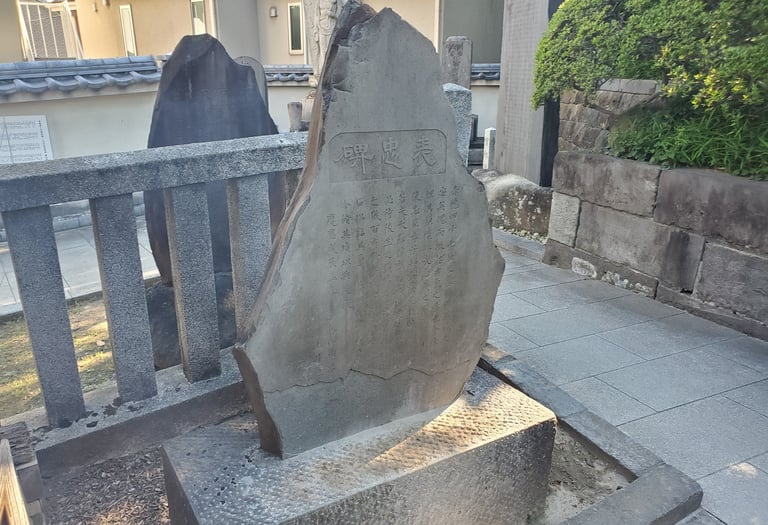
On our visit to Japan, Liam and I visited Sengaku-ji Temple in Tokyo's Minato City, about a 10-minute walk from Shinagawa Station. Sengaku-ji (泉岳寺) is one of Tokyo's most historically important Buddhist temples. We try to visit the major temples whenever we travel to a new city. We came here for a different reason—to visit the graves of the 47 Ronin. Their story has been retold in countless plays, books, and films, but is perhaps best known to Western audiences through the 2013 film 47 Ronin, starring Keanu Reeves.
Before visiting the graves, we stopped at the small Akogishi Kinenkan, or Ako Gishi Memorial Museum. Though modest in size, the museum provided valuable historical context through displays of armor, letters, and personal artifacts belonging to the 47 Ronin. By the time we stepped into the quiet cemetery, their story had become much more personal.
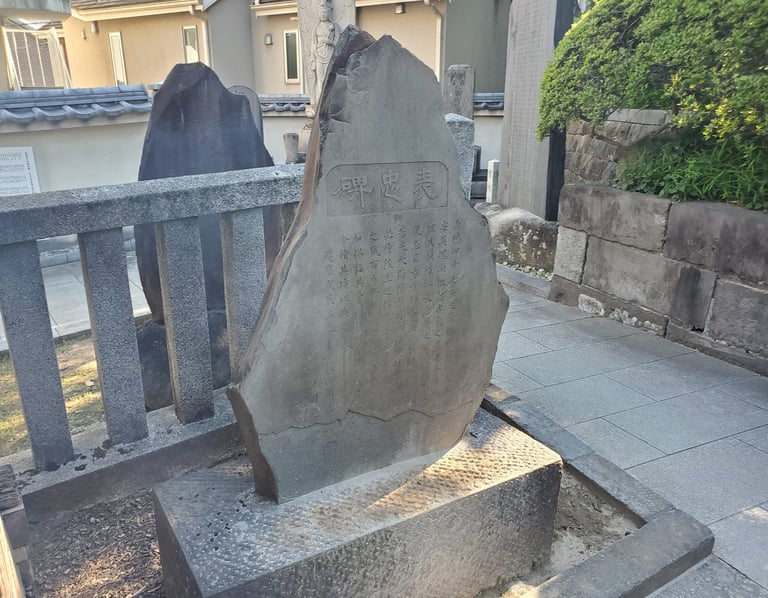
Standing among the graves, we found ourselves reflecting on one of Japan's greatest stories of loyalty and honor. The ronin acted out of unwavering loyalty to their master, fully aware that their actions would cost them their lives. The true account contains no magic, monsters, or forbidden romance—only duty, sacrifice, and an unshakable commitment to a fallen lord. More than 300 years later, the graves of Asano Naganori and his loyal retainers continue to draw visitors from around the world who come to pay their respects.
The events began in 1701 during the Edo period under the rule of the Tokugawa shogunate. At the center of the story was Lord Asano Naganori, the daimyo (feudal lord) of the Ako Domain in present-day Hyōgo Prefecture. Asano was a real historical figure who governed from Ako Castle, the seat of his domain.
That year, Asano traveled to Edo Castle—located where Tokyo's Imperial Palace stands today—to help receive imperial envoys. While there, he came into conflict with Kira Yoshinaka, another historical figure whose exact role has often been misunderstood. Contrary to his portrayal in the Hollywood film, Kira was not a powerful lord. Instead, he served as a hereditary court official known as a kōke, responsible for teaching etiquette and organizing ceremonies for the shogun.
Exactly why Asano attacked Kira is uncertain. Later legends claim Kira repeatedly insulted Asano or demanded expensive gifts, but contemporary historical records do not clearly explain the dispute. What is certain is that on April 21, 1701, Asano drew his sword inside Edo Castle and wounded Kira.
Under the laws of the Tokugawa shogunate, drawing a weapon inside the shogun's castle was considered a grave crime. The severity of Kira's injury was almost irrelevant; simply attacking someone within the castle violated one of the government's strictest rules. As a result, Shogun Tokugawa Tsunayoshi ordered Asano to commit seppuku (ritual suicide) that very day. His lands were confiscated, and his samurai became masterless warriors known as ronin.
Many people believed the punishment was unfair because Kira received no formal punishment. Whether Kira had provoked Asano or not, only Asano was held legally responsible. This sense of injustice motivated Asano's former retainers, led by Ōishi Kuranosuke, to seek revenge.
Instead of acting immediately, the ronin spent nearly two years preparing. They deliberately spread out across Japan, taking ordinary jobs and pretending to abandon thoughts of revenge. Ōishi himself cultivated the appearance of a man who had lost his honor by drinking heavily and living carelessly. Eventually, Kira relaxed his security.
On the night of December 14, 1702, according to the traditional Japanese calendar (January 30, 1703, in the Gregorian calendar), the forty-seven rōnin launched a carefully planned raid on Kira's mansion in Edo. After defeating his guards, they searched the estate until they found Kira hiding in a storage building.
According to traditional accounts, Ōishi respectfully offered Kira the opportunity to commit seppuku, allowing him to die with honor as a samurai. Kira did not do so. Whether he refused or remained silent is uncertain, but he did not take his own life. After waiting, the ronin beheaded him.
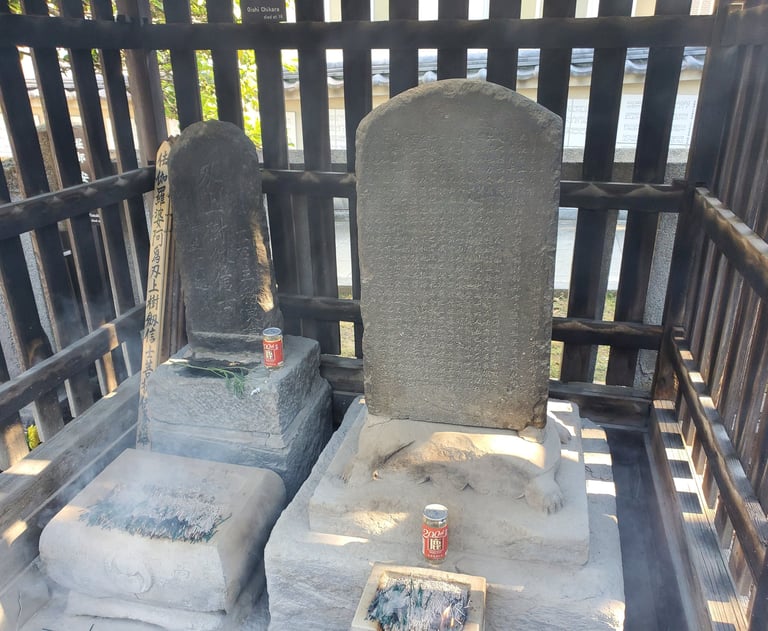
They then carried Kira's head across Edo to Sengaku-ji Temple, where Lord Asano had been buried after his death. There they washed Kira's head at the temple well and placed it before Asano's grave, symbolically fulfilling the duty they believed they owed their lord.
Having completed their mission, the ronin did not flee. Instead, they surrendered themselves to the authorities, fully expecting to die. Public opinion strongly supported them because many admired their extraordinary loyalty, but the Tokugawa government also had to uphold the law prohibiting private revenge. The compromise was to sentence the ronin to commit seppuku rather than execute them as common criminals.
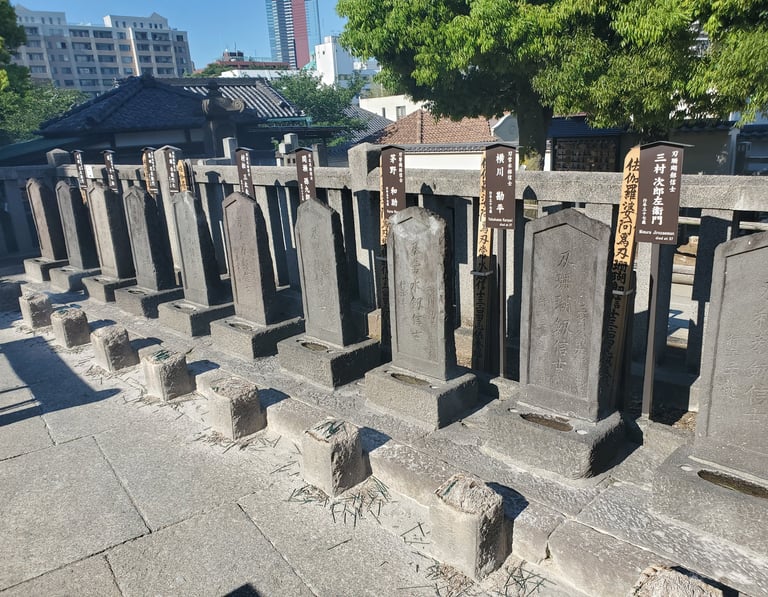
After their deaths, the ronin were buried beside Lord Asano at Sengaku-ji Temple. Their graves remain there today, surrounding Asano's grave as though they continue to serve him even in death. Visitors still leave incense at each grave more than three hundred years later.
The 2013 Hollywood film differs dramatically from these historical events.The film introduces the fictional character Kai, played by Keanu Reeves, along with Lord Asano's fictional daughter, Mika, and the witch Mizuki. It includes shape-shifting fox spirits, tengu, monsters, enchanted forests, and magical swords. Places such as the swordmaking town of Uetsu and the Tengu Forest are inventions of the filmmakers.
Some of these fantasy elements draw inspiration from genuine Japanese folklore. Tengu are legendary mountain spirits often associated with martial arts and swordsmanship, while kitsune are magical fox spirits capable of shapeshifting. However, none of these creatures played any role in the real events surrounding the 47 Ronin. The historical story is grounded entirely in human decisions, political authority, and moral conviction.
The lasting power of the 47 Ronin lies not in fantasy but in the ethical questions it raises. Were the ronin justified in avenging their lord despite breaking the law? Should loyalty to one's master outweigh obedience to the government? Did the Tokugawa shogunate act fairly by punishing Asano while leaving Kira untouched? These questions have been debated in Japan for centuries and continue to fascinate historians, philosophers, and visitors alike.
Ultimately, the true story of the 47 Ronin is not about supernatural heroes. It is about ordinary samurai who accepted death in order to fulfill what they believed was their highest duty. Their actions transformed a political incident into one of Japan's greatest historical legends, ensuring that their names—and the quiet cemetery at Sengaku-ji where they rest beside their lord—would be remembered for generations.
Standing among the rows of weathered gravestones at Sengaku-ji, it is easy to understand why the story of the 47 rōnin has endured for more than three centuries. The quiet cemetery invites reflection rather than celebration. Whatever one believes about the morality of their actions, the rōnin's unwavering loyalty and willingness to accept the consequences of their choices continue to resonate. As we left the temple, the story no longer felt like an old legend or a Hollywood film—it felt like history made tangible, preserved in one of the most peaceful corners of modern Tokyo.
Kakkoii Adventures
A couple navigating life's changes, making intentional choices, and living the life made possible.
STAY ConnectED
© 2026 - All rights reserved.
Making room. Choosing what's next. Living the life those choices make possible.
Join us for our twice-monthly newsletter as we share the choices, changes, and adventures along the way.