Two Guns Arizona
Where Route 66 Stopped
ARIZONA
7/1/20263 min read
Two Guns: Where Route 66 Stopped
Just east of Flagstaff, Arizona, where Interstate 40 races across the high desert, a forgotten exit leads to one of the most haunting places on old Route 66. At first glance it appears to be little more than a scattering of stone ruins overlooking Canyon Diablo. But walk among those weathered walls and another story begins to emerge—not simply of abandonment, but of ambition.
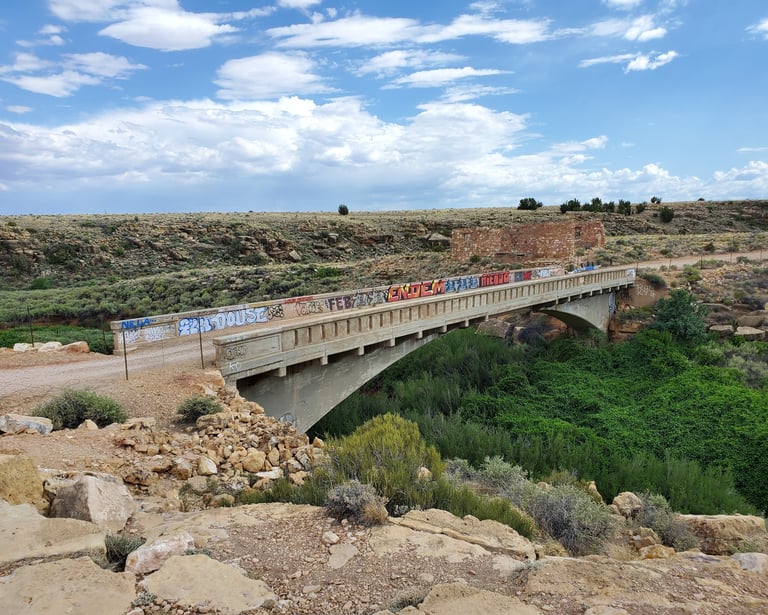
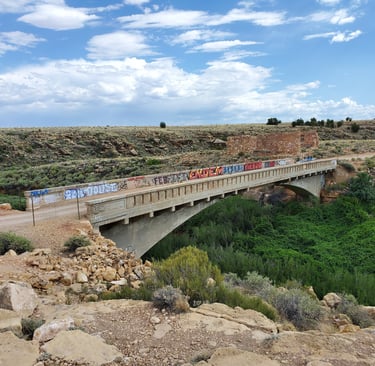
In 1915, a graceful concrete bridge carried the National Old Trails Road across Canyon Diablo. When U.S. Route 66 was established in 1926, that bridge became part of America's most famous highway. Every traveler crossing the canyon arrived almost immediately at Harry "Indian" Miller's trading post, gas station, museum, and small zoo.
For motorists of the 1920s, it must have seemed like an oasis.
Gasoline was available. Travelers could eat, spend the night, buy souvenirs, visit the Apache Death Cave, or stroll through a zoo filled with mountain lions, bobcats, eagles, Gila monsters, and other desert wildlife. It was exactly the kind of unforgettable roadside stop that made Route 66 legendary.
Success, however, came wrapped in turmoil.
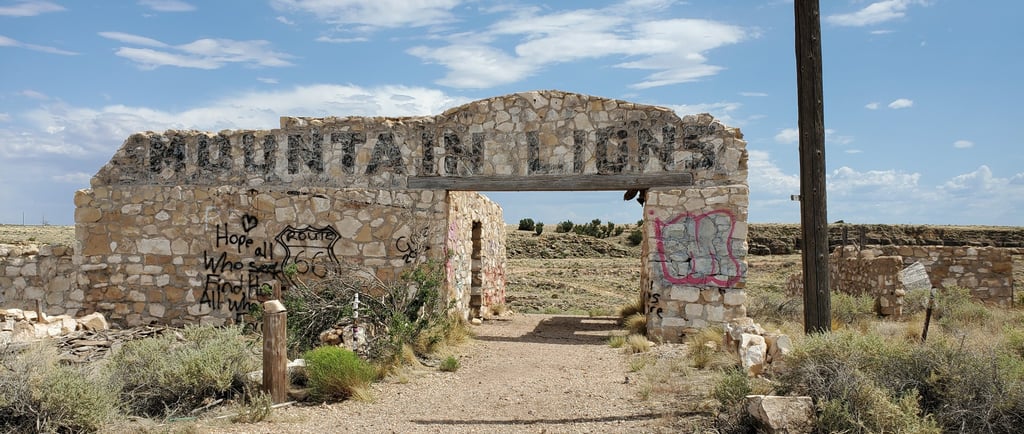
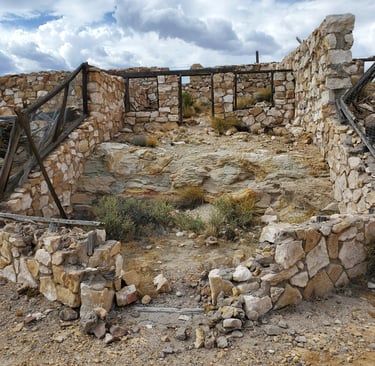
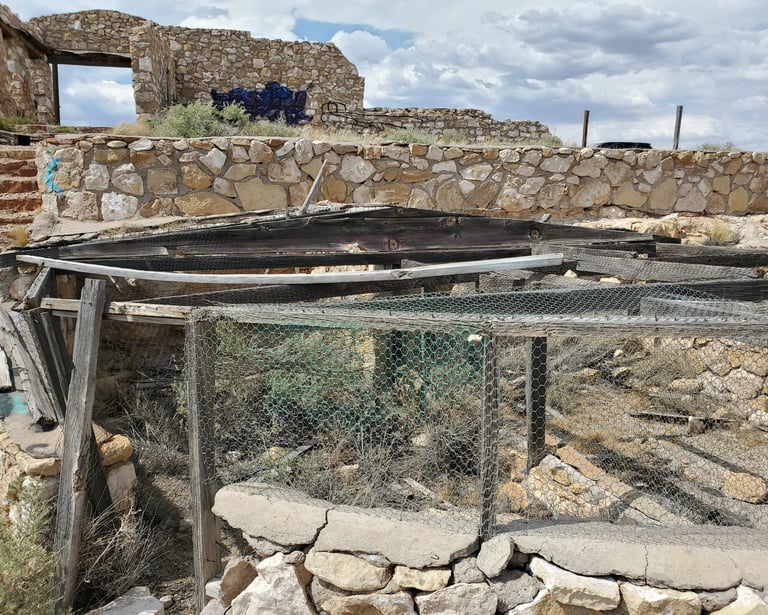
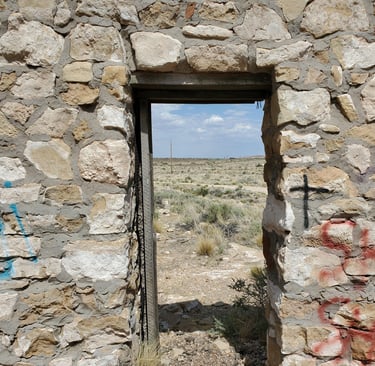
Lease disputes ended in murder. Fires destroyed buildings. Ownership changed hands. Yet Two Guns refused to disappear. When Route 66 was rerouted in 1938, the businesses simply moved closer to the new highway. A second zoo was built, and today its stone entrance still bears the fading words, "MOUNTAIN LIONS."
Most visitors never realize there were actually two zoos.
The original zoo remains hidden behind the older trading post west of the historic bridge. The more familiar "Mountain Lions" entrance belongs to the later zoo, built after the highway shifted. Walking between them is like walking through two chapters of the same story—a rare opportunity to see how an entire business adapted to the changing course of America's Main Street.
By the 1940s and 1950s, Two Guns enjoyed another golden age. A modern Texaco station, motel, restaurant, coffee shop, gift shop, campground, and expanded zoo welcomed travelers crossing northern Arizona. Once again, the future looked secure.
Then the highway moved.
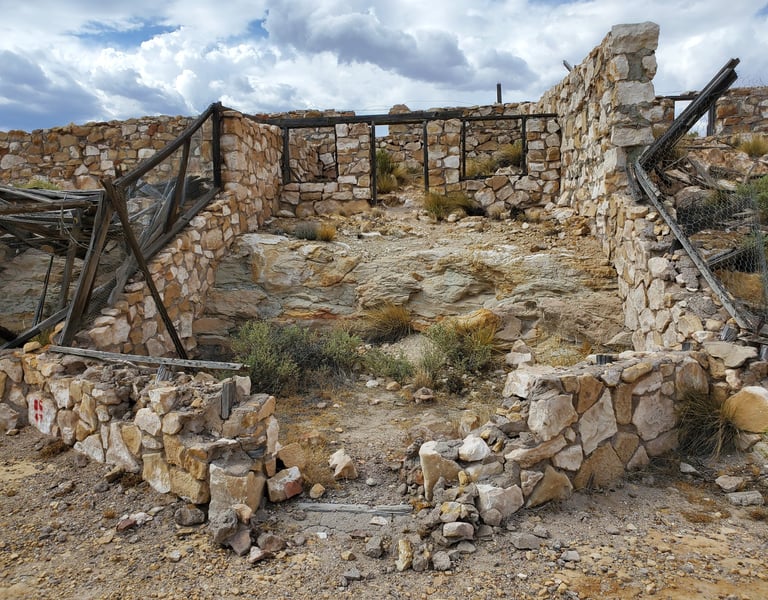
Interstate 40 bypassed the old Route 66 alignment, and the stream of travelers simply vanished. A devastating fire in 1971 destroyed much of the commercial district. Without passing motorists, there was little reason for anyone to stop. Businesses closed. Roofs collapsed. The desert reclaimed the town.
And yet the stone remains.
Standing today on the old Canyon Diablo Bridge, it is easy to imagine the sound of flathead V-8 engines climbing toward the trading post. One can almost picture families pulling over to stretch their legs while children rushed toward the mountain lion cages. The bridge, the canyon, and the sturdy stone buildings still create the same dramatic arrival they did a hundred years ago.
That may be what makes Two Guns different from so many other ghost towns.
Most ghost towns died because the mines ran out or the railroad left. Two Guns died because America found a faster road. The town didn't fail because people stopped dreaming; it failed because people stopped passing through.
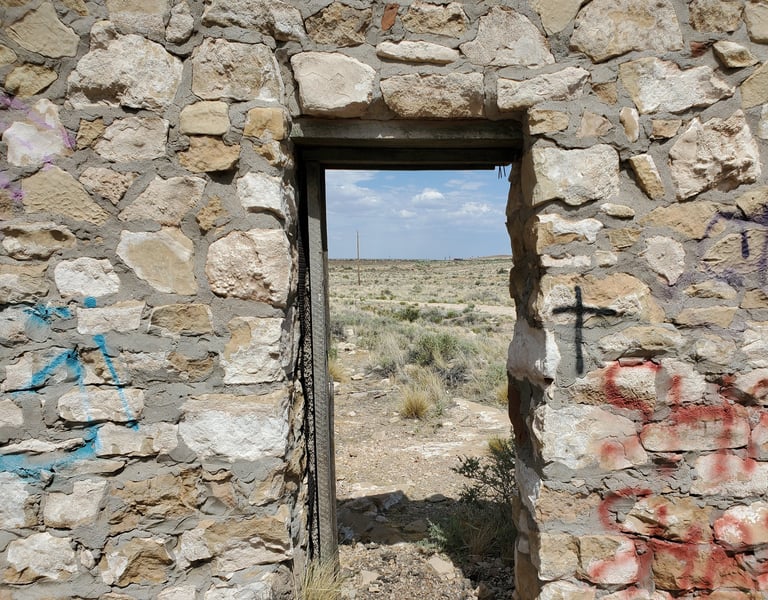
The irony is impossible to miss. Two Guns was never built as a temporary roadside attraction. Its original buildings were constructed from native sandstone, with thick walls, rounded corners, and sturdy masonry that conveyed a sense of permanence. The people who built this place believed they were creating something that would endure. They were right about the buildings—but wrong about the road.
Today, Two Guns is no longer a destination for fuel, food, or souvenirs. Instead, it remains a place where the story of Route 66 can still be read in stone. Perhaps that is why Two Guns lingers in the memory long after the visit ends. It is not simply a ghost town but a reminder that every highway leaves something behind when it moves on. The traffic has vanished, the businesses are gone, and silence now fills the canyon where travelers once gathered. Yet the stone walls still overlook Canyon Diablo, preserving the hopes of those who believed the road would last forever. In that quiet endurance, Two Guns tells one of Route 66's most poignant stories—not of how a town was built, but of how it was left behind.
If you’re traveling on Interstate 40 in Arizona, Two Guns is at exit 230. The ghost town and old Route 66 ruins are just south of the interstate via 2 Guns Road. It’s located 30 miles east of Flagstaff and 5 miles west of Meteor Crater.
If you’re planning a stop, it’s worth allowing 30-60 minutes to explore the old zoo ruins and the historic Canyon Diablo Bridge. The buildings are unstable so it’s safest to admire them from outside.
Kakkoii Adventures
A couple navigating life's changes, making intentional choices, and living the life made possible.
STAY ConnectED
© 2026 - All rights reserved.
Making room. Choosing what's next. Living the life those choices make possible.
Join us for our twice-monthly newsletter as we share the choices, changes, and adventures along the way.