
7-11 The Safest Place In Japan
How the Neighborhood Konbini Became the Safest Place In Japan
CULTURAL
2/7/20264 min read
The first time I noticed it, I wasn’t looking for it at all. I was standing in front of a 7-Eleven — one of Japan’s convenience-store triad of 7-Eleven, Lawson, and FamilyMart, collectively known as konbini — searching for a PUDO Box, something like an Amazon drop-off locker, though not quite the same. The idea is simple: you send and retrieve packages from a neighborhood locker.
Mary was trying to return a broken Fitbit, and since we weren’t residents, the PUDO Box seemed like the easiest way to ship it — if we could find one. We couldn’t.
Mornings at a konbini are always busy. Students hurry in for an onigiri before school. Salarymen stop by for hangover and liver-support drinks — a familiar sight in every convenience store (常にコンビニで見かける定番).
These come in small bottles, usually lined up in the refrigerated vitamin and energy-drink section (よく冷蔵棚のビタミン・エナジー飲料コーナーに並んでいます). They contain turmeric, liver extracts, amino acids, and vitamins, and are marketed as 二日酔い対策 — hangover prevention. You’ll see brands such as ウコンの力 (Ukon no Chikara), a turmeric drink often taken before drinking, and ヘパリーゼW (Heparise W), which blends liver extract with vitamins and is sold in nearly every konbini.
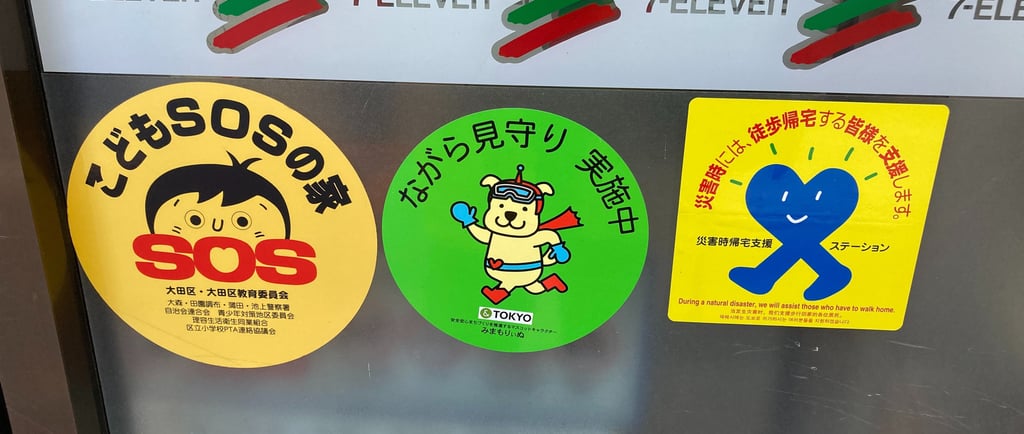
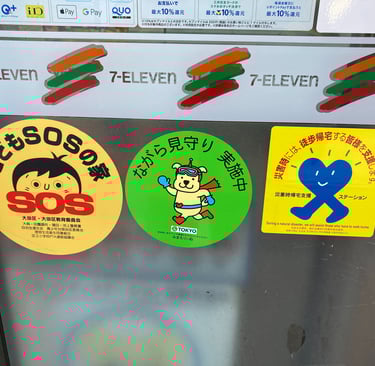
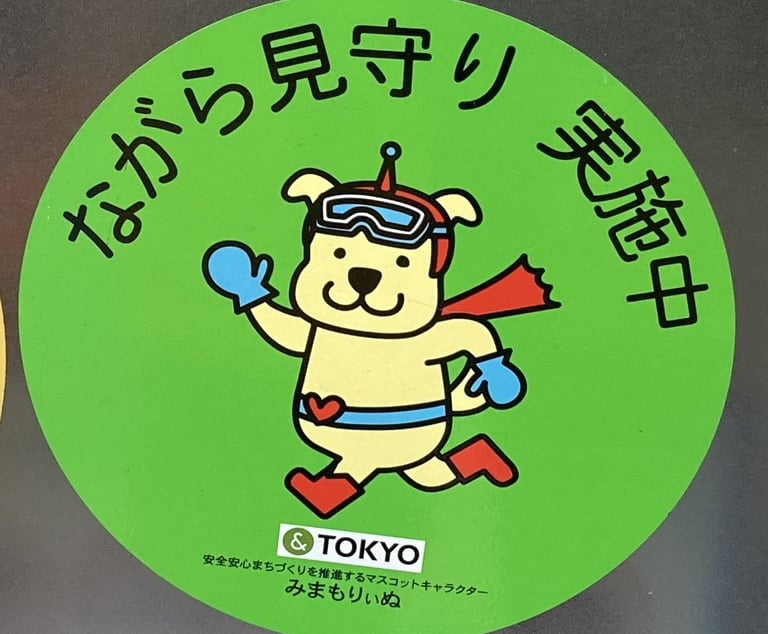
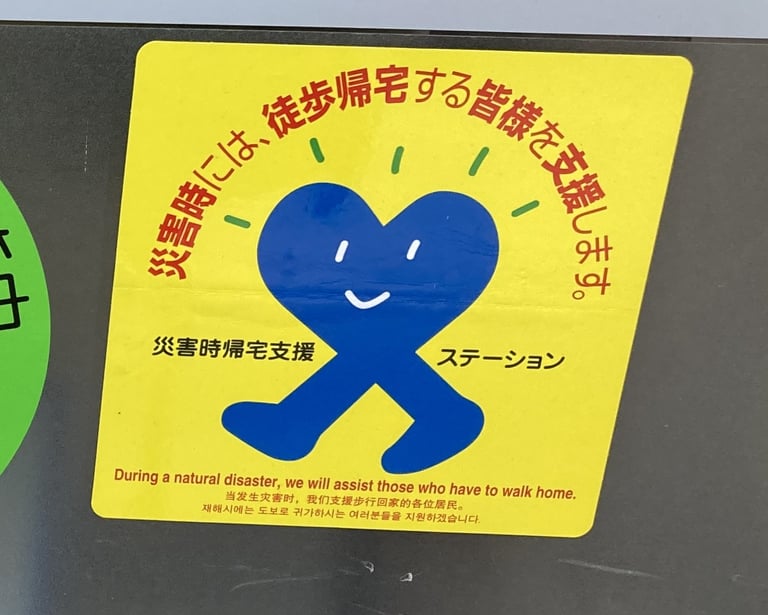
It was too crowded inside, so I stayed outside — and that’s when I noticed the stickers on the sliding doors.
On the glass was a simple decal: bold letters, a clear symbol that felt like a promise — If you are in danger, come inside.
It felt almost strange. A convenience store as refuge. Slurpees, onigiri, and sanctuary in the same place.
Historically, this began with Japan’s stalking crisis of the late 1990s and early 2000s. During that period, several highly publicized stalking murders shocked the country. Victims were followed home, attacked in public or semi-public spaces, or harmed while trying to reach police.
Public outrage led directly to Japan’s first Anti-Stalking Law in 2000, later strengthened multiple times. Police were told to treat “being followed” as a real emergency — and municipalities had to confront a practical question: Where could someone run immediately?
The answer became: konbini.
Kōban — local police kiosks — were often too far away or unstaffed at night. This is when many local governments began formal “run-in for help” agreements with 7-Eleven, FamilyMart, and Lawson.
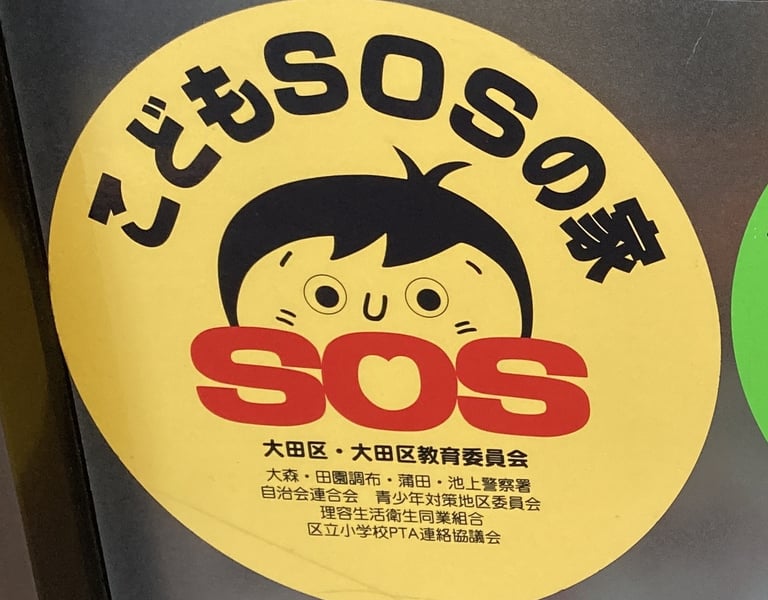
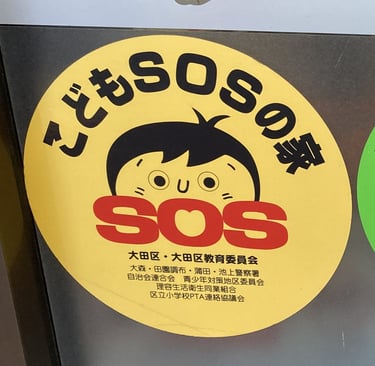
A second pressure came from crimes against children walking to and from school. Several well-known abductions and assaults in the 1990s and early 2000s led to the creation of “110 Houses” — private homes where children could seek help — along with designated safe walking routes. Even today, in many towns you’ll see stickers aimed specifically at children:
“If you are scared or lost, come in here.”
Disasters shaped the system just as much as crime. The 1995 Kobe Earthquake and the 2011 Tōhoku Earthquake and Fukushima disaster made one fact unmistakable: konbini often stayed open when everything else shut down. They had supplies, power, information, and were among the first functioning businesses after catastrophe.
I saw this myself at a local FamilyMart in Ōta-ku after the flooding of 2025. Thank you, FamilyMart.
These events pushed konbini from being merely “crime refuges” to becoming all-purpose community safety hubs — which is why you now often see SOS signs, AED notices, and disaster information displayed together.
All of this compressed into one small sign on a glass door:
Kakekomi 110 (駆け込み110番) — “Run-in 110.”
Many convenience stores display a version of the same message:
If you are in danger, come in here and we’ll call the police for you.
Recently, I was in more rural areas such as Takao and Hachiōji, and Mary and I found ourselves standing in front of several kōban. The paint was peeling, windows clouded with age, bicycles leaned against the wall — some with flat tires, as if they had been there for years. Inside: no one. Just a desk, a phone, and a map of streets I would never quite memorize.
Between these two small structures — the bright, humming konbini and the quiet, aging kōban — lies a deeper story about how Japan has adapted to its changing world.
The kōban system was born in a different Japan: slower, smaller, more intimately connected. Officers knew their neighborhoods the way shopkeepers knew their customers. A police box was not just a post — it was a node in a living social web. You went there if you were lost, if your bicycle was stolen, or if you simply needed directions or reassurance.
But cities grew taller, nights grew longer, and life grew faster. People commuted farther. Neighborhoods became less tight-knit. The kōban remained, like old sentinels, but their role quietly shifted. Many are no longer permanently staffed, especially in rural areas where a single officer might cover miles of countryside. You arrive, find the door closed, and feel the faint echo of a system that once was.
And yet, help did not disappear. It simply moved.
It moved into the konbini — those bright, ever-present islands of light that dot Japan like constellations. The stores that never sleep became the new civic infrastructure: places where a frightened child could run, where a woman being followed could step inside, where a tourist lost in a rainstorm could ask for guidance. After the great disasters — Kobe in 1995, Tōhoku in 2011 — these same stores became lifelines: points of information, shelter, and stability when everything else felt fragile.
In a way, this is profoundly Japanese. Instead of building something entirely new, the country repurposed what already worked. Safety woven into everyday life. No grand monuments — just stickers on glass doors, quiet agreements between businesses and police, and a shared understanding that community is not only the job of the state.
When I stand in front of an empty rural kōban now, I don’t see abandonment. I see a relic of an earlier rhythm of living — and beside it, often just down the road, a glowing konbini that has taken up the mantle.
Two structures. Two eras. One continuous idea: that help should never be far away.
And when the sliding doors of a 7-Eleven whisper open at midnight, I understand that in Japan, safety often arrives not with sirens, but with a polite chime and the soft hum of fluorescent light.
Kakkoii Adventures
A couple navigating life's changes, making intentional choices, and living the life made possible.
STAY ConnectED
© 2026 - All rights reserved.
Making room. Choosing what's next. Living the life those choices make possible.
Join us for our twice-monthly newsletter as we share the choices, changes, and adventures along the way.