
A Day in Sancha
Where Tokyo Still Breathes
2/11/20262 min read
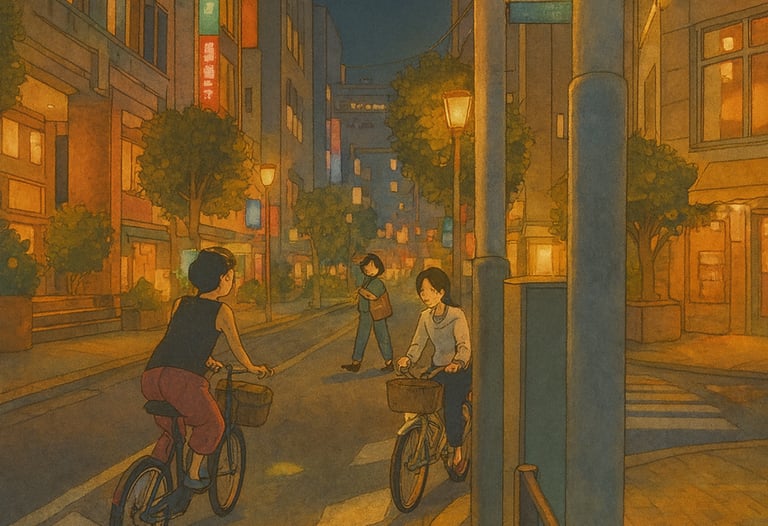
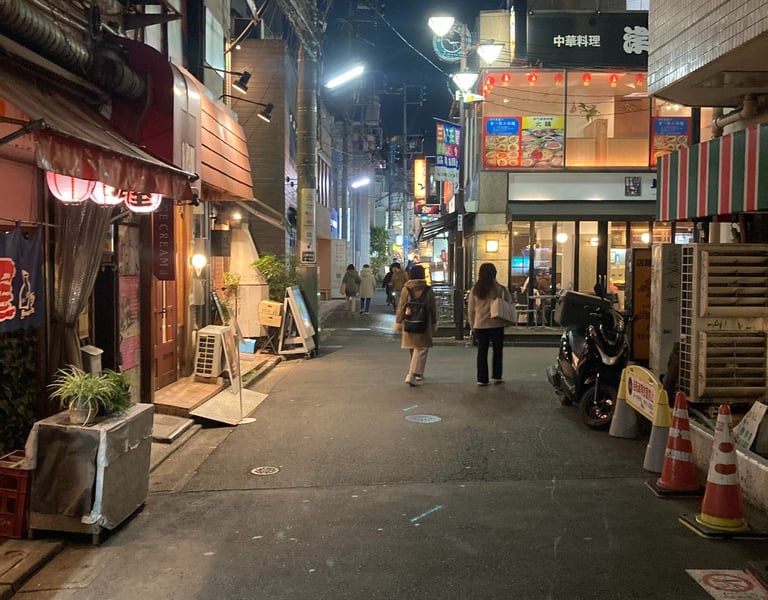
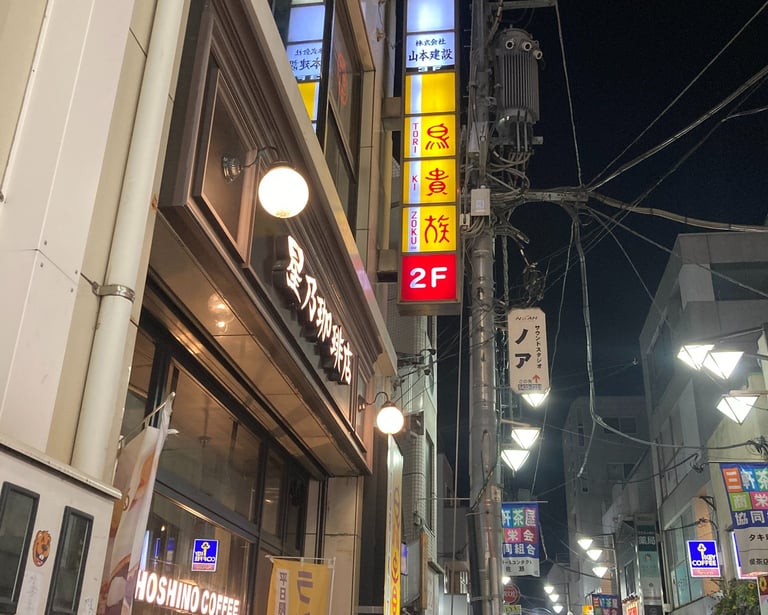
One of our favorite cities in Japan is Sangenjaya. We love it because it feels like Tokyo where people actually live — vibrant, cozy, a little messy, and deeply charming. Sangenjaya (三軒茶屋), a name that means “three teahouses” — or “Sancha,” as locals call it — blends everyday Tokyo with very cool Tokyo. It feels genuinely real rather than touristy: not a polished theme-park version of Japan, but lived-in, textured, and human.
It’s a neighborhood where many Tokyoites actually live. You’ll find tiny back-street bars, family-run ramen shops, and quirky cafés tucked into narrow lanes. The area carries big-city energy on a small, walkable scale.
We’ve been based in Sancha for this trip, which has given us time to wander slowly. We’re only minutes from Shibuya — a place we visit often — yet Sangenjaya feels far more grounded and approachable. The nightlife is relaxed rather than overwhelming, filled with small izakaya, jazz bars, and hole-in-the-wall places where conversation spills out onto the street.
One of our favorite places to eat is Torikizoku (鳥貴族), located near Sangenjaya Station. It’s part of a popular chain of yakitori and izakaya-style restaurants with all-you-can-eat and drink plans at set prices — and excellent lemon sours. Their ūron-hai (oolong highball) is among the best you’ll find: light, refreshing, and just a little bitter from the tea.
An izakaya (居酒屋) is similar to a casual neighborhood pub where drinks and shared dishes are served.
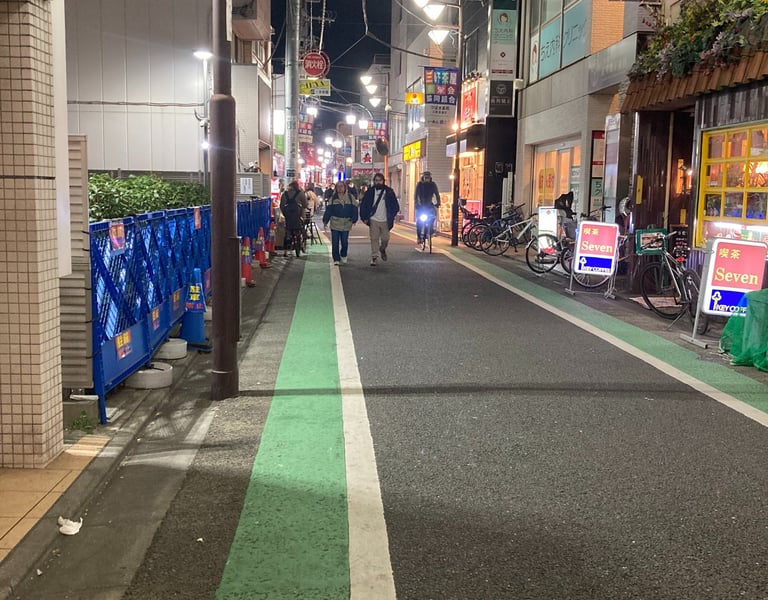
What I love most are the hidden, walkable alleys. You can wander for hours and still stumble upon something new — a tucked-away shrine, a tiny gallery, or a local shop you somehow never noticed before.
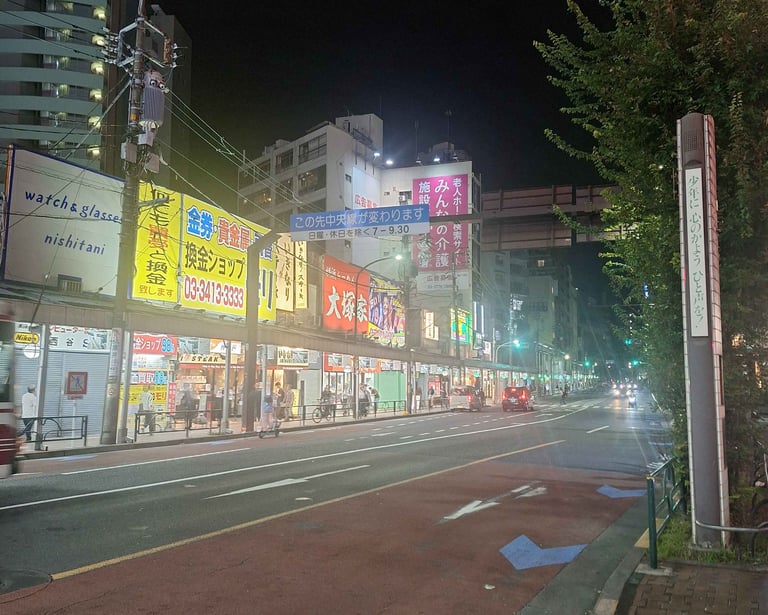
Then there’s Chazawa-dori. It’s Sancha’s main spine — a practical, lively surface street that runs between Sangenjaya and Shimokitazawa, threading through the quieter Chazawa and Kitazawa neighborhoods along the way. Shimokitazawa sits at the end of Chazawa-dori — a place we keep finding our way back to because of its thrift shops and street fairs.
Chazawa-dori has the warmth of a neighborhood street that people actually use every day. Life is always in motion here: cyclists weaving past, pedestrians drifting along the sidewalks, and the number 61 Odakyu Bus gliding down the road.
Then there’s the Setagaya Train Line (東急世田谷線). It feels more like a streetcar than a conventional train, running about 5 kilometers (3.1 miles) with ten stops between Sangenjaya and Shimo-Takaido. It marks its 100th anniversary in 2025. Riding it feels like stepping into an older, gentler Tokyo.
Above all, we’re drawn to Sancha’s creative, artsy spirit. Many artists, students, and performers live nearby, and the neighborhood is dotted with small galleries, live-music venues, and independent theaters. It’s a place that feels quietly alive — unmistakably Tokyo, yet entirely its own.
In the end, Sangenjaya isn’t a place that dazzled us all at once. It grew on us quietly — in the rhythm of its streets, the glow of its lanterns, the casual kindness of a neighborhood that feels both ordinary and quietly special. The first time I stayed here was for a week when settling my son into his dorm. I realized it’s the Tokyo a traveler notices only when they slow down: it’s not a postcard city, but a living one.
Mary and I will be leaving soon. We realize that after we’ve left, the thing we will miss most isn’t any single sight — it’s the feeling of simply belonging , even for a little while, to a place that was never trying to impress us in the first place.
Kakkoii Adventures
A couple navigating life's changes, making intentional choices, and living the life made possible.
STAY ConnectED
© 2026 - All rights reserved.
Making room. Choosing what's next. Living the life those choices make possible.
Join us for our twice-monthly newsletter as we share the choices, changes, and adventures along the way.