
Adventure to Monkey Island
Where the Monkeys Never Were
SHRINES AND TEMPLES
1/26/20263 min read
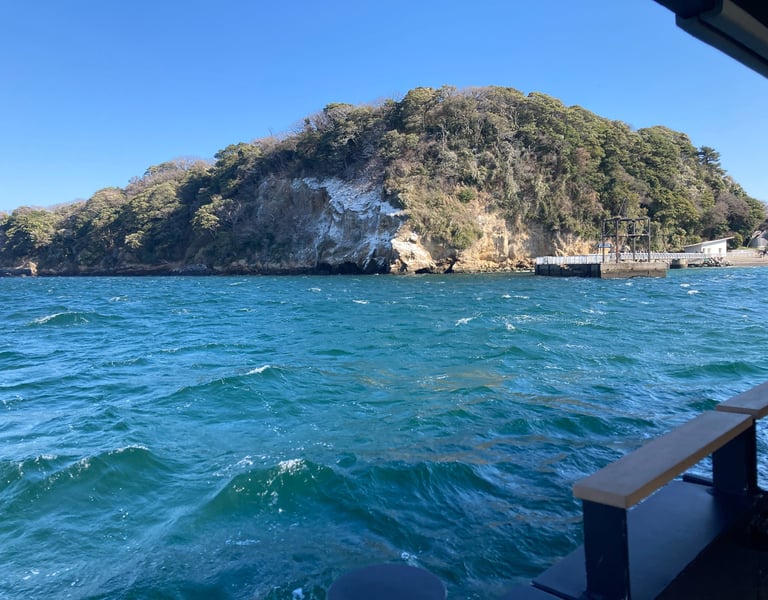
Mary and I went to Monkey Island, and there were no monkeys.
That isn’t a complaint. I haven’t really cared for monkeys since I was four and my dad took me to the Chicago Zoo. Let’s just say monkeys are rude and inappropriate.
It’s merely an observation. Cat Island has cats. Rabbit Island has rabbits. But there would be no monkeys on this trip. The island itself sits in Yokosuka Harbor. As the ferry pulled away from its moorings and the diesel engine hummed, we could see it ahead — green, uneven, and smaller than expected. No movement in the trees. No shrieks or chatter. Only wind and the waves against the rocks.
Monkey Island, it turns out, has never really been about monkeys.
The island’s real name is Sarushima (猿島), literally “Monkey Island,” but the name comes from legend rather than wildlife. According to folklore, a white monkey once appeared to guide the Buddhist monk Nichiren safely across the dangerous waters of Tokyo Bay. In medieval Japan, monkeys were considered liminal beings — creatures that moved between worlds, messengers that appeared at moments of transition.
The monkey did not live there.
It arrived, guided, and vanished.
The island kept the name anyway.
The ferry ride takes barely ten minutes — just long enough to feel separated from the mainland, but not long enough to forget it. Yokosuka — orderly, modern, naval-gray — slips behind you, and suddenly you are stepping onto something much quieter.
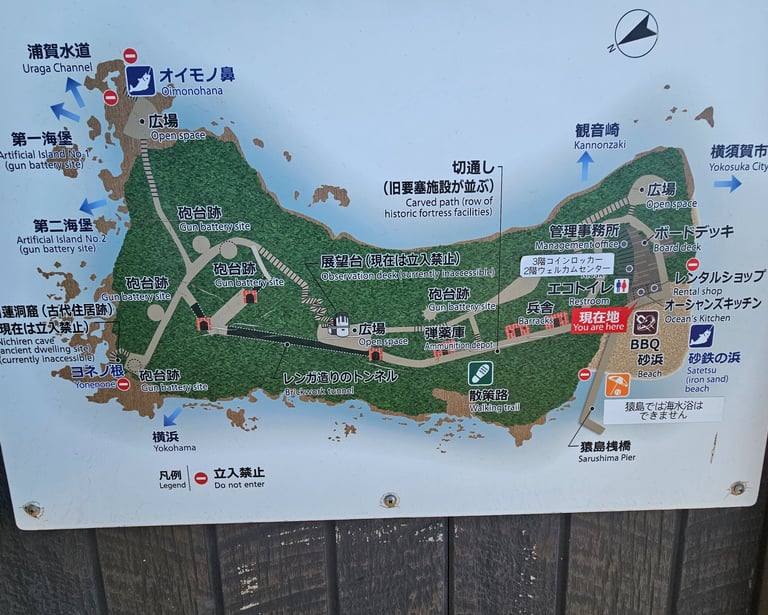
In the late nineteenth century, after Japan was opened to the world, the Meiji government recognized how vulnerable Tokyo Bay was. Sarushima’s position made it ideal for defense. The island was transformed into a fortress — artillery batteries, ammunition magazines, and observation posts forming part of a coastal network designed to protect the capital.
It is difficult not to notice how easily sacred places become strategic ones.
A monk once crossed these waters guided by a divine animal.
Later, soldiers stood here behind cannons.
Protection simply changed its uniform.
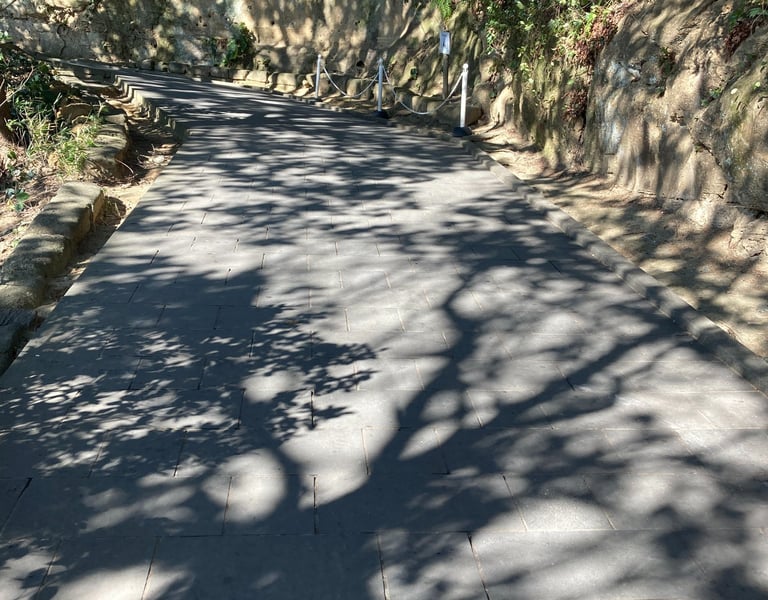
After World War II, the island was abandoned and remained closed — visible from shore but unreachable. When it reopened in the 1990s, it was not restored or rebuilt. Since then there have been new stairs and bridges installed for safety.
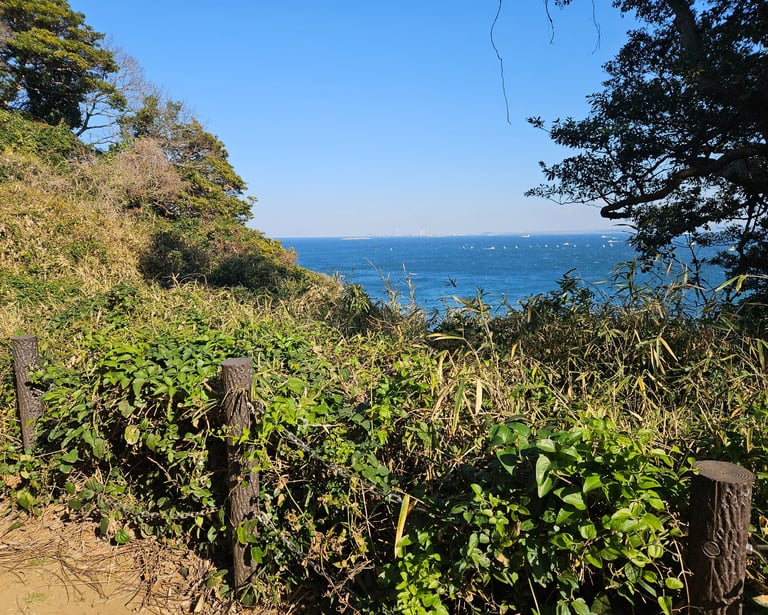
Standing inside an old gun emplacement, I looked out across the same water Nichiren once crossed. Tokyo Bay appeared calm, almost courteous. Ferries passed. Fishing boats raced into the harbor to deliver their catch for the next morning’s market.
What becomes of places once they have finished protecting us?
The monkeys never returned because they were never meant to. What remains is not the animal, but the idea it represented; guidance and safe passage.
Sarushima is a threshold.
As the day wound down, we caught the second-to-last ferry off the island. If you miss the final boat, there’s a button to push that somehow notifies the authorities you’ve been left behind. I’m not sure whether they come for you or simply offer advice on how to survive a night on Monkey Island.
When the ferry pulled away, the island receded quickly. Ten minutes later we were back among vending machines, traffic lights, and the sense of confidence provided by Google Maps.
Nothing on the mainland had changed. The harbor still hummed. The road signs still pointed forward. The world moved on as if it always had. But Monkey Island lingered somewhere behind us, not as a destination or a spectacle, but as a pause — a small place where name outlasted meaning, and where the journey itself proved to be reason enough for going.
If You Go
Sarushima (Monkey Island) is reached by ferry from Mikasa Pier in Yokosuka, near the battleship Mikasa. Take the Keikyū Line to Yokosuka-Chūō Station, then walk toward the harbor. The boat ride takes about ten minutes.
Wear comfortable shoes; paths can be damp and uneven. There are no shops on the island, and winds are often stronger than on the mainland. Ferry service is seasonal and limited in winter.
And don’t worry if you don’t see any monkeys.
You weren’t meant to.
Kakkoii Adventures
A couple navigating life's changes, making intentional choices, and living the life made possible.
STAY ConnectED
© 2026 - All rights reserved.
Making room. Choosing what's next. Living the life those choices make possible.
Join us for our twice-monthly newsletter as we share the choices, changes, and adventures along the way.