
Crossing The Stroad
Sometimes the Easiest Walk Is Crossing the Stroad
3/3/20264 min read
Before I begin, I just want to say that I do love the United States. I always look forward to returning home and the largely carefree lifestyle we enjoy here. It’s nice to be able to buy a turkey for Thanksgiving — not that easy in some places.
My beef is with the stroads.
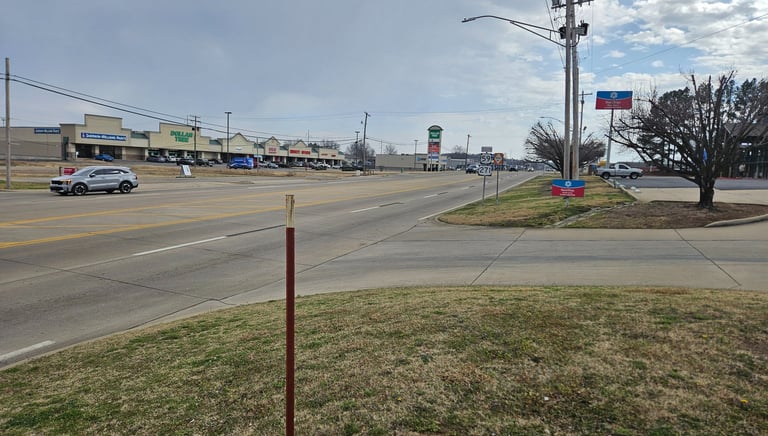
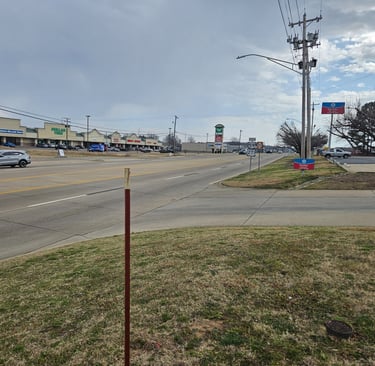
If you’re not familiar with the term, a stroad is a type of roadway that tries to function both as a high-speed road for moving cars between destinations and as a local street serving businesses, but ends up doing neither well. The word itself combines “street” and “road,” and it describes the wide commercial corridors common across much of the United States, especially in the South and Midwest. They’re lined with hotels, big-box stores, gas stations, and vast parking lots, usually separated by four to six lanes of traffic that a pedestrian must somehow navigate.
Stroads typically have higher speeds, frequent driveways, and long distances between safe crossings. Even when sidewalks exist, they often feel like an afterthought.
Seriously — they’re a danger, a nightmare, and I hate crossing them.
That’s why even a short distance — like going from a hotel to a store across the road — can feel much longer and more stressful than walking in a place built at human scale.
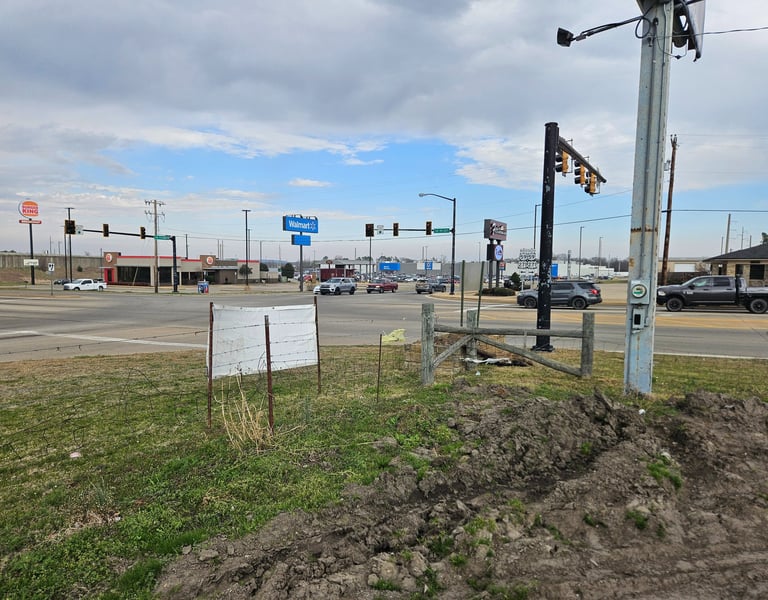
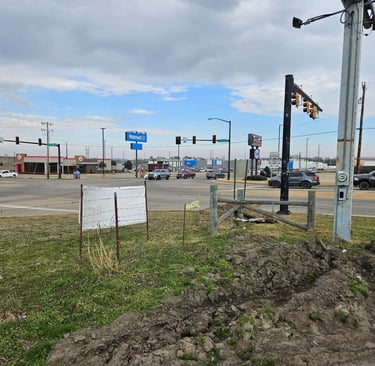
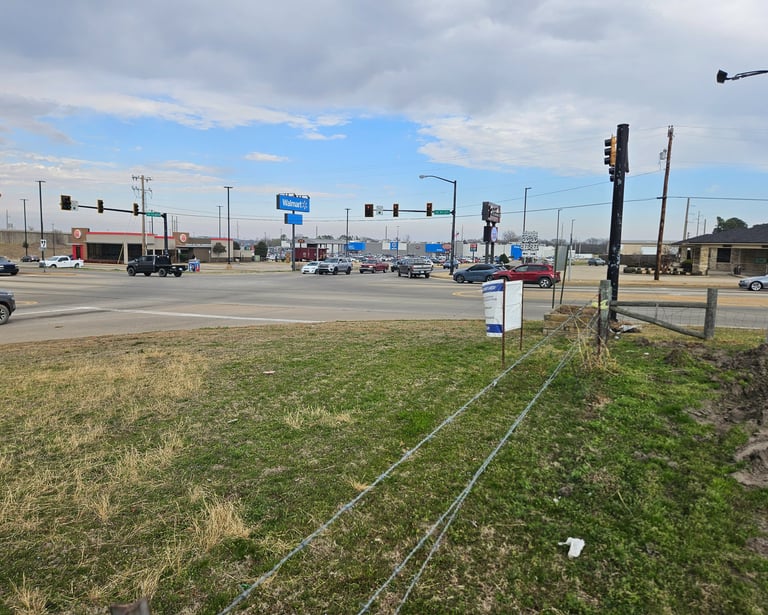
I stood on the balcony of my hotel, looking at the Walmart Supercenter on the other side of Highway 59 (Broadway Street), about 250 to 350 feet away — roughly a twentieth of a mile. It was right there. I could see it. It was my albatross.
I wanted a sandwich, and Mary had the car.
Cars rushed past in steady bursts — engines loud, tires humming against asphalt — five lanes of movement between me and the entrance: two northbound, two southbound, and the center turn lane, which you really don’t want me to get started on. The crosswalk signal was there, technically, but the distance felt longer than it should have. The sun was still high. The parking lot was wide and mostly empty in that particular American way, the building set far back as if human bodies were an afterthought.
For a moment, I considered just going back to the room.
A few weeks earlier, in Tokyo, I had walked for miles after dinner without even noticing the distance.
That contrast stayed with me.
In Japan, walking rarely feels like effort. It feels like a continuation — the natural way you move from one part of the day into the next. You step out of a train station, follow the current of people down a narrow street, pass restaurants glowing with warm light, convenience stores humming softly at the corners, bicycles leaning against railings, apartment windows flickering above. Even when you don’t know exactly where you’re going, you keep walking because something always seems to be just ahead.
The city rewards motion.
Sometimes it’s something small — a vending machine in the quiet, a neighborhood shrine tucked between buildings, the smell of grilled food drifting out of a doorway. Sometimes it’s nothing more than the rhythm of footsteps around you. Other people moving with purpose creates a kind of reassurance. You’re not alone, but you’re not crowded either. You belong to the flow without needing to think about it.
At night, that feeling deepens. Tokyo after dark isn’t silent, but it’s calm — pools of light on sidewalks, low conversation, the distant sound of trains arriving and leaving. You’re aware of your surroundings, but relaxed inside them. Alert without tension. It’s a surprisingly peaceful state to carry in a city that large.
Back in the United States, my nemesis — the Walmart across the road — felt different long before I consciously analyzed why. The space between me and the building wasn’t designed for walking. It was designed for cars, which I actually love for many reasons. Wide lanes encourage speed. Parking lots create distance. Buildings sit far back from the street, separated by asphalt buffers that prioritize convenience for drivers over comfort for pedestrians. Even when sidewalks exist, they often feel provisional — as if walking is permitted, but not expected.
Your body notices these signals immediately.
Humans evolved to pay attention to movement and exposure. Fast-moving objects trigger caution. Open spaces without shelter create subtle vulnerability. When you combine speed, distance, heat, and noise, the nervous system interprets the environment as effortful before you take a single step.
In Tokyo, the opposite signals dominate. Streets are narrower. Buildings sit closer. Destinations appear frequently. Other pedestrians are always present. Movement feels predictable. The brain concludes, almost instantly: this is a place for people.
There’s another layer too — one that has less to do with design and more to do with identity.
When I walk in Japan, I’m not just going somewhere. I’m inhabiting a version of myself that feels curious and open — a traveler, an observer, someone paying attention. Walking becomes part of the experience itself. It carries a narrative.
Walking across a suburban road to buy a sandwich is purely transactional. No discovery waits in the parking lot. No story unfolds between curb and entrance. The brain calculates effort against reward and quietly resists.
The distance hasn’t changed.
The meaning has.
What surprised me most, after several trips, was how quickly perception shifts. Returning home from Japan, American spaces sometimes feel louder, harsher, and more spread out than I remember. Distances seem longer. Traffic feels more aggressive. Nothing actually changed — only that I had spent time in an environment where movement felt easier, more natural, more human-scaled.
Once you experience that contrast, you start to recognize it everywhere.
Cities that invite you to walk.
And places that don’t.
We do have walkable places in the United States. One of the best examples is my hometown of Pasadena, California. It has a similar feel — small shops, coffee houses, bookstores, and a functioning transit system. You can move through the city without thinking too much about it. The environment supports you instead of fighting you.
And that, I think, is the real difference.
Sometimes the hardest walk in the world isn’t across a city. It’s across the street. And one day I’ll cross that street. I will eventually cross the road to Walmart one day. The sandwich will be great. The trip may be forgettable. But the hesitation has stayed with me, because it revealed something simple and easy to overlook: Sometimes the hardest walk in the world isn’t across a city on the other side of the world. It’s across the street in your hometown.
If you liked this story, here are a few more inspiring tales you may enjoy!


Kakkoii Adventures
A couple navigating life's changes, making intentional choices, and living the life made possible.
STAY ConnectED
© 2026 - All rights reserved.
Making room. Choosing what's next. Living the life those choices make possible.
Join us for our twice-monthly newsletter as we share the choices, changes, and adventures along the way.