
David Bowie, the Garden of Silence and Shochu
Shōden-ji Temple, Kyoto and a Chance Meeting
1/9/20263 min read

Today is January 9, 2026— a day late for his birthday (January 8) and nearly ten years to the day since David Bowie died at the age of sixty-nine (January 10 2016).
I met David Bowie once, briefly, in 1987. I was working as a security guard at Dino De Laurentiis Company Studios in Beverly Hills. The job wasn’t glamorous. It was meant to be temporary. Most days were spent standing still—watching doors, learning the rhythm of a place designed to keep other people moving. You learn quickly who belongs and who doesn’t, not by faces, but by how people carry themselves through space.
I’d been given clear instructions not to admit anyone who wasn’t on my guest list, and he wasn’t. It was a Sunday. He asked to speak with Barbara De Fina, the producer of The Last Temptation of Christ, in which he was slated to play Pontius Pilate. I told him she wasn’t in. There was no lobby where he could wait.
He understood. He smiled and left.
No argument. No demands. Just a quiet acceptance.
That’s how I met David Bowie—my rock idol—by turning him away from an office door. There was nothing theatrical about it. Security mattered. Doors stayed shut. I’ve regretted that moment ever since. It’s my albatross.
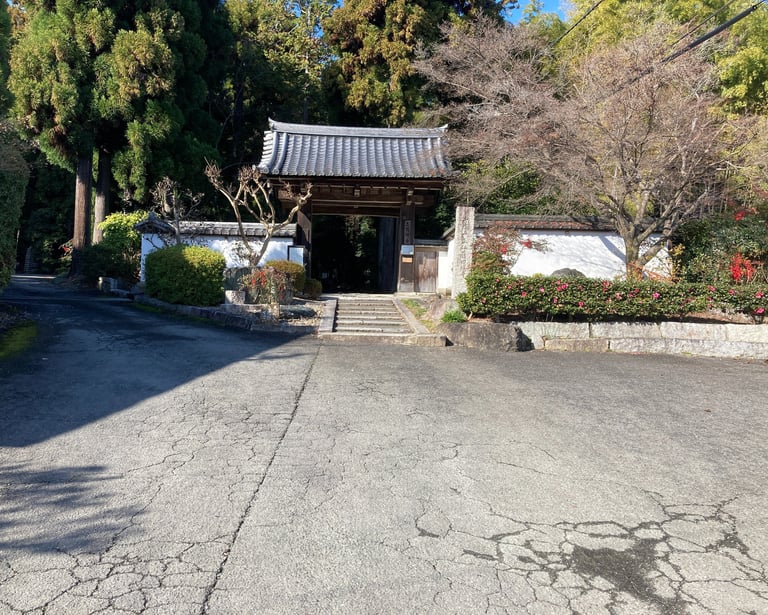
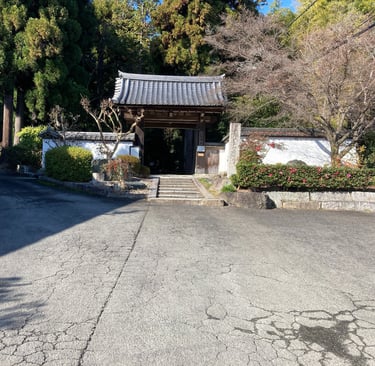
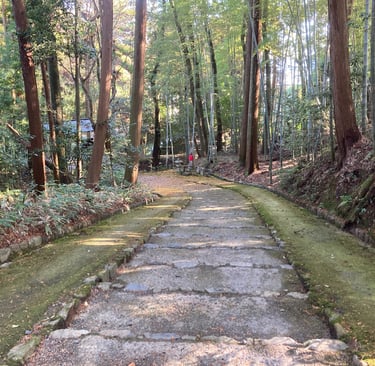
Now, nearly forty years later, I’m in Kyoto with my family. My daughter, Reaghan, uncovered Bowie’s connection to Shōden-ji Temple, a small Zen temple tucked into the hills. It was only a thirty-five-minute bus ride away.
We had originally planned to visit Shōden-ji to see its famous blood ceiling, but it had been quietly dropped from the itinerary. With this new piece of knowledge, schedules were rearranged, bargains struck, and suddenly we were on the bus—five hours before our Shinkansen would carry us back to Tokyo.
I researched the temple as we rode. Bowie’s long relationship with Japan. His repeated visits to Kyoto. His attraction to Zen gardens. His fondness for Shōden-ji in particular—for its beauty, its restraint, its calm. The place doesn’t dazzle. It refuses to.
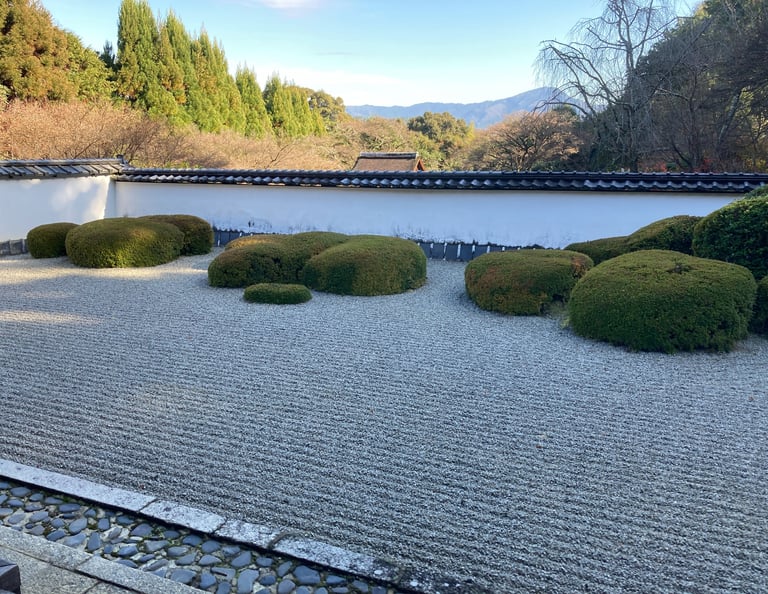
The temple’s Zen garden is often called The Garden of Tears. According to repeated accounts, Bowie was so moved by its beauty that he wept here. Standing in front of it now, that feels entirely plausible—not like mythmaking, not like celebrity lore.
Bowie was drawn to Japan not just for its pop culture, but for its ideas of space, absence, and impermanence. Shōden-ji feels built for exactly that sensibility.
The garden is officially designated by Kyoto as a cultural property and place of scenic beauty, yet it remains absent from most “Top 10 Kyoto” lists.
Bowie’s connection to Shōden-ji briefly entered the public eye when the temple served as the backdrop for a Japanese television commercial for Takara shōchū (similar to sake), accompanied by his instrumental piece Crystal Japan. The temple was chosen because Bowie was deeply touched by the serene beauty and tranquility of the garden. He agreed to do the commercial for several reasons, including his desire to showcase the grounds and bring his music to Japan—and, as he later joked in Japanese, the money was “very useful.”
Even then, the garden does most of the speaking. Bowie appears almost secondary to the silence.
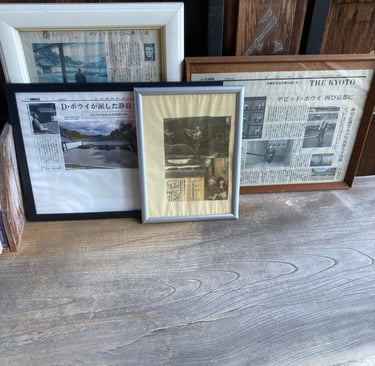
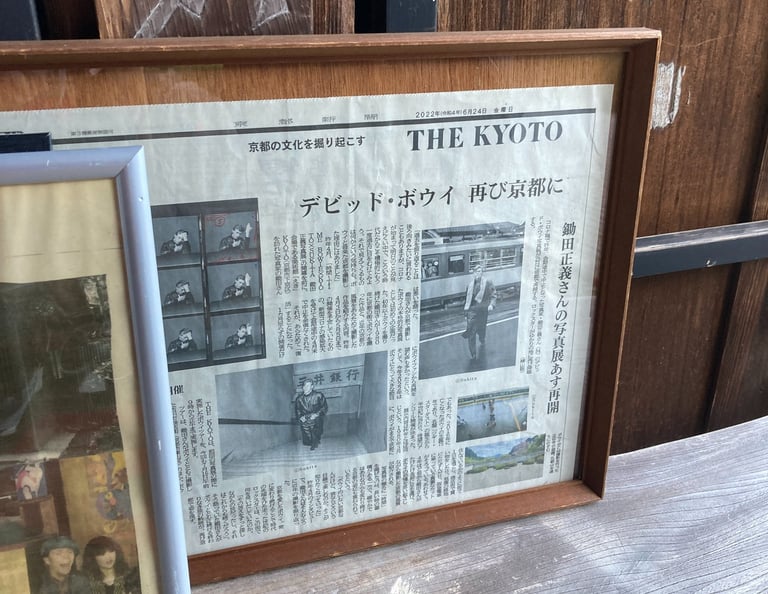
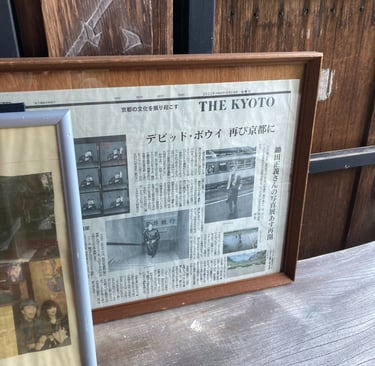
Photographs and newspaper clippings of his visit line the main hall overlooking the garden. Above them, the ceiling is made from the bloodstained floorboards of Fushimi Castle. I’ll save that story for another time.
The blood ceiling, the Zen garden, and the deep stillness of the temple form a quiet tension—a yin and yang. Bowie’s smiling face looks out from old clippings as you breathe in the mountain air and the silence settles around you.
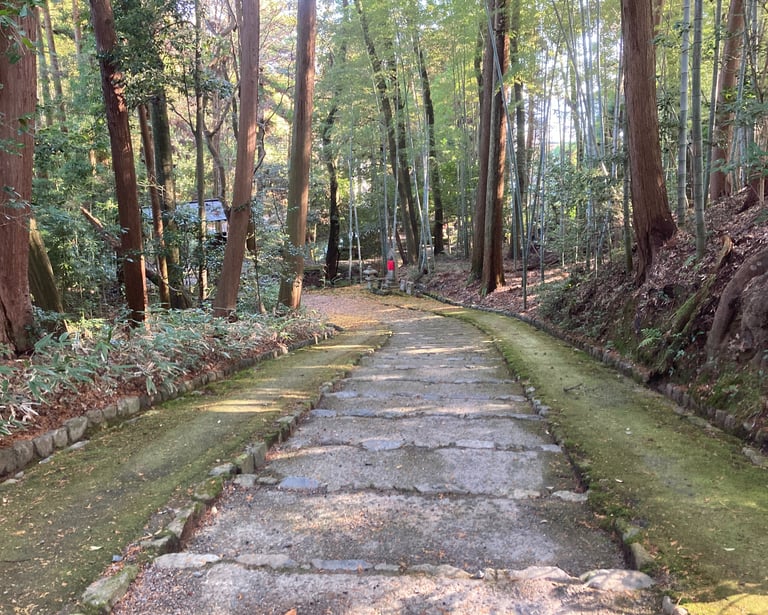
As we walked the grounds and eventually stood in the main hall, we realized that some doors close.
Others, decades later, quietly open.
Happy Birthday Mr. Bowie.
Kakkoii Adventures
A couple navigating life's changes, making intentional choices, and living the life made possible.
STAY ConnectED
© 2026 - All rights reserved.
Making room. Choosing what's next. Living the life those choices make possible.
Join us for our twice-monthly newsletter as we share the choices, changes, and adventures along the way.