
Doryodo
A Place Misremembered
SHRINES AND TEMPLES
1/29/20265 min read
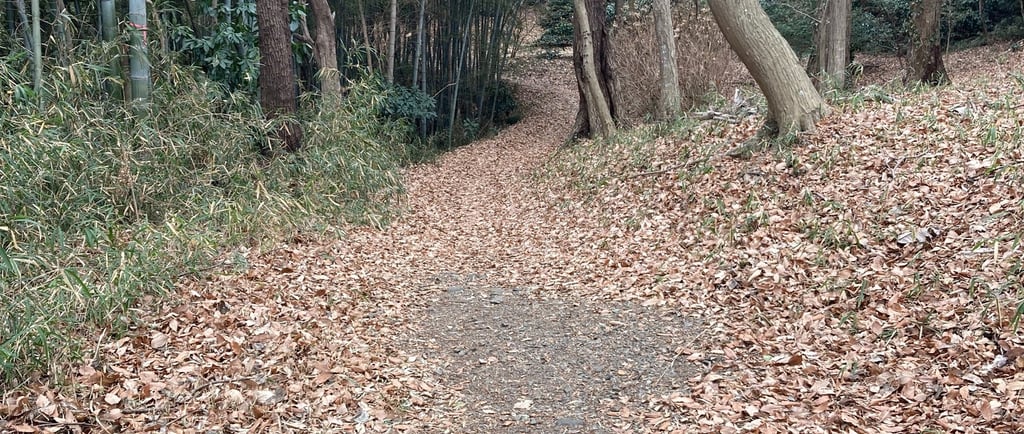
The day started bright, though slightly overcast. We took the #69 bus out of Hachiōji Station that morning—just Mary and me. It wasn’t a dramatic departure. No early alarm. No sense of pilgrimage. Just a local route, the kind people take to get where they’re going without thinking too much about it.
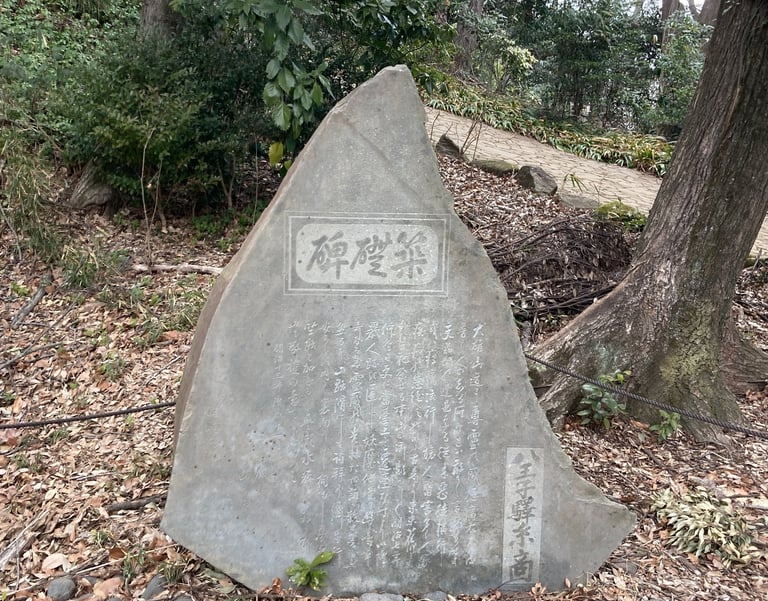
I wanted to take some pictures for a book I’m working on about the abandoned shrine, Dōryōdō.
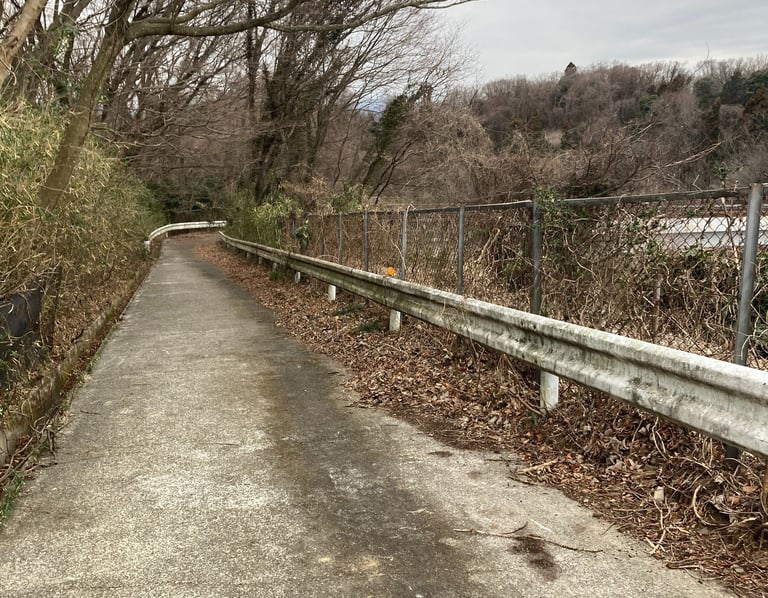
After a 30-minute bus ride, we got off at the Sakaue stop and started up the hill, walking about 300 meters. From there: a sharp left, then 200 concrete steps climbing straight upward. There were small landings meant for catching your breath, though I’m not sure they helped much.
This is where things went astray.
At the top of the stairs, the path splits. A wider dirt trail curves to the right; a narrower one veers left. The left trail was blocked, so we turned right and continued on, following Google Maps.
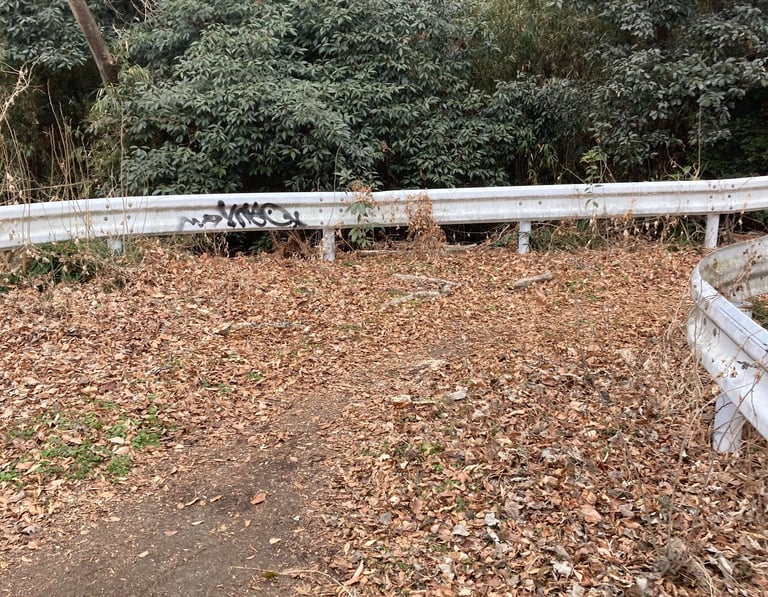
According to the map, another fork lay ahead—one branch left, the other right. The instructions said to go right, so we did. Almost immediately, the trail narrowed and dipped into what felt unmistakably like bear country.
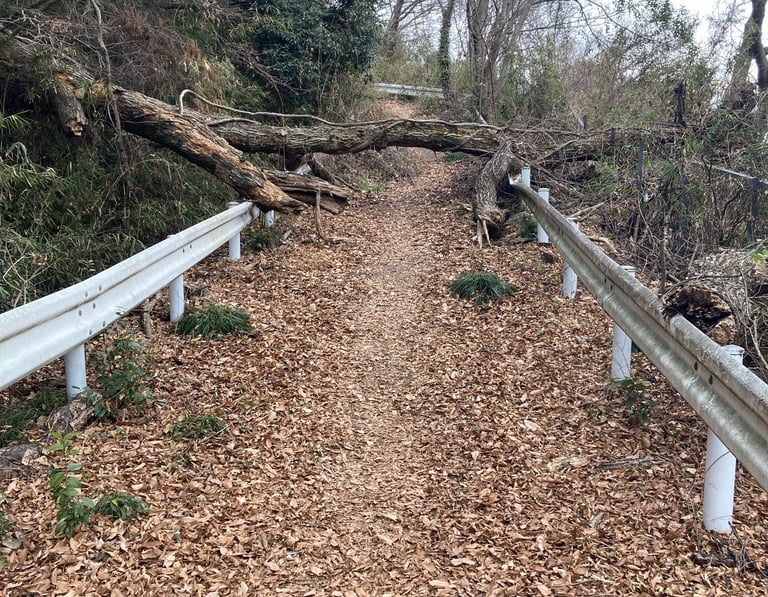
Japan has been dealing with a serious bear problem, and sightings had been reported in the area. Still, the map insisted: continue down the trail, cross the rusty bridge, duck beneath a fallen tree, and stay on the path—now shrinking fast and beginning to look less like a hiking route and more like a deer trail.
After climbing around another fallen tree and watching the trail disappear over a bluff, we realized we had no idea where we were. At that point, Google Maps stopped working entirely.
It was quiet out there. A small kinglet bird lingered nearby, its presence oddly ominous. We decided to turn back—down the deer trail, around the fallen tree, along the slippery slope, under the other fallen trunk, across the rusty bridge, and back up the leaf-covered path.
I was there for photographs. I just wanted a few pictures.
I’m working on an ebook about Dōryōdō, and I wanted images that felt honest. No dramatic angles. No theatrical framing. Just the place as it exists when no one is asking it to perform.
As we made our way back toward the stairs, Mary’s maps started working again. She found another fork we should have taken. At the second right, there was a left, and we followed it. Five minutes later, we arrived at the stairs to Dōryōdō—along a pleasant path, clean and free of fallen leaves.
Dōryōdō (道了堂) is a temple hall tucked into the wooded hills west of Hachiōji, just off the long ridgeline connecting Takao and Jinba. What remains can be reached either by climbing a second set of stairs or by following a wide dirt path that curves gently around the property. At the top, the ruins appear gradually—stone foundations, lantern bases, and steps leading upward to nothing at all.
The hall was built in the late Edo period, never large or prestigious. Its importance lay entirely in its location. It stood along an old mountain footpath used by pilgrims, woodcutters, and villagers moving between the Hachiōji basin and the Sagami side. It wasn’t so much a temple as a place of rest along Japan’s inland trade routes.
Its name—Dōryō, “the completion of the path”—explains its role clearly. This was not a destination. It was a pause. A place to bow, rest, and continue. Merchants often began their journey toward Yokohama in Hachiōji, with their first stop being Dōryōdō. Here they would prepare for a three-day hike, praying to the guardian spirit of the hills for a safe journey.
Legend holds that Dōryō Shōnin (道了上人), a guardian monk, was known locally in life for protecting travelers and guiding lost villagers in the mountains. He was believed to possess the strength to subdue or repel harmful spirits.
After his death, he was thought to have become a guardian spirit of the mountain. Travelers would rest here and ask for his guidance and protection.
When the silk trade ended, so did the flow of travelers, and the need for the hall ceased to exist.
During the Meiji era, Buddhism lost state protection. Mountain travel declined. New roads bypassed old paths. Rail stations pulled villages downhill. The forest returned slowly, and by the early twentieth century, the site was already half-forgotten.
Then, in 1923, a woman was murdered nearby.
The details mattered less than the setting. An abandoned religious site became associated with violence.
After that, locals avoided the area at night. Parents warned children away. The grounds gained a reputation—not because anything kept happening, but because nothing ever repaired what happened once.
Postwar Tokyo expanded outward, but this pocket remained untouched. No shrine replaced the hall. No memorial reframed the past. Nothing softened the site.
By the 1960s and ’70s, Dōryōdō appeared in haunted-Tokyo books and student dare hikes. Rumors grew. Stories blurred. Physically, nothing changed.
And yet, online, Dōryōdō is often presented as something else entirely.
You can find videos of self-described ghost hunters wandering the grounds, whispering into cameras, manufacturing tension where none exists. They repeat inflated claims—that hundreds died here, that the site is cursed, that something waits in the trees. None of it holds up. The exaggerations aren’t frightening so much as uncomfortable, like watching someone mistake volume for understanding.
And that troubles me, because the property has its own history that deserves to be remembered. It played an important role during the development of Japan’s silk industry.
What gets lost in all that noise is the truth.
Dōryōdō isn’t a horror story.
The land doesn’t cast fear. It asks for attention.
By the time Mary and I turned back toward the city, the clouds had thickened overhead, flattening the afternoon into shades of gray. It felt right. Dōryōdō does not reveal itself under the spotlight. It belongs to soft light—to ordinary weather, to moments when nothing is trying too hard to be seen.
Those were the photographs I came for.
Not proof of something supernatural, but evidence of something quieter: a place that deserves to be remembered accurately, not sensationally.
We didn’t come here to be frightened, or to conquer anything by walking here. I just wanted some photographs so that Dōryōdō can be remembered properly in history.
And that, somehow, is enough.
Kakkoii Adventures
A couple navigating life's changes, making intentional choices, and living the life made possible.
STAY ConnectED
© 2026 - All rights reserved.
Making room. Choosing what's next. Living the life those choices make possible.
Join us for our twice-monthly newsletter as we share the choices, changes, and adventures along the way.