Gero City
Hot Springs, Tatami and Frogs
2/26/20263 min read
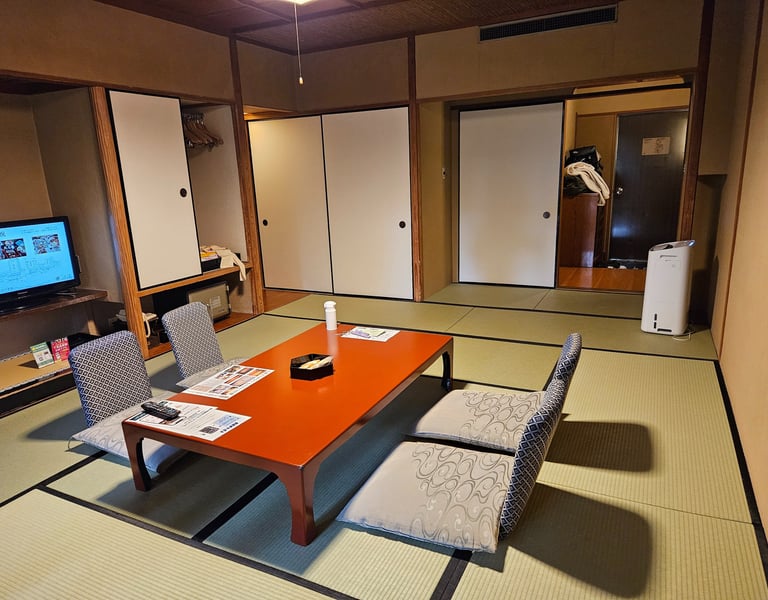
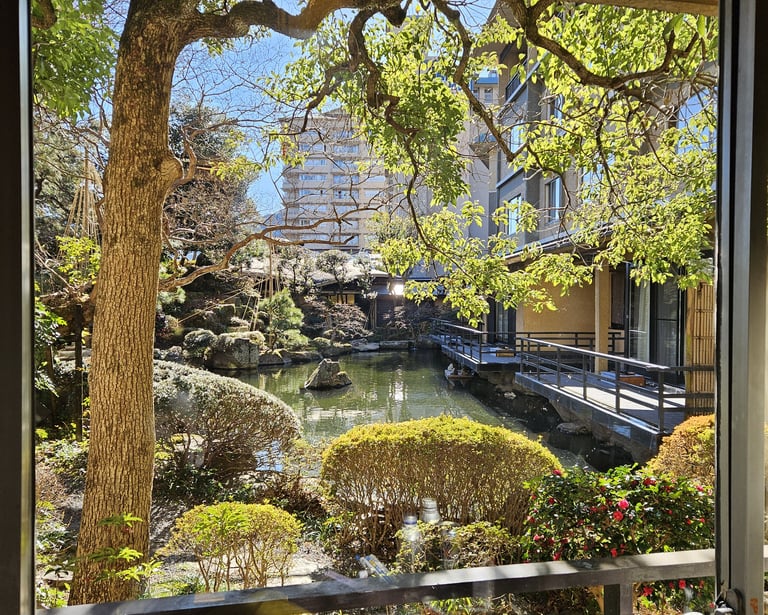
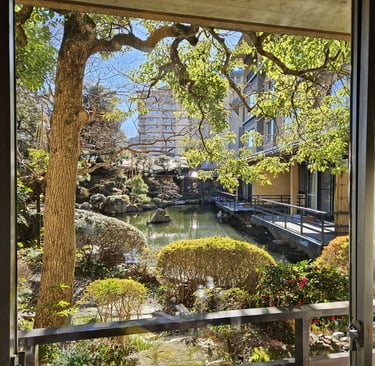
When you think of a traditional Japanese hotel, you usually picture what’s called a ryokan — rooms with tatami mats on the floor (a bit like a padded futon, and surprisingly comfortable), rice-paper sliding doors, and maybe a small Zen garden with a koi pond nearby. Yeah… we don’t usually stay in places like that. We tend to book standard hotels instead, mostly because of the cost.
Traveling with Liam and Reaghan makes things even trickier. It’s hard to find a single room that will sleep four adults, so we usually end up booking two business-style rooms, which are… very small.
The kids were getting ready to head back to school. Christmas and the Western New Year had passed, and they were due back in just a couple of days. We wanted to squeeze in one more trip before they had to hit the books. Reaghan suggested a town called Gero.
There’s a popular story that says the name Gero (下呂) comes from the sound a frog makes — something like “gero-gero” in Japanese onomatopoeia (similar to “ribbit” in English). The story gets repeated a lot because the town sits along the Hida River, with wetlands nearby, and frogs are common in the area.
But it isn’t actually true. Historians consider it a folk explanation that appeared later, simply because the sound and the place name happen to match. Older records suggest the name came from a pre-modern pronunciation that eventually evolved into “Gero.” It’s a very cute story — just not an accurate one.
Still, it probably stuck because rural towns love memorable origin stories. The people of Gero embraced the frog connection, and today you’ll see frog statues and stuffed mascots — Gero-Gero-chan (ゲロゲロちゃん), their beloved amphibian — all over town. Honestly, I suspect this charming nonsense played a role in our decision. It felt like a good place for one last holiday adventure.
Gero City (下呂市, Gero-shi) is a small mountain town best known for its hot springs (onsen), located about 90 minutes to two hours from Nagoya by train. Legend says a white egret revealed the healing waters more than a thousand years ago. The town even has a sister-city relationship with Pensacola, Florida. Nice to know.
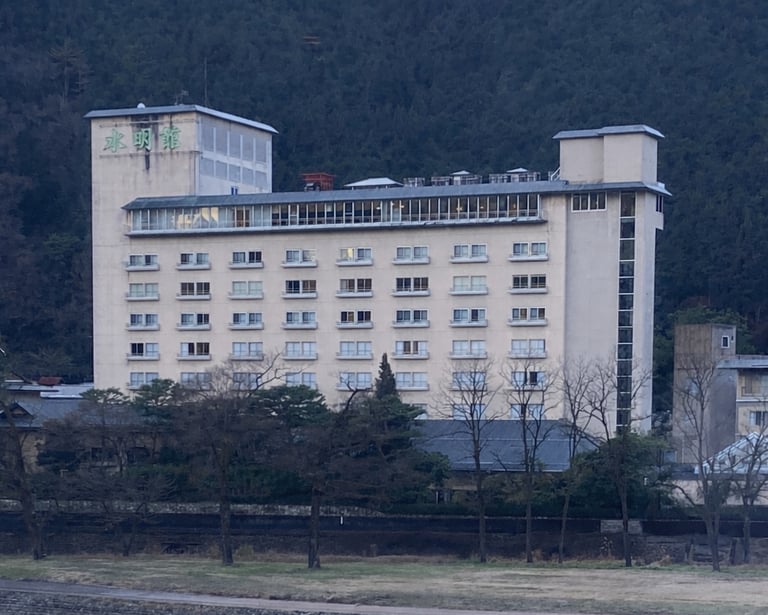
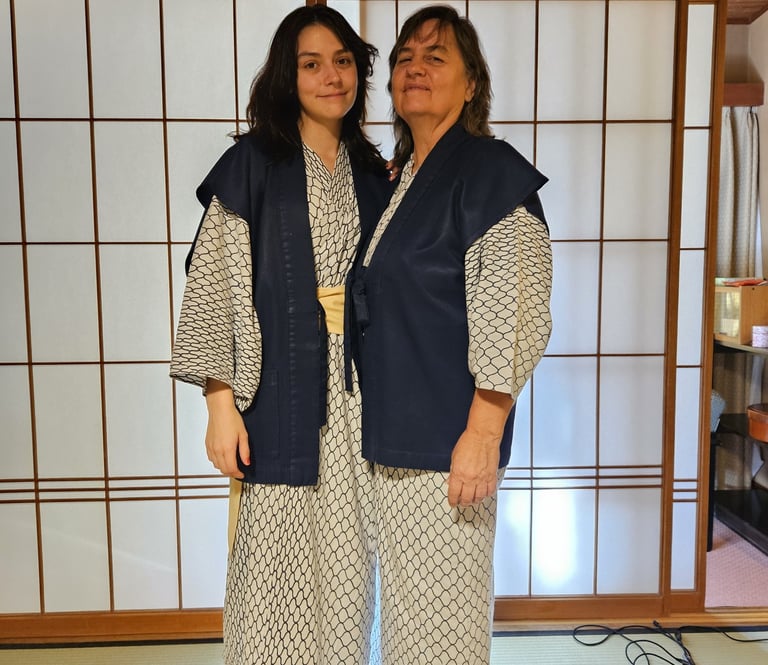
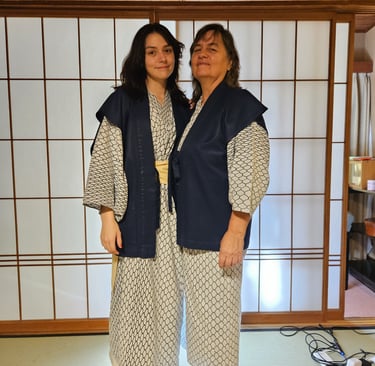
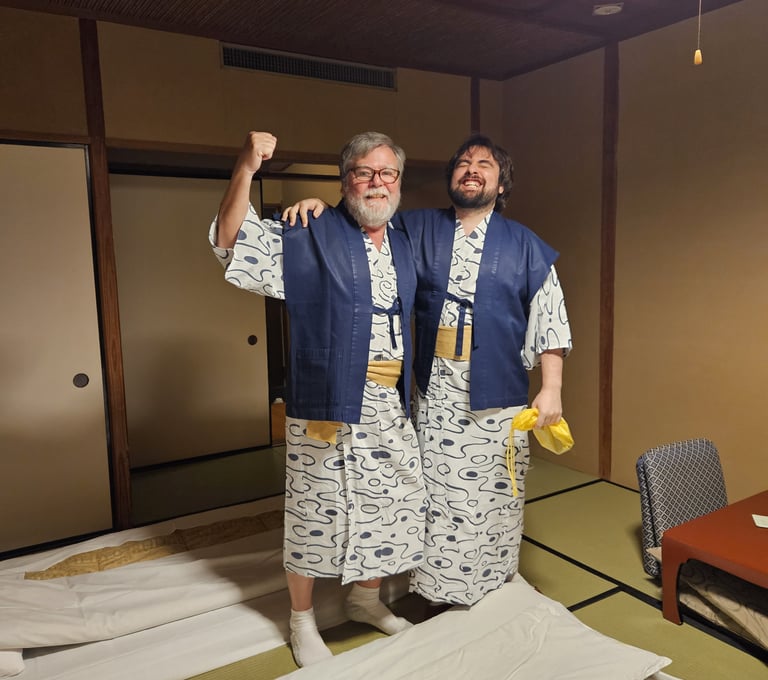
We stayed at the Suimeikan onsen resort, and for once we leaned fully into the experience — yukata, the casual cotton cousin of a kimono; tatami floors; and evenings spent sitting around a kotatsu, the low wooden table you slide your legs under for warmth. It felt equal parts unfamiliar and completely natural.
Liam tried one of the private onsen baths, which he highly recommends — essentially a large soaking tub filled with mineral-rich spring water. Mary and Reaghan explored the public women’s baths and seemed perfectly content to stay there indefinitely, emerging only for food and sleep. As for me, I mostly wandered the halls in my yukata, enjoying the quiet strangeness of it all — the soft shuffle of slippers on tatami, the faint mineral scent in the air, the sense that time had slowed down just a little.
We also skipped the traditional meal served in the room, called kaiseki (懐石 or 会席) cuisine. When meals are delivered privately to your room at a ryokan, it’s referred to as heya-shoku (部屋食), or “room dining.” We skipped this because these meals often feature fish and shellfish, and we aren’t fans of either.
Instead, we ate in the dining room or at restaurants around town. On the dining room wall were photographs of celebrities who had stayed at the Suimeikan — kind of like what you might see in New York or Los Angeles. It’s a throwback to the 1960s and 1970s Showa-era entertainment culture, loosely influenced by Western ideas.
One photograph looked like Osamu Dazai. He’s the author I spent much of this trip researching for a book, and he is known to have stayed at Suimeikan. The inn has hosted prominent cultural figures over the decades, including authors, actors, politicians, and entertainers from the Taishō through early Shōwa periods.
Dazai traveled extensively in the late 1940s during Japan’s difficult post-war years. He visited Suimeikan for rest and recovery — he struggled with both health issues and addiction. Hotel records show he stayed there during this period, and Suimeikan still commemorates notable literary guests.
Kind of cool.
What stayed with me most, though, was the quiet sense of convergence. Mary and I had spent months tracing Dazai’s life across Honshu, following fragments of his story from place to place, and without planning it, we ended up in one of the same spaces he once chose for refuge. At the same time, we were standing on the edge of another transition ourselves — watching our children move toward adulthood, trying to give them both roots and momentum. The Japanese have a word, en (縁), for the unseen threads that connect people, places, and moments across time. Sitting there in Gero, it felt less like coincidence and more like a gentle reminder that journeys don’t always move forward in straight lines. Sometimes they circle back, quietly linking past and present in ways you only recognize when you pause long enough to notice.