
Road to Hachi-Oji Castle
The Kindness of Strangers
2/27/20264 min read
The bus from Takao Station was small and unremarkable — the kind meant for local errands rather than journeys of consequence. We boarded at Stop 1 outside Takao station, the route marked “Shiro 01,” bound for the old castle. Shiro translates to “castle.”
Using Google Translate, we explained our destination to the bus driver, who reassured us that we were on the correct bus. We took seats at the rear, a habit we’ve developed because it gives us a little more room for our gear. Rural buses are rarely even half full, and this one was no exception.
The other riders went about their quiet routines. A few passengers sat with grocery bags at their feet, an elderly man gazed out the window, and every few minutes the driver called out another stop.
The road passed through ordinary neighborhoods — convenience stores, apartment blocks, traffic lights — but almost without noticing, the scenery began to shift. Houses grew farther apart. Trees pressed closer to the roadside. The hills rose ahead, green and layered, concealing whatever waited beyond them.
Ten minutes later, the driver pulled over along a narrow shoulder and opened the doors. We hesitated, confused, because this wasn’t the stop Google Maps had shown us. Ours was supposed to be another quarter mile up the road, but the driver — along with several passengers — assured us this was where we should get off.
The stop sat beneath a railroad bridge, which we appreciated as the weather turned and an incoming storm gathered overhead. When the bus pulled away, it took the last trace of city noise with it.
We stood there in the sudden silence, aware that we had crossed into a different kind of place. A Japanese man about our age had gotten off at the same stop and asked if we were going to the castle. When we said yes, he invited us to walk with him since he was headed that way too.
That turned out to be a mistake.
We exchanged a bit of small talk. He asked if we were Americans, and we asked if he was Japanese — a question that somehow made sense in the moment. It quickly became clear that we were slowing him down. After a few minutes, he politely moved ahead, striding up the road with purpose.
The next time we saw him, he was already a block away, waiting for us to catch up. When we couldn’t, he waved to get our attention, then pointed in the direction we needed to go.
Then he disappeared.
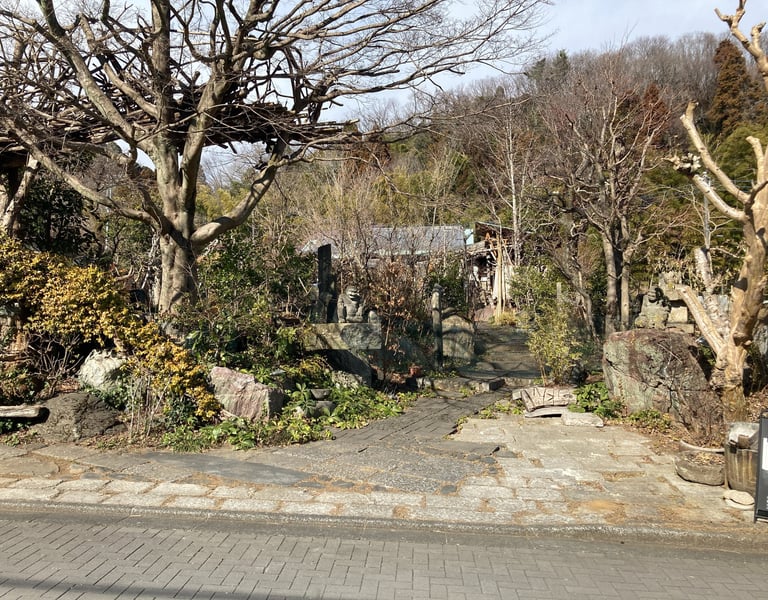
Wind moved through the grass. Somewhere far off, dogs barked. The air carried the faint scent of soil and vegetation — the unmistakable smell of farmland. Every available patch of ground was being used to grow green onions or cabbage.
The road toward the castle became a narrow lane slipping between houses and fields, curving gently uphill. If you did not already know history waited ahead, you might assume this was simply another farming village — the kind that exists quietly between more famous destinations.
It reminded us of Sekigahara or Shiroishi — history mixed with farmland just as it had been for centuries.
The neighborhood felt suspended in time. Houses were modest, functional, and weathered by decades of seasons — tiled roofs, sliding doors, sheds leaning slightly with age beside gravel driveways. Bicycles rested against walls with the casual permanence of things used daily for years. This ordinariness made the experience more profound.
There is a particular feeling that comes when traveling in Japan’s rural areas — a sense that the present and the past occupy the same physical space. The road beneath your feet may have been walked for centuries. The fields may follow boundaries drawn generations ago. Even the houses, though modernized, often sit on land held by the same families for decades, sometimes longer.
Walking there, it became easy to imagine another procession moving along the same route: retainers climbing toward a fortress, messengers carrying news, soldiers returning from campaigns. The modern world had not erased those possibilities. It had simply layered itself on top.
The farther we walked, the quieter it became.
Utility poles thinned out. Houses appeared less frequently. The road narrowed into something that felt more like a path than infrastructure. One moment we were walking between homes; the next we were stepping onto a trail that angled upward into trees. Gravel shifted underfoot. Often, history waits in places that look entirely ordinary.
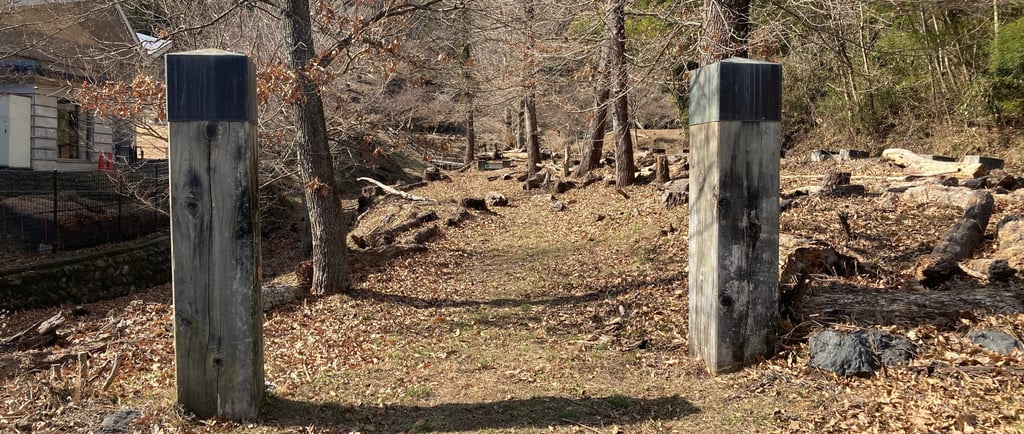
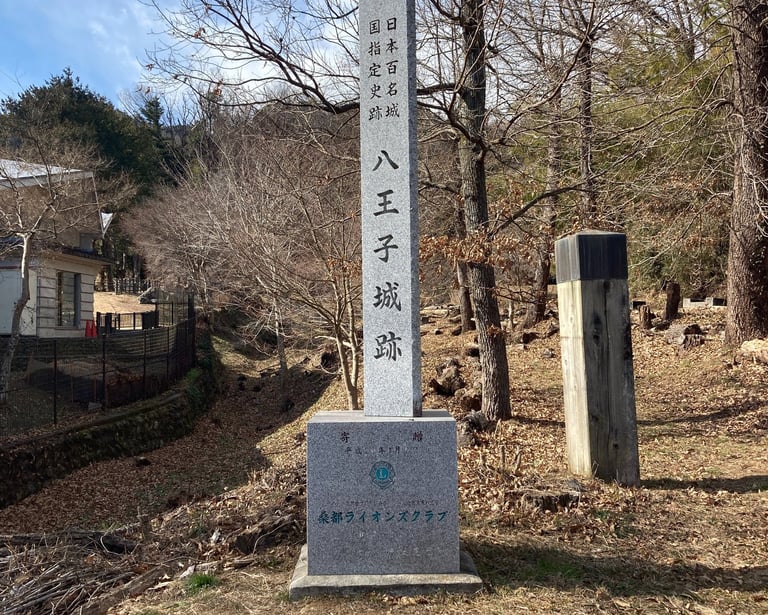
By the time we reached the first visible earthworks — shallow embankments, uneven terraces carved into the hillside — there was no dramatic reveal, no towering structure. Instead, there was recognition: we had entered a space shaped by human intention centuries earlier.
In travel, there are moments that feel arranged rather than accidental — small kindnesses that appear exactly when they are needed. Later as we walked a higher trail we crossed paths with our fellow traveler from earlier. He waved goodbye to us from a path below as he headed out. We were in bear country so we were happy to see he would be fine. We never learned his name, and he never learned ours, yet for a brief stretch of road our paths overlapped with quiet purpose. By the time we continued on alone, the hills no longer felt unfamiliar. The uncertainty had passed. We were no longer just visitors trying to find a landmark on a map. We were walkers on a path, moving steadily toward the castle.
Kakkoii Adventures
A couple navigating life's changes, making intentional choices, and living the life made possible.
STAY ConnectED
© 2026 - All rights reserved.
Making room. Choosing what's next. Living the life those choices make possible.
Join us for our twice-monthly newsletter as we share the choices, changes, and adventures along the way.