
Shoden-Ji Temple and the Blood Ceiling
The Ceiling That Remembers
1/10/20263 min read
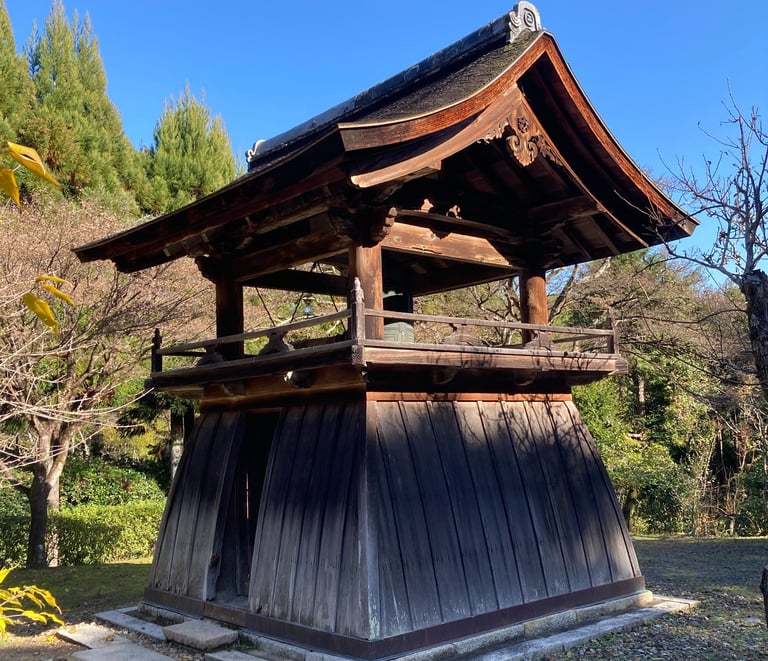
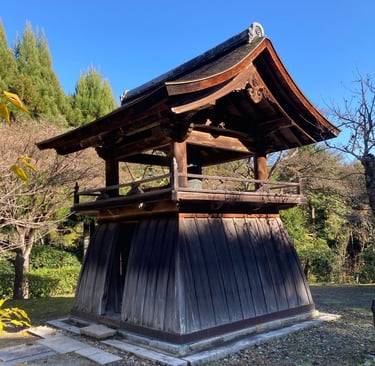
Today we’re in Kyoto on a kind of side quest. I’m working on a book about Tokugawa Ieyasu (徳川 家康), the warlord who ended Japan’s age of civil war. His formal title was Seii Taishōgun (征夷大将軍)—“Barbarian-Subduing Great Generalissimo,” usually shortened to shōgun—and he’s often compared to George Washington for the way he helped shape a nation out of internal conflict.
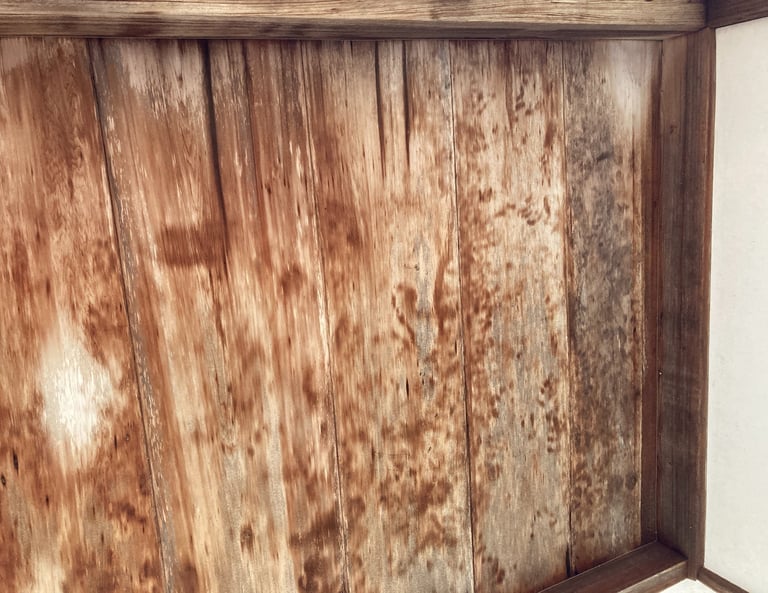
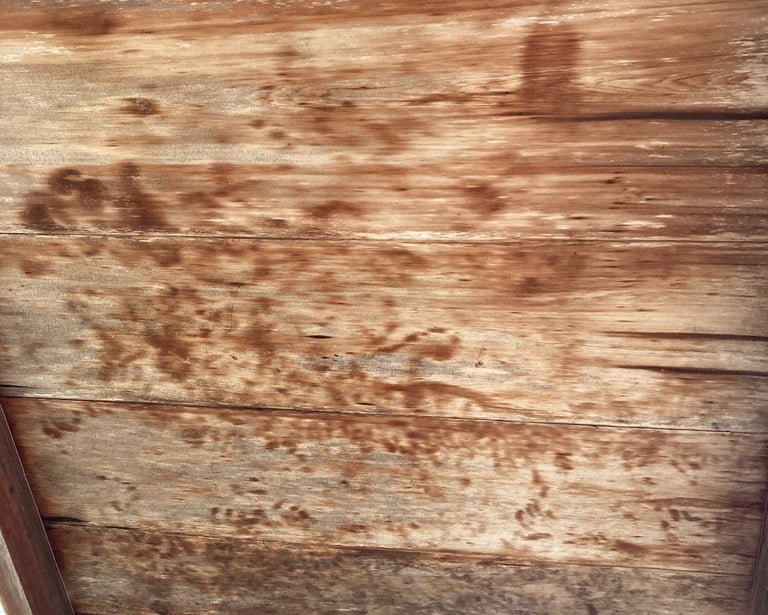
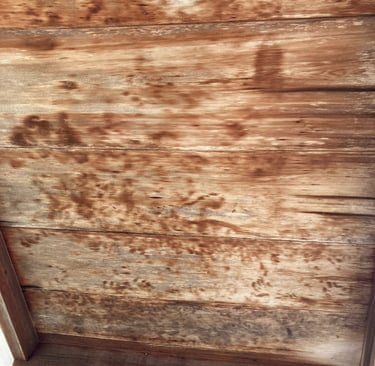
Tokugawa’s destiny was decided at the Battle of Sekigahara, a story I’ve written about before. There he defeated the Western Army led by Ishida Mitsunari. That victory explains why, standing inside Shōden-ji Temple, we find ourselves looking up at something unsettling: faint bloody footprints in the ceiling above our heads.
The quiet of the temple makes the contrast even sharper. Sunlight slides across tatami mats. A garden breathes beyond the open doors. And overhead, the wood remembers.
Those ceiling boards were once the floor of Fushimi Castle, soaked with the blood of Tokugawa’s loyalists in the summer of 1600. They weren’t moved here for spectacle. They were moved here so the dead would not be forgotten.
Fushimi Castle stood on the southern approach to Kyoto, controlling the roads and rivers that fed the capital. In the fractured Japan that followed Toyotomi Hideyoshi’s death, whoever controlled Fushimi controlled Kyoto—and whoever controlled Kyoto controlled legitimacy itself.
Two coalitions formed around that truth. Tokugawa Ieyasu gathered allies in the east. Ishida Mitsunari rallied Toyotomi loyalists in the west. War was coming, and both sides knew where it would be decided.
Tokugawa sent Torii Mototada, one of his most trusted retainers, to defend Fushimi Castle. He did not give him enough troops to win. He gave him enough to delay. Tokugawa needed time to assemble his army for the coming clash at Sekigahara.
It was a deliberate sacrifice.
There is an American parallel here. At Gettysburg, the rocky hill called Little Round Top served the same purpose—a thin, exposed position that had to be held not because it was strong, but because if it fell, everything else would collapse. Joshua Chamberlain’s regiment didn’t hold the hill because they could; they held it because they had to.
Fushimi Castle was Tokugawa’s Little Round Top.
It was also his Brooklyn Heights—the place where a doomed stand bought time for survival. In 1776, the Maryland 400 died holding off British troops so George Washington could evacuate his army from Long Island. Without that sacrifice, the American Revolution might have ended there.
Torii Mototada was playing the same role.
Tens of thousands of Mitsunari’s troops surrounded Fushimi. Inside were only a few hundred Tokugawa loyalists. Before the siege began, Torii wrote to Ieyasu, promising to hold for as long as humanly possible.
The castle burned. Walls collapsed. Defenders were driven back through corridors and chambers until there was nowhere left to go.
When defeat became inevitable, Torii and his men did not flee. They knelt where they stood and performed seppuku—ritual suicide—to avoid capture and dishonor. Their blood soaked into the floors. Hands pressed into wood. Armor fell. The building absorbed it all.
Mitsunari took the castle.
But Tokugawa took Japan.
The delay at Fushimi gave Ieyasu exactly what he needed. When the two armies finally met at Sekigahara, Tokugawa was fully assembled. Mitsunari was not. The result was decisive. Sekigahara became Japan’s Gettysburg—the battle that ended a century of civil war and set the nation’s future.
After Tokugawa’s victory, Fushimi Castle was dismantled. But the blood-stained boards were not discarded. They were carried to Kyoto’s temples and installed as ceilings.
In Buddhist thought, placing the dead above the living is not macabre—it is reverent. These planks transformed a place of slaughter into a place of prayer. What had been walked on in terror would now be contemplated in stillness.
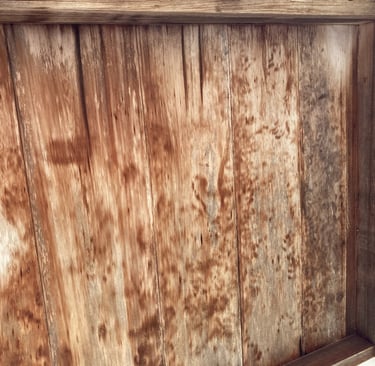
At Shōden-ji, faint stains still linger in the grain of the wood—not dramatic, not theatrical, just darker shadows where life once poured out. With a little imagination, you can almost see the hands and feet of men who never left the castle alive.
Standing beneath that ceiling today, in the quiet of a Kyoto afternoon, it is impossible not to feel the weight of it.
Fushimi Castle was never meant to survive. It was meant to hold just long enough. Like Little Round Top, like the Old Stone House in Brooklyn, it was a narrow place where minutes mattered and history balanced on the edge of collapse.
Two and a half centuries of Tokugawa peace were built on what happened on those boards.
And now those boards rest above our heads—not as relics, but as witnesses.
A ceiling that remembers.
We had come to Shoden-Ji to further understand modern Japan. Because to know where I am I need to know where I’ve been.
Kakkoii Adventures
A couple navigating life's changes, making intentional choices, and living the life made possible.
STAY ConnectED
© 2026 - All rights reserved.
Making room. Choosing what's next. Living the life those choices make possible.
Join us for our twice-monthly newsletter as we share the choices, changes, and adventures along the way.