
Standing in Winslow
Where the Song Actually Began
ARIZONA
6/29/20265 min read
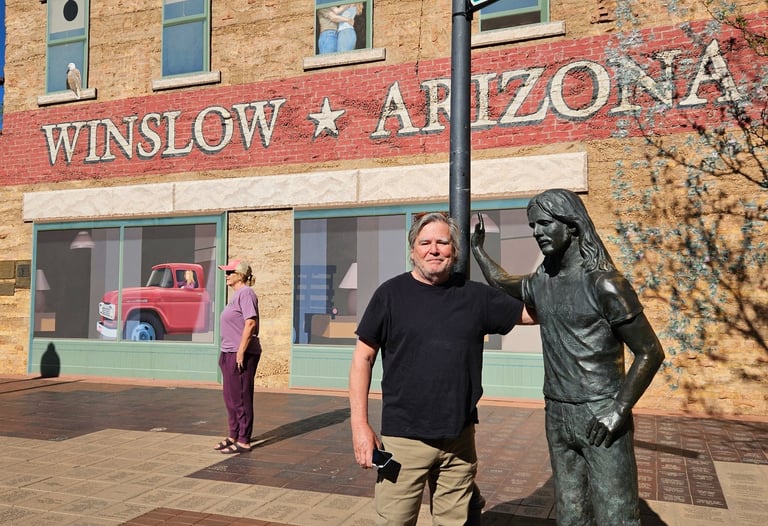
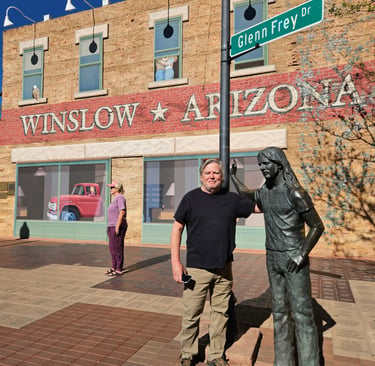
There’s a particular corner in Winslow, Arizona, that was made famous by a song from the early 1970s. I’ve been advised not to mention the title or use any of the lyrics, but the song's famous second verse places the narrator on a street corner in Winslow, Arizona, where he spots a woman in a flatbed Ford. That vivid image has become one of the most recognizable scenes in classic rock. If you were raised in the 1970s, you’ll know the song. It was the debut single by a band that would go on to become one of the biggest acts of the decade. Released in 1972, it launched the band's career.
Winslow is actually a pretty interesting town. If you've driven across northern Arizona, it's easy to think of Winslow as just "the town from that song." But it's actually one of the most historically interesting small towns in the state.
Winslow was founded in 1882 by the Atchison, Topeka and Santa Fe Railway. Businesses sprang up to serve railroad workers and travelers, and the town became an important transportation hub across northern Arizona.
When U.S. Route 66 opened in 1926, Winslow became one of its busiest stops. Motels, gas stations, restaurants, and curio shops lined the highway. Although I-40 bypassed the town in the 1970s, Winslow embraced its Route 66 heritage and has become one of the best-preserved Route 66 destinations in Arizona.
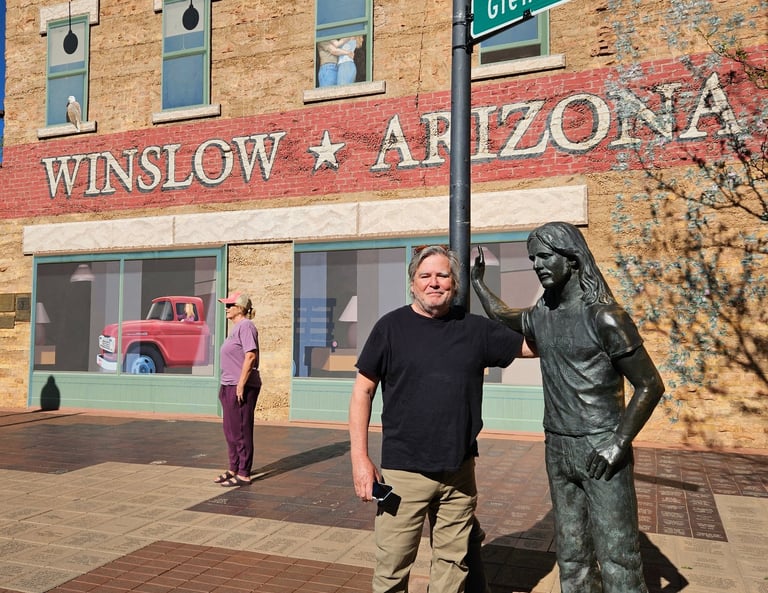
Today, it's famous for Standin' on the Corner Park, where visitors pose for photographs with a flatbed Ford and a statue of Glenn Frey. I've stood on this corner. Many people from my generation have made the same pilgrimage. Go to Winslow. Stand on the corner. Take a picture.
I grew up listening to this group and this song. It was fun to finally stand on this corner.
Not long afterward, I found myself driving past the Winslow exit on I-40. That's when it hit me. This corner, in this city that people flock to, is really no different from any other corner in Arizona. Why? Because it's based on a fictitious event that never actually happened. The corner gained its notoriety from the lyrics of a song. And yet people still flock here. Why?
Is it a nostalgia thing? Maybe. It is a tangible connection to a beloved song. Millions of people know the opening line. Even if they know the story is fictional, standing on that corner lets them step into the song for a moment and reflect on a time in their own lives.
People enjoy visiting places tied to stories. We do this all the time. Fans visit 221B Baker Street even though Sherlock Holmes never lived there. Movie fans seek out filming locations, and baseball fans visit the Field of Dreams Movie Site because of what it represents, not because the movie's events actually occurred.
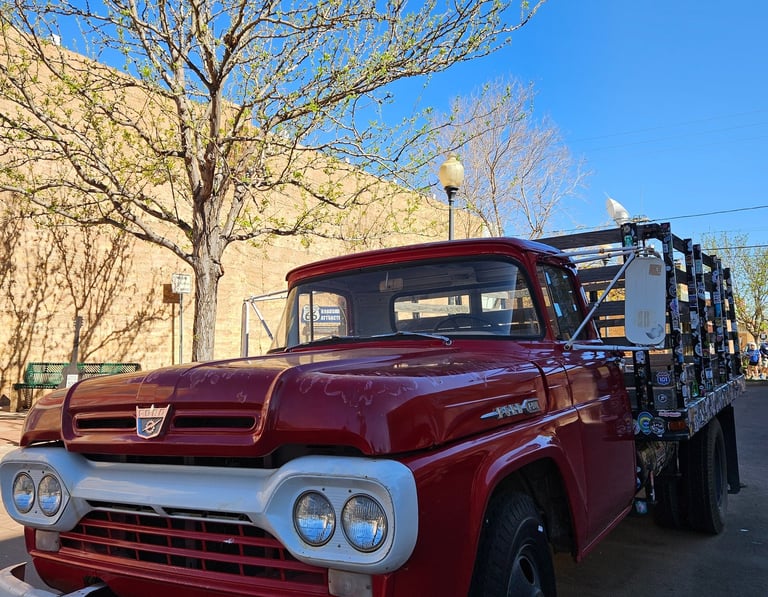
It's interactive. The park features a life-size bronze musician, a mural depicting the reflection of a girl and a flatbed Ford, and an actual vintage flatbed Ford parked nearby. Visitors naturally recreate the famous scene in photographs.
In a way, the park celebrates the power of a lyric rather than a historical event. The corner has become famous because people collectively decided it was worth visiting. Before the park was created in 1999, there was nothing particularly special about that intersection. Today, thousands of visitors stop there every year simply because a few words in a song turned an ordinary corner into a cultural landmark.
There's something almost poetic about that. The lyric gave the place meaning, and then the place reinforced the lyric. Even though the original scene was fictional, the corner itself has become real history through the people who keep coming to experience it.
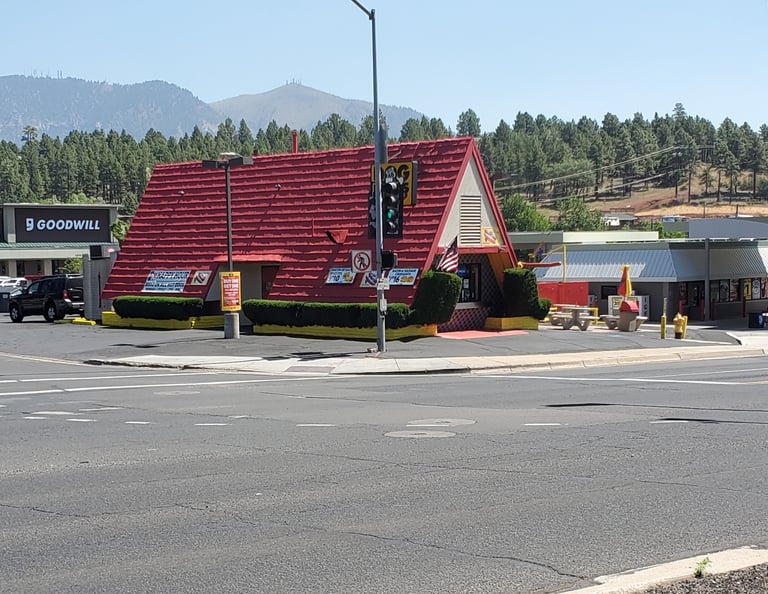
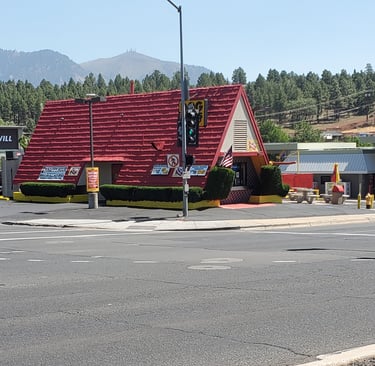
The kicker to all of this is that these opening lines are based on a real event that happened 60 miles due west in front of a Der Weinerschnitzel restaurant.
The song is actually based on some earlier work by Jackson Browne. Jackson Browne was a singer, song writer of the early 1970s. He has explained that the lyric was always "Winslow, Arizona," because he thought it sounded better in the song. However, the image of the girl slowing down in a truck actually came from East Flagstaff.
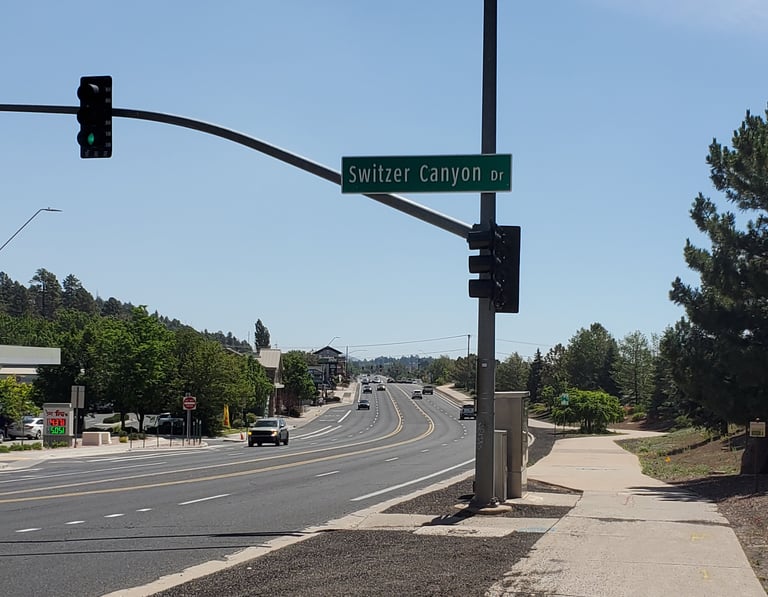
The location he identified was the former Der Wienerschnitzel on historic U.S. Route 66. Today, that site is occupied by Dog Haus, at the corner of Historic Route 66 (Business I-40/US 180) and Switzer Canyon Drive in east Flagstaff.
Browne recalled that the woman wasn't even driving a flatbed Ford—it was a Toyota pickup pulling out of the Wienerschnitzel. He shared that memory with Glenn Frey, who was his roommate at the time. Frey helped finish the song by turning this event into the now-famous lyric. So, Winslow gets the famous lyric and the tourist attraction and East Flagstaff gets credit for the real-life visual inspiration behind one of rock's most memorable lines.
In the end, it doesn't really matter that the scene happened in Flagstaff instead of Winslow. The song transformed an ordinary Arizona street corner into a destination known around the world. That's the power of a great story. Sometimes a few well-chosen words can give a place an identity that lasts for generations, inspiring millions of people to stop, smile, and become part of the story themselves.
If you liked this story, here are a few more inspiring tales you may enjoy!
Kakkoii Adventures
A couple navigating life's changes, making intentional choices, and living the life made possible.
STAY ConnectED
© 2026 - All rights reserved.
Making room. Choosing what's next. Living the life those choices make possible.
Join us for our twice-monthly newsletter as we share the choices, changes, and adventures along the way.