
“We Thought We Knew Where We Were Going—Until We Got There”
Leaving California and selling our home was the easy part, figuring out what came next surprised us how difficult it would be.
DOWNSIZING & TRAVEL LIFE
4/21/20265 min read

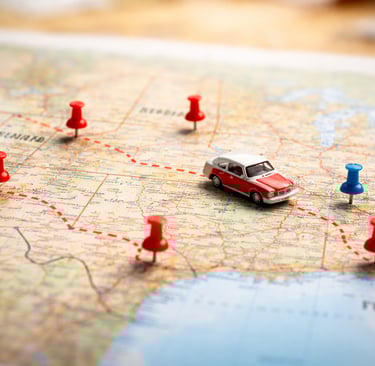
It’s been over a month since my last four posts, where I shared how we planned and organized our exit from our 30-year home in California. At the time, that felt like the hardest part.
It wasn’t.
Within days of the sale, we left the country to visit our children. When we returned to the U.S. in mid-February, we stayed in a hotel for a few days to recover from jet lag, then headed back to Oklahoma to visit my sister and regroup. We had a lot to organize—again.
For two weeks, we visited, helped my sister, took care of our cats, and went through our belongings once more. This second round of downsizing was even more difficult than leaving the house. These were the items we had already decided were worth keeping—our children’s mementos, personal keepsakes, things we thought we would carry forward into this next phase of life.
And yet, we found ourselves reducing again.
We went back to our familiar categories: give away, keep, and deal with later. We donated truckloads of everyday household items—things like cookware, dishes, towels, and blankets—knowing they could always be replaced if needed. What remained were the harder decisions: photos, books, memorabilia, and items tied to memory more than function. Some of those we kept. Others, we set aside for a later decision.
That process forced a realization—we still had more than we needed.
At the same time, we began taking a hard look at our financial future. Living on a fixed income means thinking carefully about the next 20 years, not just the next move. Leaving California was driven in large part by cost—especially taxes on our pension. But once we returned to Oklahoma and started preparing our taxes, we were surprised to see that even there, the tax burden was higher than we were comfortable with long-term.
So the question shifted from where are we going next? to where does it actually make sense for us to live?
We began expanding our search.
We were looking for something simple—a small, affordable home where our cats could stay comfortably, and where family could check in when we traveled. We even considered placing a small travel trailer on my sister’s property for visits. On paper, it sounded reasonable.
In reality, it was harder than expected to find a place that fit both our financial goals and our lifestyle.
We started evaluating different states.
Florida was one of the first. No state income tax, no tax on Social Security or pensions—it checked the financial boxes. But humidity, rising real estate costs, and overall climate made it less appealing. What ultimately pushed it off the table was the closure of an RV park that had previously helped travelers establish domicile there.
Next was Texas. Again, no state income tax and housing options within our price range. There was also a well-known RV park in Livingston that assists with establishing domicile for those living more nomadically. We headed to southeast Texas to explore the option.
But after arriving, dealing with severe weather and tornado warnings, and spending time in the area, it became clear this wasn’t a place we wanted to return to—let alone live. We decided against setting up domicile there.
Another major factor for both Texas and Oklahoma was something we couldn’t ignore: allergies. The humidity and environmental conditions triggered severe symptoms for both of us. It became obvious that without relying heavily on medication, we wouldn’t be comfortable living in either state.
So we made a decision—we headed west.
After storing our newly reduced belongings in a storage unit, we shifted into a new phase of the search. At that point, everything was on the table:
Buying a small piece of property, possibly with a modest structure
Living more nomadically in a van or RV while establishing domicile elsewhere
Renting a condo or apartment while we figured out where we truly wanted to settle
What followed was about four weeks of driving from state to state, city to city, trying to get a feel for where we might fit.
The best way I can describe that time is this: it felt like living in a fog.
Too many options. Too many variables. No clear answer.
At one point, we even circled back to the idea of homesteading in Oklahoma—it started to seem more feasible simply because it was familiar. But deep down, we knew we weren’t making a clear decision—we were reacting to uncertainty.
We needed to refocus.
As we continued west, we kept evaluating.
South Dakota came up as an option, largely because of how easy it is to establish residency—technically, a one-night stay. But even there, you still need a physical, livable address—not just a PO box—which made things more complicated than they initially appeared.
Texas remained off the table for us—not just because of weather, but also property taxes and the unpredictability of annual assessments.
Florida stayed in the “no” column for similar reasons as before.
Nevada, however, started to stand out.
No state income tax, and a more straightforward path to establishing residency with a 30-day stay. Instead of trying to navigate the uncertainties of setting up domicile through an RV park or mail service, we decided to rent a condo. It felt like a more stable and manageable approach.
Arizona was a close second—beautiful, especially with the Saguaro cactus landscapes—but even with lower taxes than California, it still didn’t make as much sense financially for our situation. We agreed it would be a place to visit and enjoy, not establish residency.
Through all of this, one thing has remained consistent: we have no regrets about leaving California.
What these past two months have shown us is that choosing where to live isn’t just about taxes or affordability. It’s about lifestyle, health, environment, access to services, and how you want to spend your time day to day.
We’ve driven through multiple states, explored different cities, compared costs, considered weather patterns, looked at housing, and thought about everything from medical access to walkability and daily activities.
It’s been an intense process—but also an eye-opening one.
For now, Nevada is our next step.
Not necessarily the final answer—but a step forward with more clarity than we had before.
In my next post, I’ll share more about what we discovered as we continued this search—and how our thinking began to shift as a result.
Reflection and Moving Forward
What looked right on paper didn’t always hold up in real life.
Taxes, affordability, and location mattered—but day-to-day comfort, weather, and health mattered just as much.We underestimated how difficult it would be to choose “what’s next.”
Leaving was clear. Landing somewhere new required more clarity than we expected.Too many options can slow you down.
Visiting multiple states and cities gave us perspective—but also created a kind of mental fog that forced us to step back and refocus.
This process is helping us redefine what “home” really means.
It’s no longer just a place—it’s a balance of lifestyle, financial sustainability, and how we want to live day to day.
“Leaving California after 30 years felt like the hard part. It wasn’t.”
“The last two months have felt like living in a fog—too many options, and no clear place to land.”
If you liked this story, here are a few more inspiring tales you may enjoy!


Kakkoii Adventures
A couple navigating life's changes, making intentional choices, and living the life made possible.
STAY ConnectED
© 2026 - All rights reserved.
Making room. Choosing what's next. Living the life those choices make possible.
Join us for our twice-monthly newsletter as we share the choices, changes, and adventures along the way.