
Tengu at Takao
On Our Way To Hachi-Oji
2/25/20263 min read
With the time we had remaining in Hachiōji, Mary and I decided to visit the ruins of Hachiōji Castle. Earlier in the trip, we had explored the Takiyama Castle ruins, an early stronghold of the Hōjō clan. Located outside the city center, Takiyama lies about four miles from Hachiōji Castle in a straight line — roughly 20 to 30 minutes by car, or about an hour by bus.
We traveled by a combination of train and bus, beginning at Hachiōji Station on the JR Chūō Line (中央線). From there, we boarded a Rapid/Local train bound for Takao (高尾) and arrived about 10 minutes later at Takao Station (高尾駅). The fare was approximately ¥170 (about $1.30 USD).
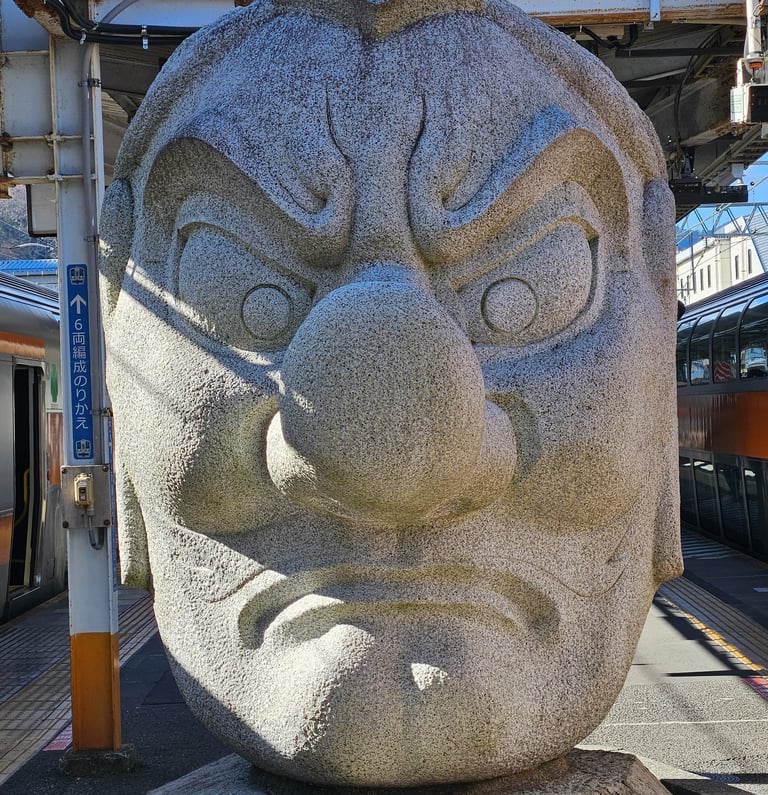
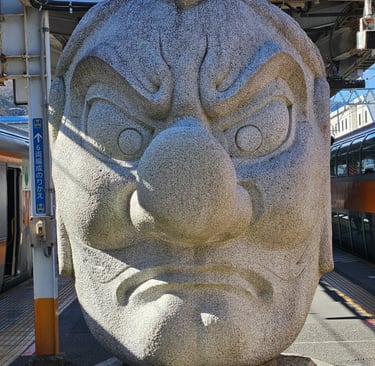
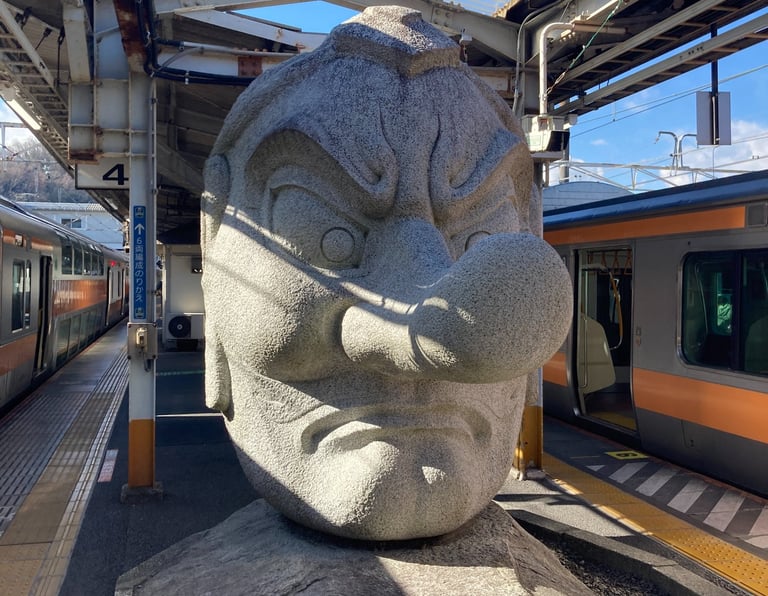
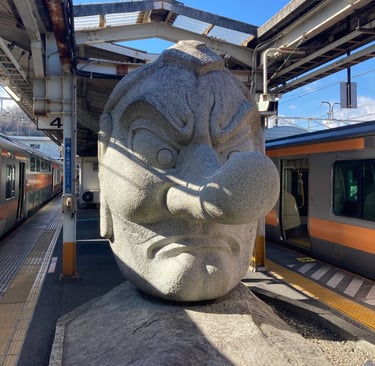
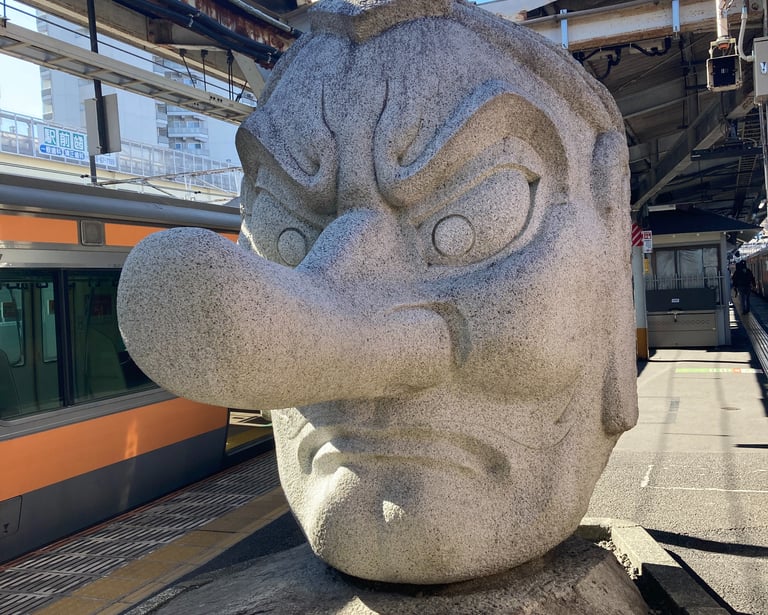
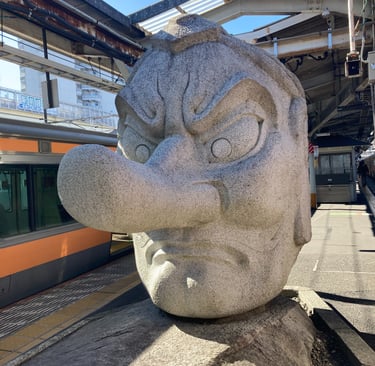
At Takao Station, we were greeted by an enormous tengu — or more precisely, a sculpture of a tengu head. A tengu (天狗) is a supernatural figure from Japanese folklore, often described as part mountain spirit, part trickster, and part guardian. Over time, tengu evolved from feared demons into powerful protectors associated with mountains, forests, and martial discipline.
There are two main forms of tengu. The first is the human-like tengu (daitengu), with a red face and long nose — the most recognizable form today. The second is the bird-like tengu (karasu tengu), which has a beak-like face along with wings and claws. This form is considered the older representation in folklore and is seen less frequently.
More than 1,000 years ago, tengu were viewed as dangerous demons believed to cause chaos and possess people. Over the centuries, however, they became associated with mountain guardianship and were regarded as teachers of martial arts and swordsmanship who punished arrogance and pride.
Mount Takao is one of the most well-known tengu-associated areas in Japan, reflecting the long-standing belief that remote mountains are places where spirits dwell. Today, tengu are not seen as frightening figures but rather as powerful folk guardians.
We had visited this station before, and I am still not sure how we missed it. The tengu statue at Takao Station is quite large — about eight feet tall and weighing approximately 18 tons, carved from a solid piece of granite. It is roughly the size of a small bedroom.
If you visit the area for hiking or to explore the nearby castle ruins, do not miss the tengu. It is located near the end of the JR Chūō Line platforms (the JR side of the station). After exiting the train, you will see it before going up and over the pedestrian bridge that connects the platforms to the station exits.
We initially had trouble finding the correct stop in the bus loop outside Takao Station. After a few minutes of uncertainty, we decided to board a bus and ask the driver directly. Using Google Translate — something we had learned to rely on — we explained that we were trying to reach Hachiōji Castle. After reading the screen, the driver nodded and reassured us that we were on the right bus.
About 10 minutes into the ride, the driver stopped, turned slightly in his seat, and announced that this was our stop for the castle. At the same moment, nearly everyone on the bus — perhaps a dozen passengers — turned around to look at us. We had been sitting on the back bench seat, and several people smiled and gestured toward the door, repeating that this was our stop. There was a quiet friendliness in the moment, a shared sense of making sure we arrived where we were meant to be.
We stepped off the bus and noticed a large metal map posted nearby — one of those “You Are Here” maps for visitors. As we walked over to orient ourselves, a senior Japanese man approached and asked if we were going to the castle. We told him we were and asked where he was headed. He smiled and said he was going there as well, then invited us to join him. We gladly accepted, and our journey to Hachiōji Castle continued
Moments like this happened often during our travels in Japan — small acts of kindness from strangers that quietly removed uncertainty and replaced it with connection. We had set out to find a castle, but what we found first was the generosity of the people around us.
Kakkoii Adventures
A couple navigating life's changes, making intentional choices, and living the life made possible.
STAY ConnectED
© 2026 - All rights reserved.
Making room. Choosing what's next. Living the life those choices make possible.
Join us for our twice-monthly newsletter as we share the choices, changes, and adventures along the way.