
The Howitzer of Talihina
Talihina Veterans Park
OKLAHOMA
10/28/20254 min read
Oklahoma has a way of surprising you. Between the small-town diners and the long stretches of open road, history waits quietly — tucked into hills and hollows, marked by plaques and rusted iron. There’s the Lowery Museum, the Heavener Runestone, the Southern Belle Restaurant — and if you don’t mind a bit of a drive, there’s always more waiting just down the highway.
One afternoon, Mary and I decided to take that drive — west from Poteau to Talihina, about thirty-two miles through the Winding Stair and Kiamichi foothills. The route along OK-63 and OK-1 is a straight, scenic ribbon through the mountains. In the spring, the hills are varied shades of green with fading springtime flowers, their colors deepened by the low light. It’s a drive that feels older than it is, touched with the kind of stillness that makes you roll down the window just to listen.
We reached Talihina in about forty-five minutes. Our destination was the Bigfoot Museum — a small, earnest collection of stories, casts, and local legends. Mary made a lovely video about that place and I made a song about it. Go watch it. I’ll wait.
After the museum, we followed Veterans Avenue through the center of town. Talihina is one of those Oklahoma towns that makes you slow down without realizing it — a main street lined with old storefronts and a quiet sense that time doesn’t hurry here. As the day softened toward evening, we turned toward Poteau and found, just beyond the last houses and the post office, a small park that made us stop again.
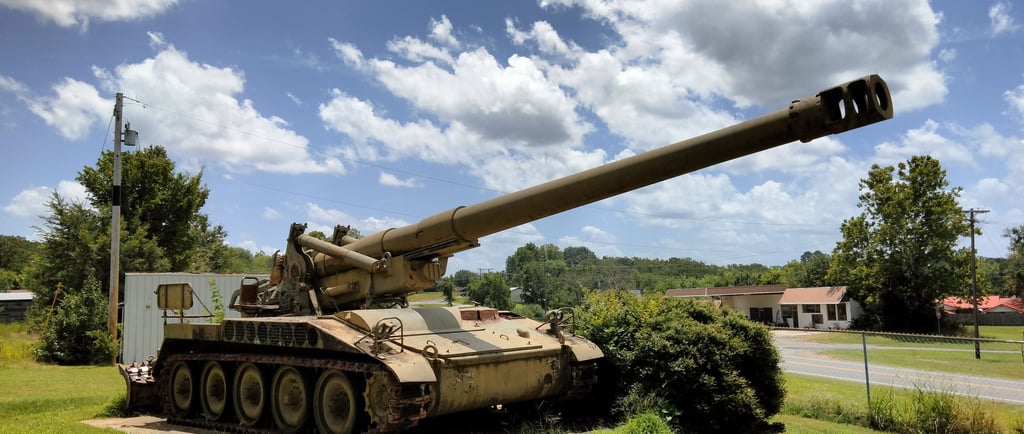
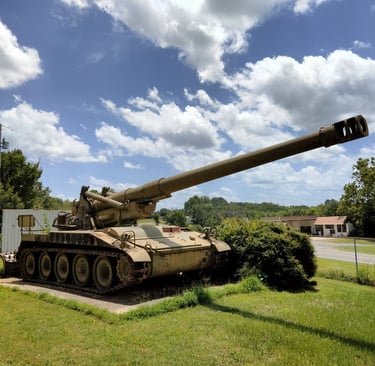
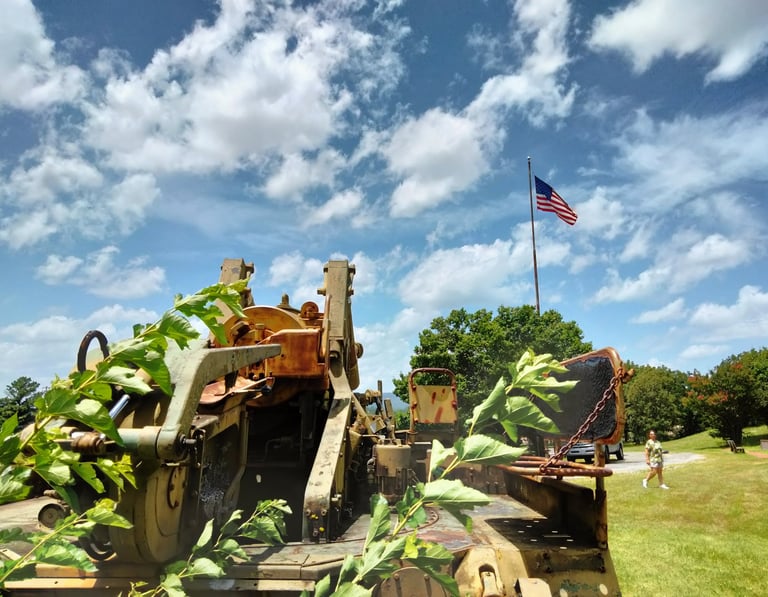
It wasn’t large — just a patch of green on the edge of town — but in its center stood a massive howitzer, angled toward the clouds as if waiting for thunder that never comes. Fifty years ago, the ten-year-old version of me would have seen it as an invitation to climb — a playground made of steel and mystery. But now, standing before it, I felt the weight of what it meant.
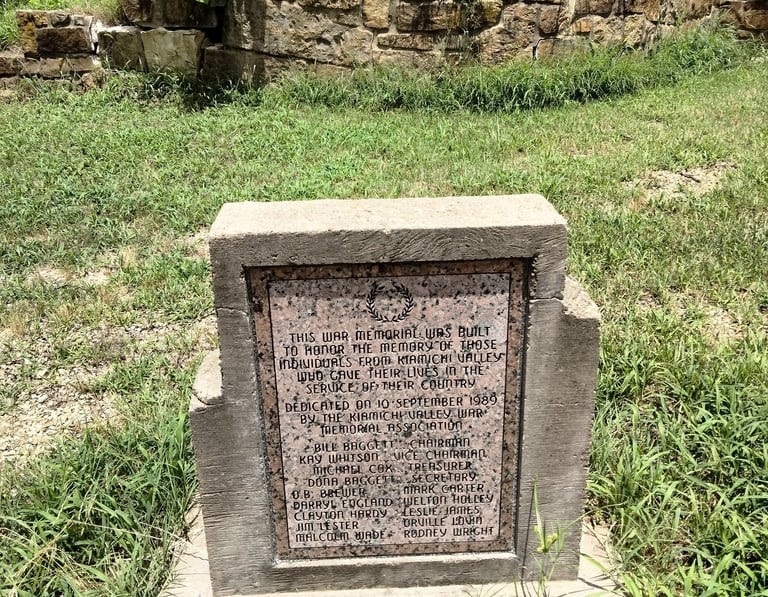
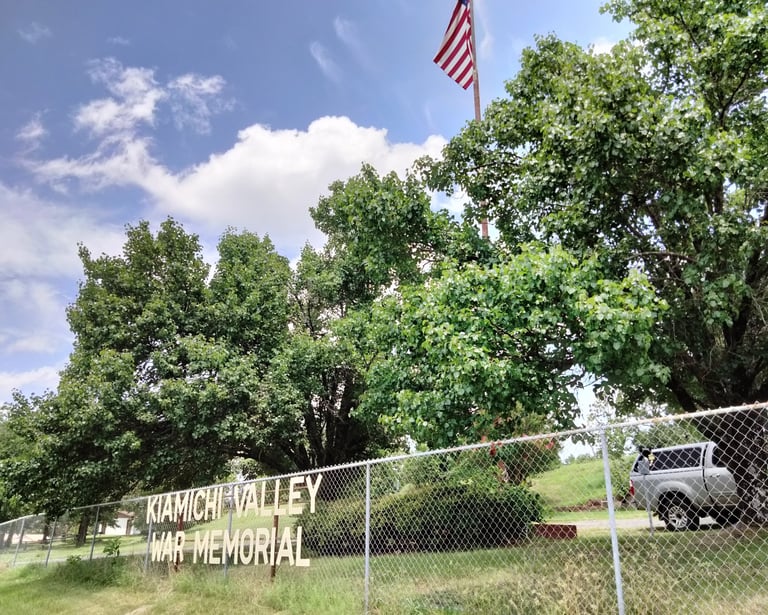
This was the Kiamichi Valley War Memorial, a place where the stories of young men and women who served — and sacrificed — are remembered. Many mistake the weapon for a tank, but it’s actually an M110 self-propelled howitzer, a Cold War-era machine designed not for duels, but for distance. Installed in 1989, it has stood watch over this valley ever since — steel and silence, honoring those who once answered when their country called.
LeFlore County, where Talihina rests, is home to fewer than fifty thousand people. About eight percent of Oklahoma’s adults are veterans — more than the national average — and many of their stories carry Native American roots. The region lies within the historic homeland of the Choctaw Nation, and more than one in ten residents identify as American Indian. For generations, Native Americans have served in the U.S. military at higher rates than any other group — a tradition older than statehood itself. Some of the names remembered here likely belong to men and women who balanced two loyalties: tribal citizens and American soldiers, bound by honor to both.
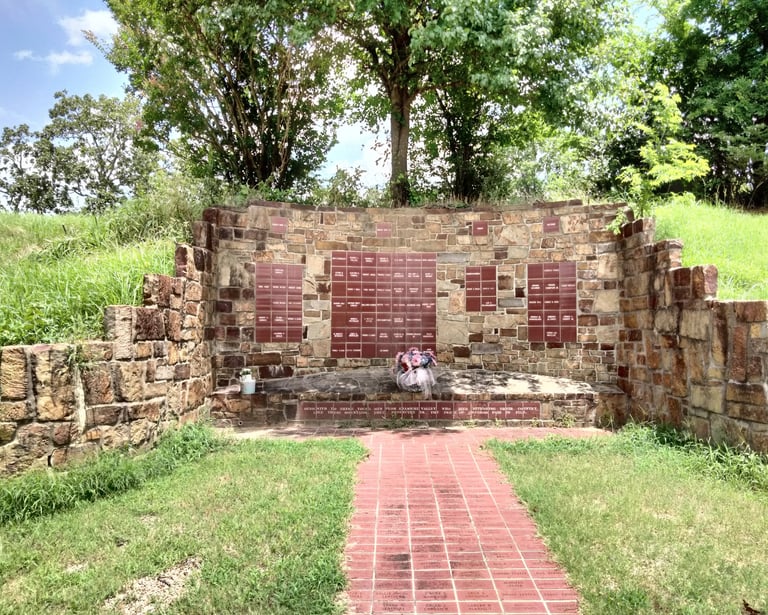
A low wall near the howitzer bears their names, etched on brass plaques. The names don’t shout; they don’t need to. The wind and the quiet take care of the rest. Standing there, you feel the kind of reverence that doesn’t come from ceremony — just from being still long enough to listen.
As cars hum past on Highway 1, most drivers don’t look up. Maybe they’ve already stopped before. But if you pull over, step out, and stand there even a minute, you’ll feel what Talihina holds close — that small-town blend of respect and remembrance, of gratitude carried quietly by those who remain.
We walked back to the car without saying much. The sun had dropped behind the hills, leaving the howitzer washed in pale gold. In a world that rushes past its own history, Talihina’s memorial reminds you that memory can take form — heavy, rusting, and utterly still. It asks nothing except that you pause long enough to hear it. And if you do, the silence answers back — with duty, loss, and the steady hum of gratitude that small towns still hold for their dead.
If You Go
Location: Kiamichi Valley War Memorial, Talihina, Oklahoma (off OK-1, near downtown)
Main features: Two M110 self-propelled howitzers; plaques honoring veterans of multiple wars
Established: 1989, by the Kiamichi Valley War Memorial Association
Nearby: Bigfoot Museum of Oklahoma (500 Veterans Ave), Talimena Scenic Byway, Choctaw Nation Museum (Tuskahoma), and the forests of the Ouachita Mountains
Best time to visit: Late afternoon for the light on the hills; mornings for quiet reflection
Kakkoii Adventures
A couple navigating life's changes, making intentional choices, and living the life made possible.
STAY ConnectED
© 2026 - All rights reserved.
Making room. Choosing what's next. Living the life those choices make possible.
Join us for our twice-monthly newsletter as we share the choices, changes, and adventures along the way.