
The Road That Remembers
Traveling Highway 66
ARIZONA
4/7/20265 min read
The Road That Remembers
We had already been on the road long enough to stop calling it a trip.
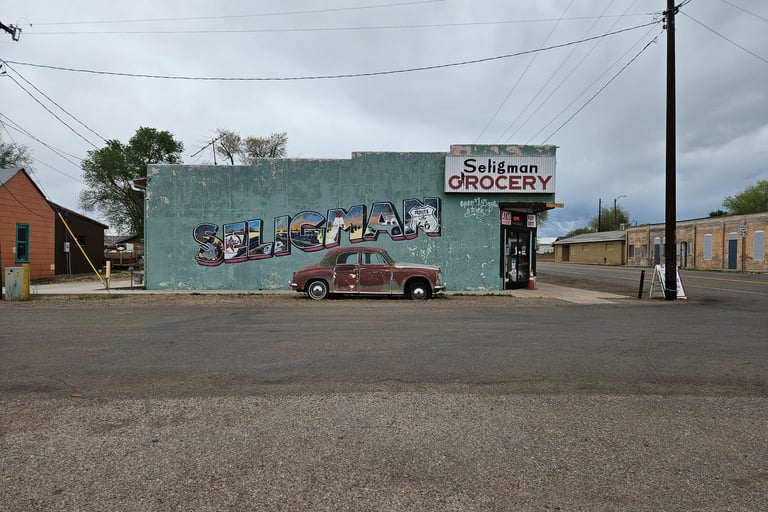
By the time we pulled into the Roadkill Café in Seligman, we realized the drive itself had become the destination. The map mattered less. The stops weren’t planned so much as discovered—sometimes by instinct, sometimes by a faded sign leaning into the wind. The road between Kingman and Seligman has a way of doing that. It invites you to slow down, then quietly insists.
It was time for lunch when we pulled into Seligman. It was cold and slightly windy outside, and we had just passed through a series of downpours. The sound of rain hitting the windshield had been hard and sudden—desert rain. The kind that doesn’t linger politely, but arrives like a memory trying to prove something. Outside, the sky moved fast, low and gray, dragged across the high desert by a restless wind. It wasn’t the Arizona most people imagine. Not postcard Arizona. This was something older.
Something truer.
The Weather Has a Voice
If you drive that stretch expecting sun and stillness, the wind will correct you.
Between Kingman and Seligman, the land sits higher than you think—over 5,000 feet in places—and it behaves accordingly. Storms don’t roll in; they arrive abruptly, as if they’ve been waiting just beyond the horizon for the right moment to cross the road. Rain falls in bursts, sharp and temporary. The sky shifts tone every few miles. One moment, silver light over the desert. The next, dark clouds folding into themselves.
It gives the road a personality.
You begin to understand why this highway feels cinematic even when nothing is happening. The emptiness isn’t empty. It’s holding something—old traffic, old conversations, the ghost of motion that used to define it. When the weather turns, it feels like the past briefly becomes visible.
Inside the café, the waitress took our orders while a stuffed elk head stared on. Plates clattered as a fellow traveler laughed loudly with her companions. Somewhere, a song drifted in and out of recognition. Outside, the storm passed as quickly as it arrived.
By the time we stepped back into the air, the road had already changed again.
The Places That Didn’t Make It
We liked the stretch from Kingman to Peach Springs best.
Not because it was lively, but because it wasn’t.
There’s a loneliness there that feels intentional, as if the road is revealing itself in stages. You don’t get the nostalgia all at once. First, you get absence. Then, if you stay with it long enough, the meaning follows.
We stopped at the old Osterman’s gas station.
Or what used to be one.
From a distance, it still looked like a place that might be open. The structure was intact. The sign still carried weight. You could almost imagine pulling in, stepping out, and hearing a bell ring as the door opened. But closer up, the illusion faded. The building was closed, repurposed, and filled with storage instead of stories.
It felt like arriving late to something important.
There’s a particular kind of disappointment that only exists on roads like this—not anger, not frustration, just a quiet recognition that time has moved on without ceremony. You don’t get to experience the place as it was. You only get to stand where it used to be.
And yet, somehow, that becomes part of the experience.
Because not everything along Route 66 has been polished into memory. Some of it remains in transition—neither preserved nor erased.
Just… paused.
The road doesn’t hide that from you.
Valentine
Further along, we stopped at Valentine.
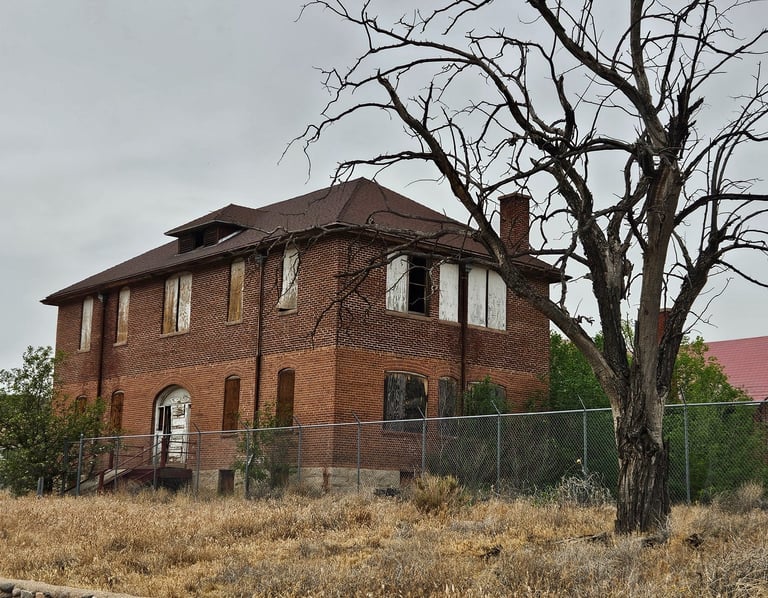
There's quite a lot of history here. In the day, lovers would send their letters to the Valentine post office to get a Valentine stamp cancellation. There's an old schoolhouse that stands there in a way that feels almost deliberate—weathered, fragile, but still present enough to demand attention. It isn’t just another abandoned building. It really wasn't a school in a traditional sense. It's original name was the Hualapai Indian Training School/ Truxton Training School and it was closed in 1937. It has a presence you can feel that immediately. There’s weight to it.
The kind that doesn’t come from architecture.
The structure is deteriorating, yes, but it hasn’t been forgotten. Not entirely. There are conversations around it—plans, discussions, disagreements about what it should become. A museum. A memorial. A community space. Or something else entirely.
That uncertainty lingers in the air.
Places like this don’t resolve easily. They carry more than history; they carry interpretation. What one person sees as preservation, another sees as reopening something that should be left alone. The building stands in that tension.
From the road, you wouldn’t know all of that.
You’d just see a school falling apart in the desert.
But if you stay a moment—if you let the silence settle—you realize it’s not falling apart in the usual way. It’s waiting. For a decision. For meaning. For someone to decide what part of its story matters most.
We didn’t stay long.
It didn’t feel like a place you pass through casually.
The Road Improves, But Not in the Way You Expect
There’s a rhythm to this stretch of Route 66.
It begins in quiet, almost uncomfortable emptiness. Then it deepens—becoming more isolated, more reflective. And only after that does it begin to open up again, offering signs of life, of memory preserved instead of fading.
It’s a slow arc.
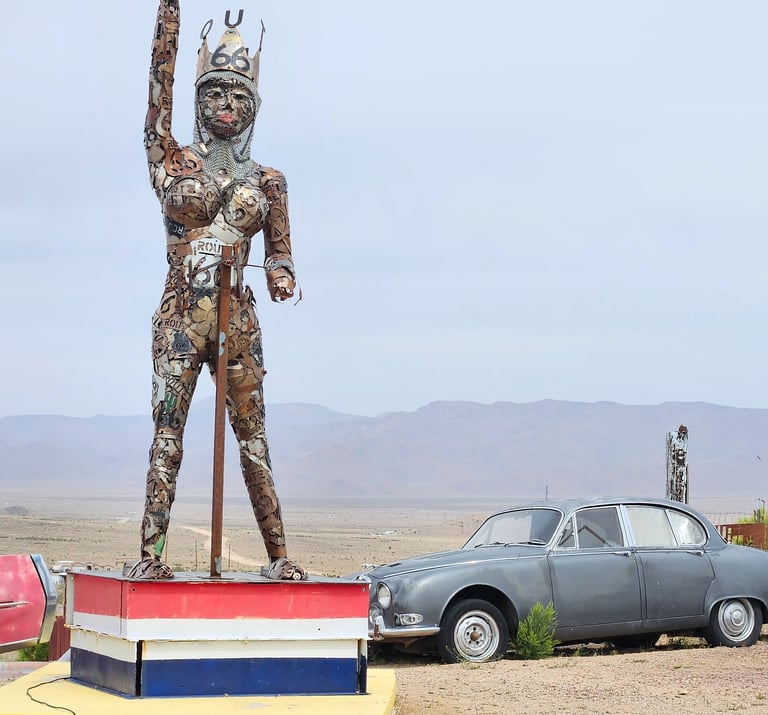
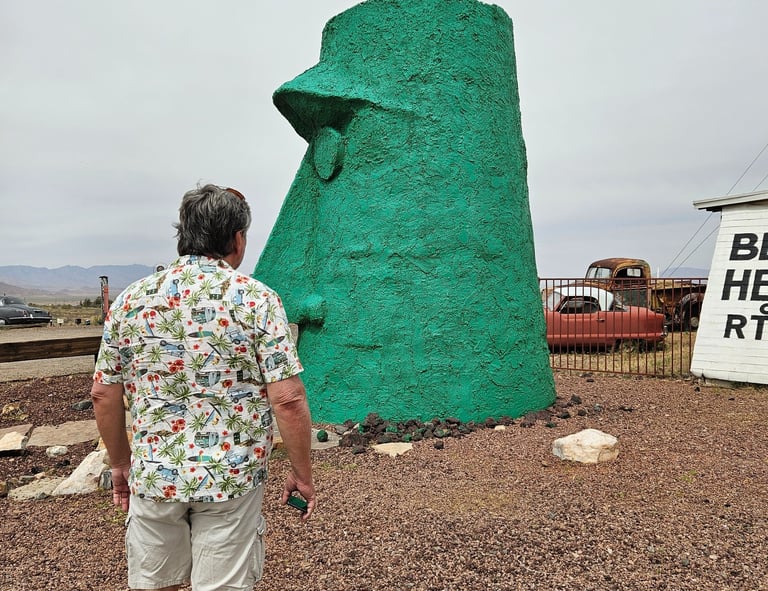
By the time you approach Hackberry, the tone shifts. The nostalgia becomes more visible, less abstract. Objects appear—cars, signs, remnants arranged in a way that feels intentional. Not forced, but curated by time itself.
And then, eventually, Seligman.
But the real story isn’t the arrival.
It’s what happens before it.
Because by the time you reach a place that feels alive again, you’ve already passed through everything that wasn’t. You’ve seen what remains when traffic disappears, when businesses close, and when time moves forward without asking permission.
That’s what gives the brighter stops their weight.
Without the empty stretches, they’d just be attractions.
With them, they feel like survival.
Why This Stretch Matters
There are parts of Route 66 that feel like exhibits.
This isn’t one of them.
The Kingman-to-Seligman stretch still feels like a road—one that remembers what it used to be but hasn’t fully decided what it is now. That’s what makes it compelling. It doesn’t hand you nostalgia. It makes you work for it.
You notice things differently here.
A closed building feels significant. A working sign feels like a victory. A patch of empty desert becomes part of the story instead of just the space between stories.
Driving it, you start to understand something about roads like this.
They’re not just about where you’re going.
They’re about what’s still there when you slow down enough to see it.
By the end of the day, the storm was gone. The sky had cleared. The road stretched ahead like it always does—unconcerned, unchanged, waiting.
We got back in the truck and headed over to our hotel. Tonight, we will be staying at the Deluxe Inn on Highway 66. We think it may have been a motor court back in the day. I’m sure it held its own stories.
With Nevada behind us and eastern Arizona ahead, we retired to our room for a good night’s sleep.
Kakkoii Adventures
A couple navigating life's changes, making intentional choices, and living the life made possible.
STAY ConnectED
© 2026 - All rights reserved.
Making room. Choosing what's next. Living the life those choices make possible.
Join us for our twice-monthly newsletter as we share the choices, changes, and adventures along the way.