
The Silk Road (Part 2)
Hachi-oji to Yokohama
HISTORY
2/23/20264 min read

Mary and I traveled northwest from Yokohama to Hachiōji, with a brief stop in Ōta along the way. Our destination was the Doryōdō ruins, where I hoped to gather material for an ebook I had been working on. The site lies beyond the main city, tucked into the hills, and reaching it required a local bus from central Hachiōji.
What remained with us most strongly, however, was the quiet character of the city itself.
Hachiōji did not immediately appear to be a historic destination in the way some Japanese towns do. There were no prominent landmarks announcing its past, no preserved streets drawing visitors toward them. Instead, the buildings were practical and familiar, and the streets moved with the steady rhythm of everyday life. Shops opened and closed, traffic flowed, and people continued their routines without interruption. Everything functioned naturally, without drawing attention to itself.
The city felt lived in — comfortable and established — yet without the sense of ceremony often found in places shaped by tourism.
It carried the atmosphere of a place many travelers pass through on their way elsewhere.
And yet, beneath that ordinariness, there was a quiet impression that the city held a deeper history — something important that had unfolded here long ago, even if it was not immediately visible.
In truth, Hachiōji had been strategically important for centuries.
After visiting and photographing Doryōdō, we found ourselves with some unexpected time remaining and began considering how to spend it. One option was to visit the ruins of Hachiōji Castle; another was to stop by the small Silk Road Museum (Kinunomichi Museum). Unfortunately, our free day happened to be a Monday, and like many museums in Japan, it was closed.
Still, the discovery sparked our curiosity. We began to wonder whether there might be a connection between Hachiōji and the Yokohama Silk Museum. The Kinunomichi Museum is located in the Yarimizu district, south of central Hachiōji, along the historic route where silk merchants once transported raw silk toward Yokohama port.
Hachiōji sits at the western edge of Tokyo Metropolis, where the Kantō Plain gradually rises into the surrounding mountains. This geography made it an important transportation hub long before modern railways existed.
During the Edo period, it served multiple roles: a checkpoint town, a commercial distribution center, a textile production center, and a gateway connecting Edo (Tokyo) with inland regions of Japan. In many ways, it functioned as Tokyo’s western frontier town.
What we discovered about silk turned out to be one of the most meaningful parts of the city’s identity.
Hachiōji became Japan’s largest silk-weaving and textile center during the Edo and Meiji periods. The region produced silk thread, kimono fabrics, and cotton textiles. From Hachiōji, goods traveled east to Yokohama for export, and because of this network, the city was nicknamed 桑都 (Sōto) — “Silk Capital.”
It was, in effect, a major industrial artery of pre-modern Japan — the northern terminus of the Silk Road that extended to Yokohama.
Today, however, this history is not immediately visible, largely overshadowed by nearby Mount Takao.
Hachiōji feels somewhat overlooked for several reasons, the most significant being that it lacks the polished tourism identity of places like Kamakura or Kawagoe. There is no strong narrative constantly reminding visitors of its historical importance.
Yet the area was once a transportation hub, the silk manufacturing capital of Japan, and a major post town along important highways.
In many ways, it resembles towns in other countries that flourished during earlier economic periods and later blended quietly into the modern landscape.
In the end, we realized we had stepped into a place whose historical significance was far greater than its outward appearance suggested.
In the end, Hachiōji was not a city that revealed itself quickly. Its history was not displayed on the surface, and its importance was easy to overlook if one only passed through. Yet once we began to understand its role — as a gateway, a center of industry, and a link between regions — the quiet streets took on a different meaning. What had first seemed ordinary began to feel layered with memory. We had come looking for ruins in the hills, but instead we discovered a place whose past still lingered quietly in the present, waiting for someone to notice.
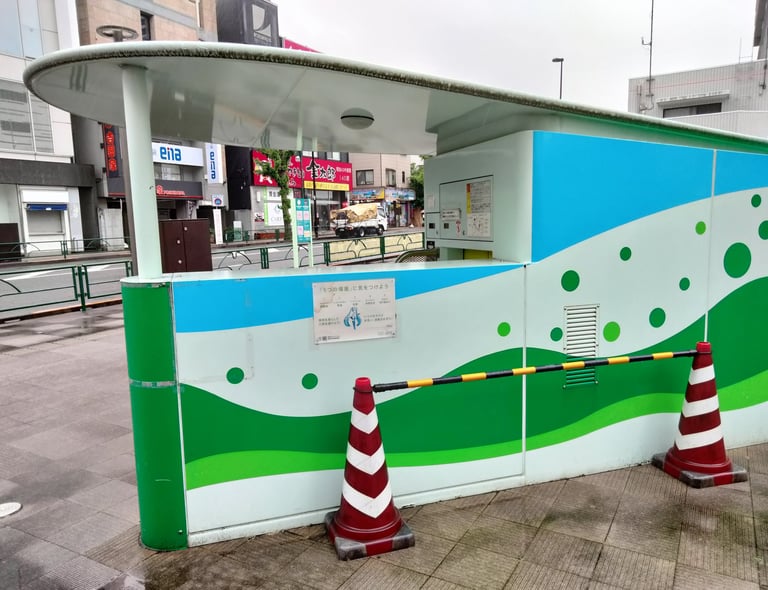
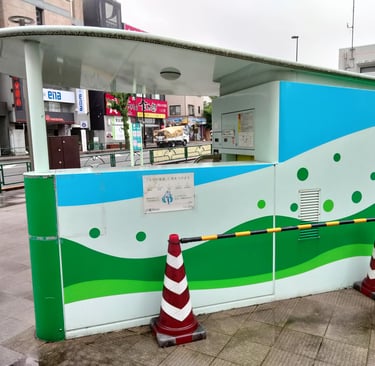



Entrance to underground bicycle garage.
Downtown Hachi-oji
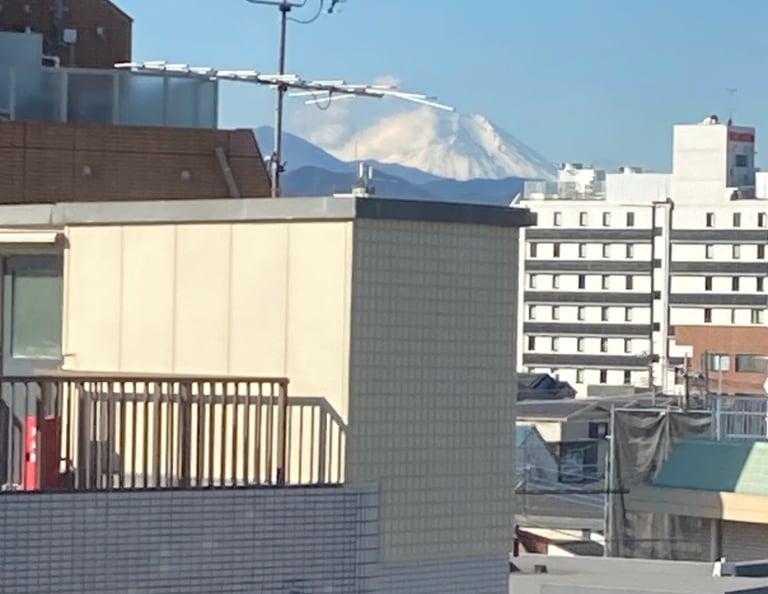
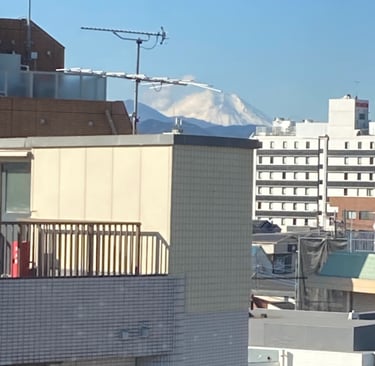
Fujisan from LiveMax Hotel in Hachi-oji
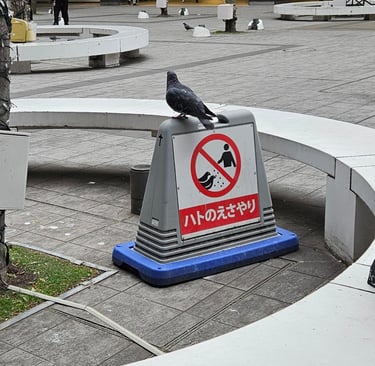
Pigeon with an attitude in city mall
Kakkoii Adventures
A couple navigating life's changes, making intentional choices, and living the life made possible.
STAY ConnectED
© 2026 - All rights reserved.
Making room. Choosing what's next. Living the life those choices make possible.
Join us for our twice-monthly newsletter as we share the choices, changes, and adventures along the way.