
Traveling With Knowledge
How Research Can Lower Social Barriers
1/9/20263 min read
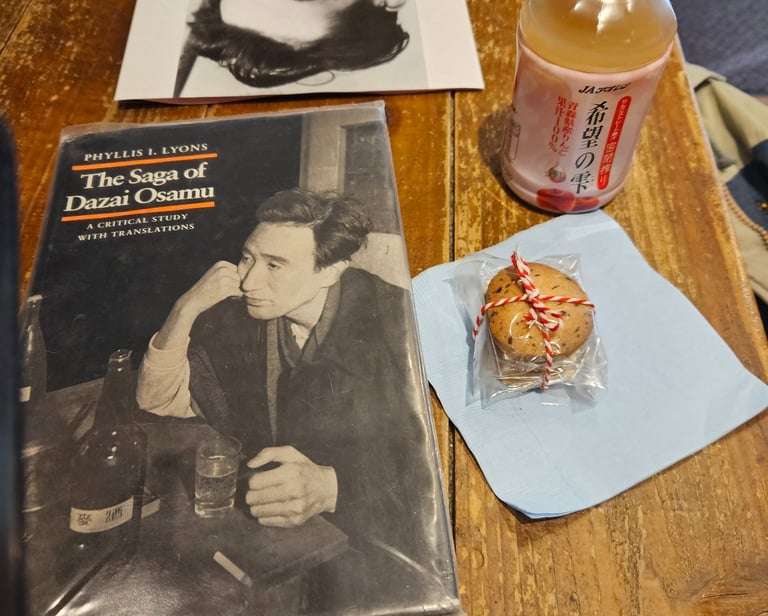
I want to talk about my son for a moment. He doesn’t particularly like it when I do, but I want to make a point about how preparation can make travel safer, richer, and more fulfilling—especially in Japan.
My son, Liam, is a very good student, the kind of person who is always reading, always learning, always trying to understand how the present arrived to where it is now. He’s a gifted historian and a thoughtful military strategist, able to discuss wars, battles, and conflicts with clarity and restraint. What matters most, though, isn’t the breadth of his knowledge. It’s how that knowledge shapes the way people respond to him when he travels.
I saw this clearly in Kyoto. Our taxi driver was polite but reserved, hesitant to engage beyond what was necessary—understandably, given the language barrier. The ride was quiet and formal. Then Liam mentioned that we were visiting Honnō-ji. The shift was immediate. The driver’s posture relaxed. He asked a question, then another. What followed wasn’t small talk but conversation—about history, about place, about why that site still mattered. Through the cab driver’s broken English and Liam’s early stages of Japanese language acquisition the language gap didn’t disappear, but it stopped being an obstacle. Shared reference had created common ground. It wasn’t that Liam knew more than the driver; it was that he knew enough to listen well.
When we move through places together, I notice a pattern. Conversations last longer. Politeness softens into engagement. Someone pauses mid-task. Another corrects a detail gently. These moments aren’t transactions. They’re invitations, and they often begin when Liam or any of us references something that mattered before we arrived.
In Japan, this kind of preparation carries particular weight. History here is not abstract; it is local, layered, and often unspoken. A closed station, a narrow street that bends without explanation, a shrine without visitors—these are not empty spaces. They are held spaces. Without context, they can seem quiet or even forgotten. With it, they reveal continuity.
Research acts as a form of courtesy. It signals that you didn’t arrive by accident, or simply because a place was trending. You came because something about it called for attention. In a culture that values intention and awareness, that distinction matters.
There is also a practical dimension that is easy to overlook. Preparation makes travel safer—not just in the sense of navigation, but socially. Knowing a place’s history helps you understand what deserves care, where pride is fragile, and why certain subjects are approached obliquely. People are more inclined to extend patience and help when they sense respect.
That experience wasn’t unique to Kyoto, or even to traveling with Liam. I saw the same pattern emerge in a quieter, more personal way in Mitaka.
My wife and I traveled there to visit the home of Dazai Osamu, not out of casual curiosity, but because I had spent some time reading some of his writings and doing some research while preparing an ebook on the writings of Dazai and his relationship with the women in his life. We arrived already carrying his voice with us.
There is a salon or library dedicated to Dazai and his writings. A kind docent answered our questions and gave us a map to the local monuments and memorials. She was professional, courteous, and initially formal. But as we spoke—about No Longer Human, about the tension between performance and sincerity in Dazai’s work, about how deeply autobiographical his writing was—something shifted. The conversation slowed. The distance narrowed. Eventually, in a gesture that was never promised and never expected, the docent allowed us to wear Dazai’s tonbi coat.
It wasn’t a costume moment. It wasn’t tourism theater. It was recognition.
What visitors sometimes describe as special treatment or favors are usually something quieter: recognition. You remembered us. You didn’t flatten our past into a backdrop. In towns and neighborhoods accustomed to being passed through, that acknowledgment carries real weight.
Preparation also slows you down. You stop trying to justify your presence with photographs or lists. You wait without resenting the wait. You accept rain as part of the experience rather than an inconvenience. In Japan especially, many places reveal themselves only when you allow time to stretch.
Travel writing often talks about discovery, but very little here is undiscovered. What remains is recognition—learning how to see what is already present.
Research is not about mastery or expertise. It is about respect. It is a way of saying, I understand that this place has a memory, and I am willing to meet it on its own terms.
When you walk through a neighborhood like this—perhaps in the rain, perhaps during the off-season—you are no longer just moving through space.
You are participating in a quiet exchange.
That is when travel stops being movement and becomes conversation.
Kakkoii Adventures
A couple navigating life's changes, making intentional choices, and living the life made possible.
STAY ConnectED
© 2026 - All rights reserved.
Making room. Choosing what's next. Living the life those choices make possible.
Join us for our twice-monthly newsletter as we share the choices, changes, and adventures along the way.