
Using a VPN
Traveling Safely With the Internet
2/8/20264 min read
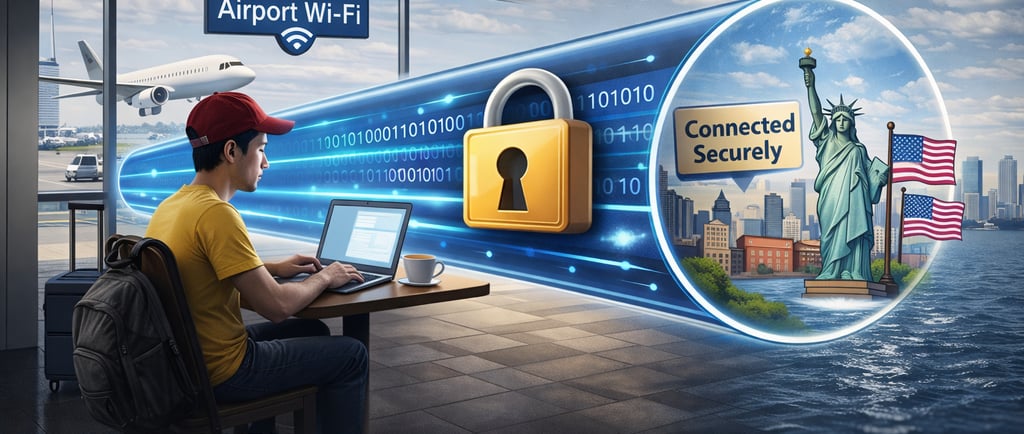
I want to briefly mention a travel tip — one that is as invaluable to a traveler as a passport and local currency: using a VPN.
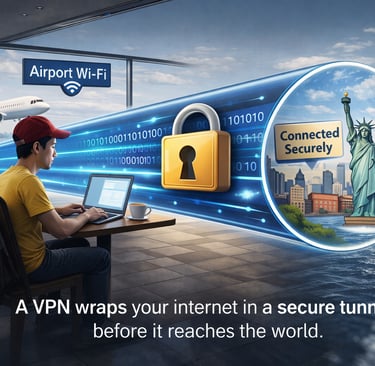
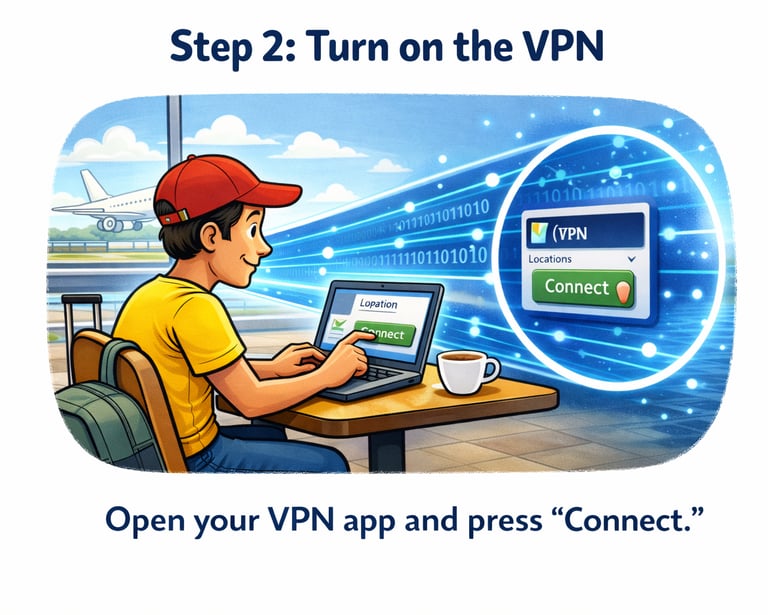
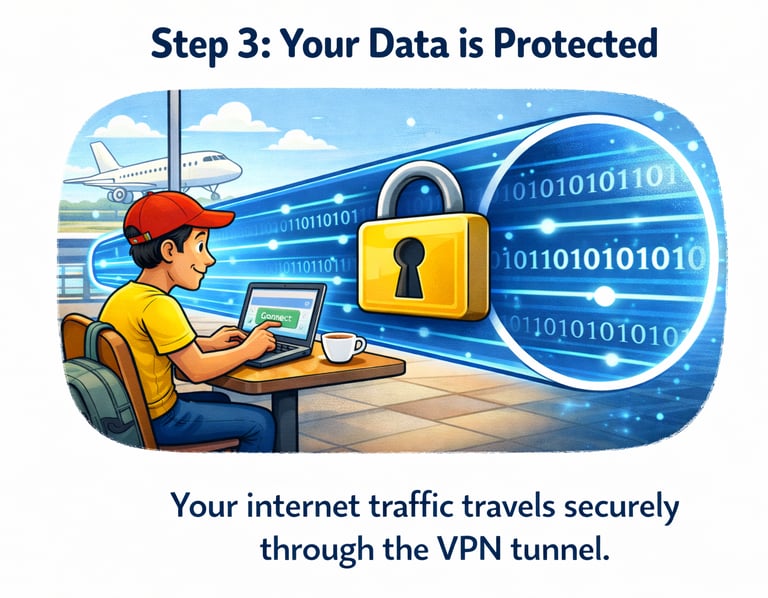
For those new to it, a VPN — or Virtual Private Network — works like a protected corridor around your internet connection. Instead of your data traveling out in the open, it moves through a private tunnel to another location. When you use a VPN, your internet traffic is encrypted — essentially locked inside a secure passage — so no one on the same Wi-Fi network can easily see what you’re doing. Whether it’s banking information or photos of you sipping a mai tai on the beach, your data is wrapped in mathematical encryption.
In simple terms, when a VPN encrypts your data, it applies a set of mathematical rules (an algorithm) that scramble your information before it leaves your device. Your message starts as clear text, but the encryption process transforms it into scrambled “gibberish” that only the VPN server can properly unlock. Pretty neat, huh?
A VPN isn’t a complete shield against hacking or viruses — that’s a different layer of cybersecurity. Still, we’ve seen how much difference it makes. There’s a hotel in Oklahoma that Mary and I frequent, and whenever we’ve stayed there without a VPN, we’ve experienced minor hacking attempts and picked up simple viruses. When we remember to turn the VPN on, those problems vanish. We don’t see the same issues elsewhere — in other states or in Japan — which suggests the VPN is doing its job quietly in the background. That said, very sophisticated attacks could still bypass a VPN, so it isn’t foolproof.
For us, one small but essential part of our travel setup in Japan has been using a reliable VPN. Mostly, it’s about security. My U.S. bank and business accounts are far happier when I’m on a protected connection — ironically, they sometimes flag me when the VPN is off. It’s become a quiet part of our routine: morning coffee, maps open on one screen, and a secure digital tunnel back to the States humming along behind the scenes.
We use Proton VPN, which is operated by the Swiss company Proton AG and governed by Switzerland’s strong privacy laws. It follows a strict no-logs policy, meaning it doesn’t collect or store records of your browsing activity.
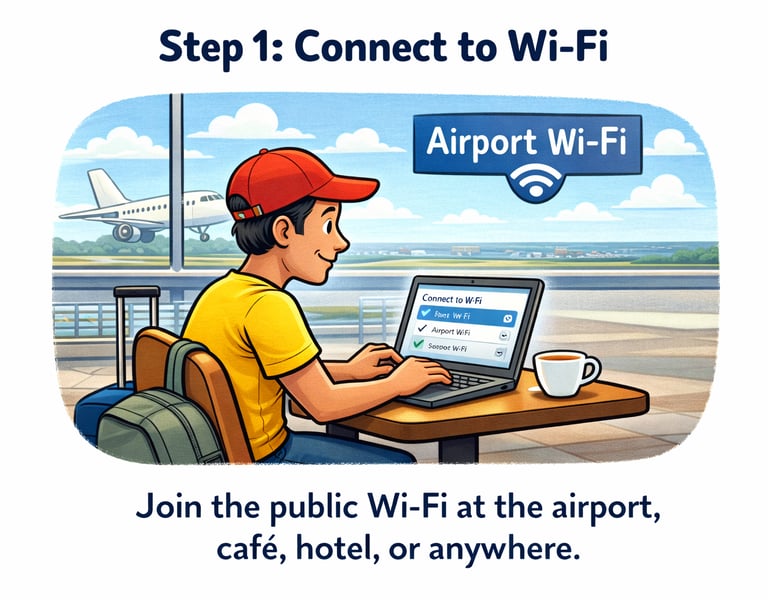
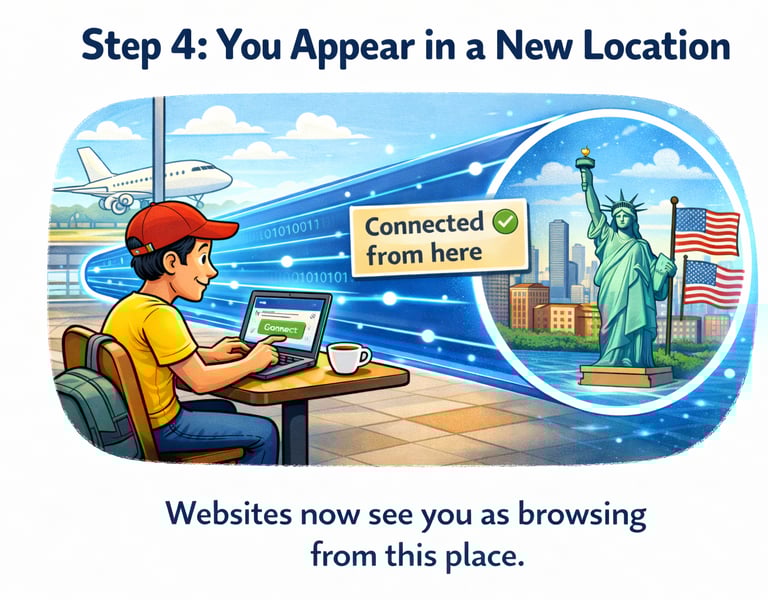
My routine is simple: I turn on my computer, start Proton, choose a country to route my connection through, and begin my work. The country I pick usually depends on which servers are least crowded at the moment. That’s why my location on Instagram or X might appear as Zimbabwe, Switzerland, or the United States — even while I’m sitting in Japan.
Using a VPN while traveling is legal in most of the world and often a smart move for protecting your data on public Wi-Fi. The exceptions are a small number of countries that restrict or block VPN use, including China and Russia. I probably wont be traveling to either one of those soon, so one less worry.
Even where VPNs are legal, they don’t make illegal activity legal — so don’t use one to pirate content or evade local laws. And in some cases watching TV.
For most travelers, the real risk isn’t legal trouble but simply finding that some networks or streaming services block VPN connections. So, you may be able to access your Netflix or Amazon account, but you could get blocked or banned by your service. Amazon often blocks or challenges VPN users not because VPNs are illegal, but because shared VPN addresses can look like fraud or location spoofing, which triggers their security systems. Location spoofing is when a device or user makes it appear that they are in a different place than where they actually are. Licensing and copyright laws are the biggest reason to try to prevent location spoofing.
Amazon does not own the rights to most movies, shows, books, and music worldwide. Those rights are sold country by country.
So if your VPN makes you look like you’re in another country, Amazon could be showing you content it isn’t legally allowed to sell or stream in your real location, or charging you a price that doesn’t match local rules or taxes. If Amazon didn’t fight location spoofing, it could be violating contracts and national laws. That’s why they are so strict about this.
Occasionally, we hop on YouTube to check our channel or upload clips from the day. YouTube is usually less strict than Amazon in regards to location spoofing. YouTube cares about location for the same basic reasons as Amazon — licensing and advertising — but it’s usually much less strict because most people are just watching, not buying.
I haven’t encountered a problem with YouTube and the VPN, but it may be because we use it to post our content, not to watch shows.
but the real value is simply feeling like our digital life can travel with us, not against us.In the end, these platforms aren’t trying to police your travels so much as manage their own legal and business realities. YouTube cares about location for the same basic reasons as Amazon — licensing and advertising — but it’s usually far less strict because most people are simply watching rather than buying. For travelers like us, that means a VPN becomes less about “getting around” anything and more about carrying a little piece of our digital home with us. It’s a quiet tool that lets us move between countries with fewer frictions, keeping our work, our memories, and our online life connected as we move through the world.
Kakkoii Adventures
A couple navigating life's changes, making intentional choices, and living the life made possible.
STAY ConnectED
© 2026 - All rights reserved.
Making room. Choosing what's next. Living the life those choices make possible.
Join us for our twice-monthly newsletter as we share the choices, changes, and adventures along the way.