
Walking the Lights
Between Two New Years in Yokohama
1/22/20263 min read
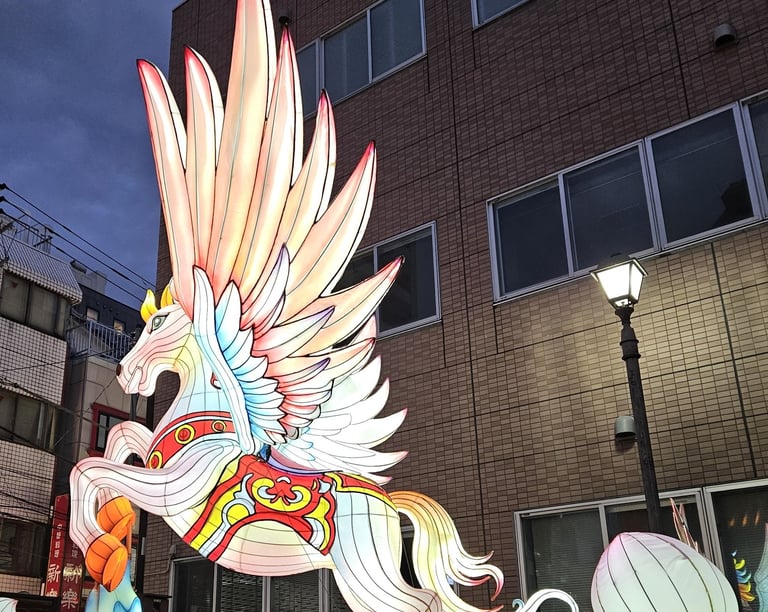
Winter settles gently in Yokohama.
Not with snow—this is still a harbor city—but with light. The kind that spills softly across sidewalks, curls around bare tree branches, and reflects back from dark water, as if the city is trying to remember itself after sunset.
We stepped out just as the sky faded into that deep harbor blue. The air had the bite of January—cold, breezy, with snow somewhere in the forecast. And yet, even in winter wind, Yokohama invites walking.
The city’s illumination season stretches longer than you’d expect. Long after Christmas trees are packed away, the lights remain—part of THE YOKOHAMA ILLUMINATION, a citywide winter program that quietly links more than forty light-up spots across waterfronts, shopping streets, and transit corridors. It continues deep into February, as if the city isn’t quite ready to let darkness win.
From Yokohama Station toward Minato Mirai, the route is lined with soft white lights—the kind that makes ordinary streets feel warmer than they are. A roughly kilometer-and-a-half ribbon of glow guides you past office towers, mall plazas, and open parks, where light pools on the pavement like spilled moonshine.
At Grand Mall Park, the illumination opens up. Trees shimmer. Phones come out; shutters click (in Japan, cellphone cameras click—it’s the law), just to mark the moment. Nearby, Landmark Tower rises like a lighthouse of glass, its seasonal lighting shifting subtly, as if breathing.
As you move closer to the harbor, the mood changes again. At Ōsanbashi International Passenger Terminal, light meets water. The rooftop lawn glows faintly beneath your feet, and the bay mirrors everything above it. Somewhere out in the darkness, a ship’s horn sounds—low, patient, unhurried.
And then—almost without noticing—you cross an invisible line.
The colors change.
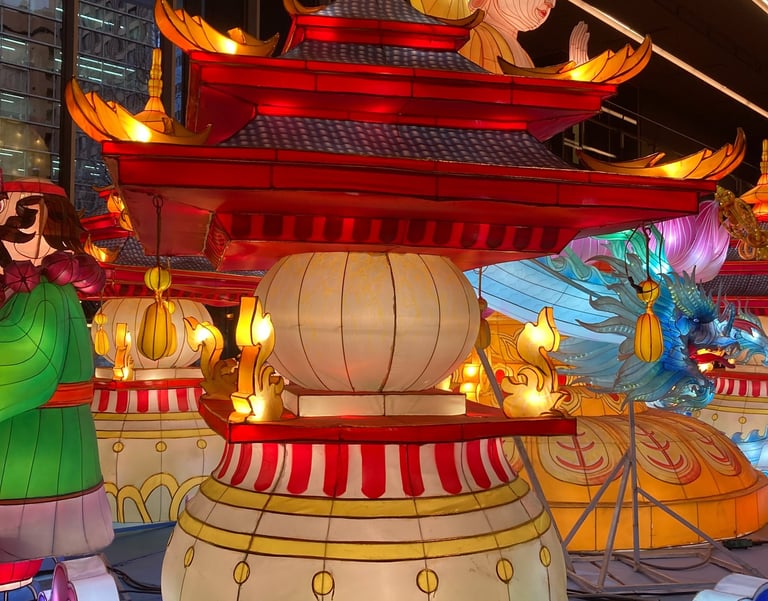
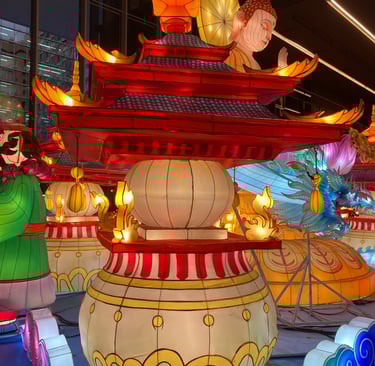
White becomes red. Gold appears. Lanterns multiply overhead. The streets narrow and grow warmer, louder, more fragrant.
You’ve entered Yokohama Chinatown.
Here, the lights are not simply decorative. They carry meaning.
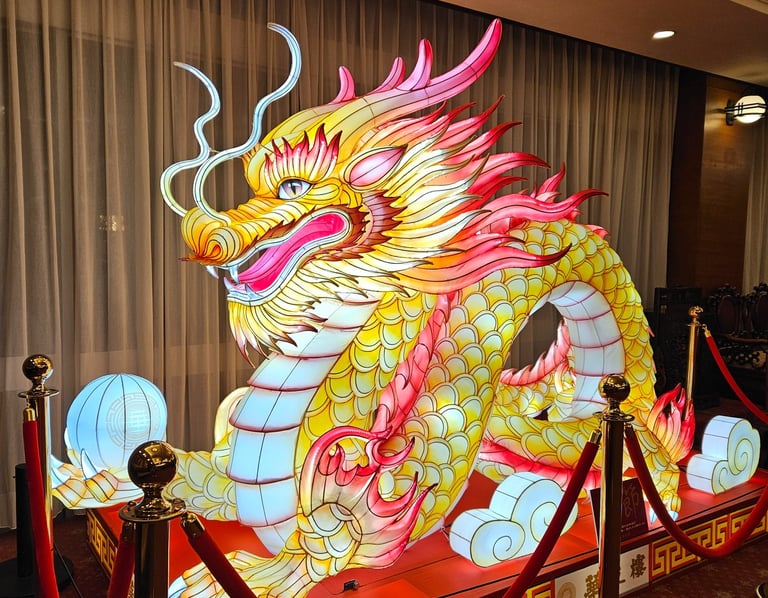
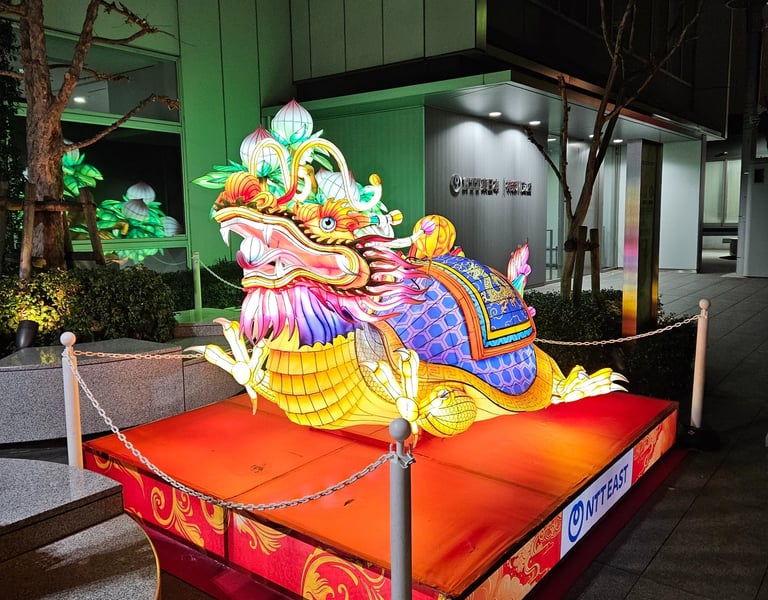
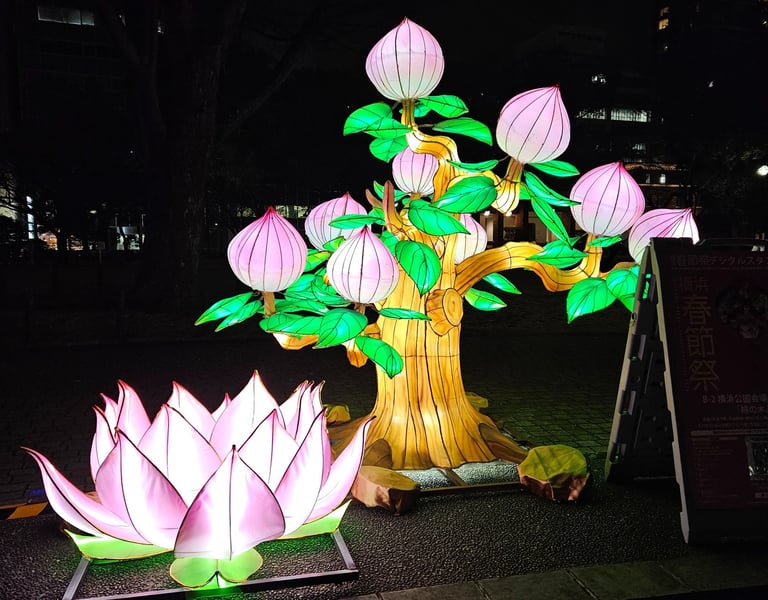
These lanterns mark Spring Festival (春節)—Chinese New Year. They hang from gates and storefronts, stretching toward Yamashita Park, guiding visitors the way festival paths have for generations. Red calls in good fortune. Gold invites prosperity. Even the light feels celebratory—alive. Firecrackers will soon split the winter air. Incense will rise at Kanteibyō, where prayers for health, family, and success quietly queue behind temple doors.
The waterfront illuminations belong to a different purpose. They began in November, created for winter tourism, evening strolls, and harbor atmosphere. They follow no lunar calendar. They feature no zodiac animals, no ritual symbolism.
And yet, the seasons overlap.
So when you walk from Minato Mirai through Yamashita Park and into Chinatown, it feels like a single, continuous festival—even though it isn’t. Two traditions running parallel, close enough to touch, but never merging.
Modern winter Japan alongside a historic Chinese diaspora celebration.
That layered coexistence feels unmistakably Yokohama.
A port city has always lived this way—absorbing without erasing, welcoming without rewriting. The lights don’t compete for meaning. They simply share the night.
By the time we reached the park, the harbor wind had strengthened. Lanterns swayed gently overhead. The city glowed behind us. Somewhere between two calendars, two cultures, and two versions of the new year, we kept walking.
Because in Yokohama, winter isn’t about arriving anywhere.
It’s about drifting—slowly, thoughtfully—through the light.
Kakkoii Adventures
A couple navigating life's changes, making intentional choices, and living the life made possible.
STAY ConnectED
© 2026 - All rights reserved.
Making room. Choosing what's next. Living the life those choices make possible.
Join us for our twice-monthly newsletter as we share the choices, changes, and adventures along the way.